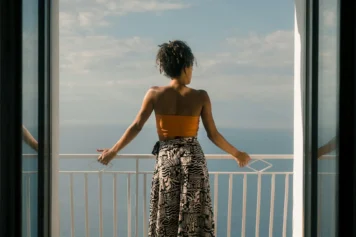
A relic of the expat glamour of the 1930s through the 1960s, Tangier is home to a curious mix of upper-crust residents, from French philosopher Bernard-Henri Lévy to American heiresses and English dukes and duchesses (Elena Prentice, an American painter who has been coming to Tangier for the last 50 years, dubs them “The Accidentals”). And since such sophisticates have necessitated the arrival of designer riads, urbane art galleries, and chic restaurants serving a sort of Spanish–North African fusion, it’s now the most fashionable place in Morocco to live it up.
The country code for Morocco is 212. Prices quoted are for May 2012.
Lodging
A restored seven-room riad, the 1 Hotel Nord Pinus is decorated with inlaid chests from Syria, stained glass, Persian carpets, and hand-painted tiles. Ask to stay in Le Chameau S’en Fout (“The Camel Doesn’t Give a Damn”), and watch the sunrise through arched windows facing the water (661-22-8140; doubles from $250). The riad2 La Tangerina has 360-degree views of the city, port, and sea from the multilevel roof deck, but its rooms are spare (539-947-731; doubles from $100). On a hill above the city in a palmy, well-to-do area reminiscent of Beverly Hills, the 3 Villa Joséphine is an exquisite old colonial house decorated in slightly stuffy old English style, with a fantastic restaurant serving mod Moroccan food like roasted chicken with a subtle lemon kick (539-334-535; doubles from $132). The downtown 4 Hôtel Continental is worth a look-in for its marvelous public spaces, but guest rooms are rather dated (539-931-024; doubles from $80). And 25 minutes outside town, on a rocky outcrop above the so-called Grottoes of Hercules (a series of sea caves), 5 Le Mirage has big rooms on a long, wide beach where the Atlantic meets the Mediterranean (539-333-331; doubles from $220).
Dining
Seafood is a must, but the city’s expat influences guarantee plenty of variety. The wood-fired pizza at 6 Casa d’Italia, a trattoria in the former sultan’s palace, has been a local favorite for decades (Palais Moulay Hafid; 539-936-348; entrées from $10). Near the grand mosque, 7 La Fabrique serves boeuf bourguignon and chocolate soufflé in a contemporary space that feels more Parisian than pastiche (7 rue d’Angleterre; 539-374-057; entrées from $19). The sea views from the terrace at 8L’Océan are as good as the seafood pâté (Plage Sidi Kacem; 539-338-137; entrées from $15). 9 La Pagode serves Vietnamese cuisine in the Ville Nouvelle area (3 rue El Boussairi; 539-938-086; entrées from $9).
The busiest restaurant at the moment, 10 Le Saveur du Poisson, occupies a downtown town house and serves sea bass–and-confit salads and seafood spaghetti to a cool crowd (Escalier Waller; 539-936-326; prix fixe, $18). Next month Belgian-born Vincent Coppée will bring the style of his Tangier estate—a rambling fantasy filled with mid-century modern furniture and art—to a Casbah restaurant: 11 El Club de Morocco will serve Moroccan and Mediterranean food in a restored blue-and-white riad (Place de la Kasbah; 539-948-139; entrées from $15).
To read the entire story, go to Conde Nast Traveler