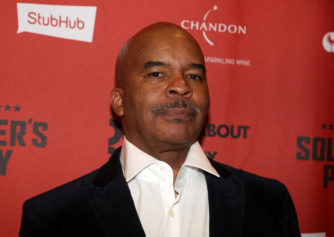
It was more than 70 years ago that George Gershwin introduced the world to his folk opera, Porgy and Bess. The play was acted out on the theater stage with an all African-American cast and soon became a classic. In 2012, the folk opera is back on Broadway and brings some much expected controversy along with it. David Alan Grier, the actor who plays the drug dealer Sporting Life, said the entire history of the play has been filled with racial intrigue.
“[In the original], every other word was N-word this, N-word that,” he explained on NPR. He even revealed that Al Jolson wanted to play Porgy in blackface. After a while the original company approached Gershwin, saying, “Look we have to cut out these racial epithets.” Ever since then the script has been changed and altered over time. “There is a lot of history surrounding this piece and infused in the piece that’s very interesting to me,” admitted Grier.
Just as the new adaptation of the play was ready to hit the stage The New York Times received a letter protesting the production. The letter was from Stephen Sondheim, the American composer and lyricist, who believed that the removal of the N-word was arrogant and dishonored the original piece. Grier didn’t seem affected by the letter and instead seemed to poke fun at Sondheim.
“Listen I don’t know who this Steve Soderbergh is, but I’ve never like his films and I didn’t even know he was an opera fan,” Grier told members of the cast as he laughed. Grier told NPR that when Audra McDonald heard this she fell down laughing. Rather than deterring him, the letter of disapproval encouraged Grier, making him even more eager to do the play.
“I was titillated and excited because that is what theater is supposed to do. I didn’t think people would get this excited and heated over a simple musical production. I want to be in that production,” Grier said. “At the end of the day, I felt confidence in what we were doing.”
This will be Grier’s sixth Broadway production. He admits that although he wasn’t a fan of musicals growing up, by the time he was a sophomore at the University of Michigan he started to change his mind. He reminisced with NPR about being “jumped in” to his friend’s theater company. “For the first time in my life, I felt ‘this is a career, this is a life that I think I can grow old doing,’” Grier said. “It was love at first sight.”
According to Broadway.com, the historical musical production has recently extended its run on Broadway all the way through September 30th.