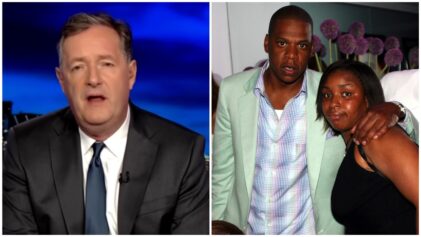
Piers Morgan wasn’t looking like a stand up kind of guy today in Great Britain. During his testimony before a government inquiry about his alleged involvement in the phone hacking scandal, the CNN talk-show host came off as very suspicious when he refused to answer questions about the illegal activities alleged to have occurred on his watch as the editor of the Daily Mail between 1995 and 2004.
“I have no reason…to believe [hacking] was going on,” he told the London-based panel via video link.
During his intense grilling, Morgan was asked whether he had listened at any time to a voicemail former Beatle Paul McCartney left for his then-wife, Heather Mills, to which the former America’s Got Talent judge admitted to have done so. Morgan also acknowledged he heard Sir Paul singing “We Can Work It Out” when the couple were trying to make up after a nasty fight. However; on grounds that “it would compromise a source,” the former editor declined to reveal the source of the tape or how he was able to hear the tape in the first place.
Mills had previously stated that there was no way anyone would have heard the message unless she was hacked.
Morgan adamantly denied having listened to a hacked message and refuted suggestions that he was “directly involved” in hiring private investigators to retrieve information for the tabloid. He also stated he did not condone the apparently widespread practice of paying police informants for tips.
Piers dug his hole deeper when he answered the question “whether eavesdropping in on a private recording was ethical?” with,
“It doesn’t necessarily follow that listening to someone else talking to someone else is unethical,” he told the panel.
Inquiry chairman Lord Justice Leveson subsequently threatened to call Mills in to testify that she did not give permission for anyone to listen to that voice message.
The one thing that Piers Morgan did finally confess to was that his staff digitally altered an August 1997 photo of the late Princess Diana and boyfriend Dodi Fayed to make it look like they were kissing.
“Yeah, it was a stupid thing to do,” he said, while in the same breath adding, “We didn’t actually con the public because it was exactly the same as the picture that was going to appear in a rival paper the next day…it was to do with the introduction of digital photography…[but] we all thought, ‘This is not a good idea.'”
Wow just when you thought you knew your news anchor/reality TV judge, they reveal a whole other side that just doesn’t look good. Shame on you Piers Morgan!