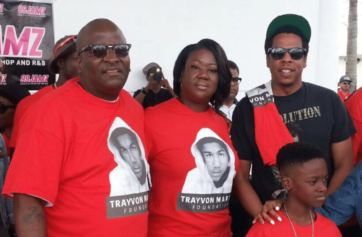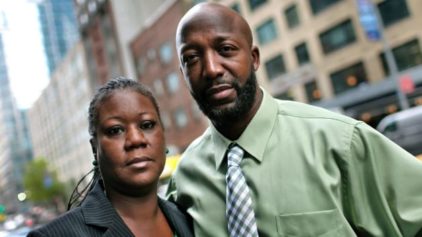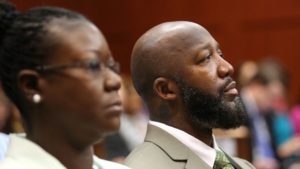
Sybrina Fulton and Tracy Martin
On Tuesday night, Tracy Martin, the father of slain Florida teen Trayvon Martin, spoke at the 30th Annual Charles W. Kegley Memorial Institute of Ethics at California State Bakersfield.
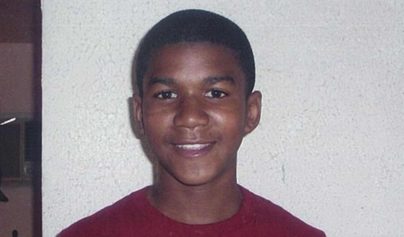
Trayvon was gunned down in 2012 by neighborhood watchman George Zimmerman after coming home from a convenience store.
While speaking at the institute, Tracy Martin reflected on his son’s life and how he wants him to be remembered.
Martin said Trayvon should be remembered “not as the iconic image of the hoodie, but as the African-American boy who galvanized the country.”
Martin referenced the Black Lives Matter movement, which started the same year of his son’s death. Founders Alicia Garza, Patrisse Cullors and Opal Tometi were inspired to do something about rampant police brutality and created a network of 28 local chapters as a response. The hashtag was only the beginning of a national movement that has challenged police corruption and inspired justice reform.
“Everywhere I go, people say ‘you’re a celebrity.’ I beg to differ. I’m a father who cares about his kids. If I was to sit here and tell you guys that I’m a celebrity, then I am just as guilty as the man who pulled the trigger and killed an innocent,” Martin said.
Trayvon’s mother, Sybrina Fulton, and Martin have made media rounds discussing police brutality, race and crime. Just three months ago, Fulton came out to endorse Hillary Clinton.
The Bakersfield Californian stated that Martin could not bring himself to say Zimmerman’s name throughout the course of the lecture. His speech discussed more than his son. He also talked about crime in Black communities and demanded that Black people “stop throwing away that letter from the clerk of courts that says ‘jury duty.’ ”
“Trust me when I say that white America can’t survive without Black America. We need each other,” Martin said.
The activist also brought up the need for jobs in poverty-stricken communities that are accustomed to crime and violence.
“If your means of feeding your children is being out on the corner hustling, it’s hard for me to tell you to stop feeding your family. Until the government steps in and says ‘here’s jobs in the African American communities,’ and comes down with a plethora of jobs for us, we gonna be lost,” Martin said. “We gonna keep killing one another. I tell people all the time that we are committing genocide.”
His speech urged Black people to also look at the violence in these communities and try to do something about it.
“We’re on the brink of extinction at the way these shootings and killings are going on. We keep the funeral homes and the penal system in business. When are we going to wake up? I’m a realist. We can’t sit up and scream that Black lives matter at any other ethnicity group if Black lives don’t matter to Black people.”
Martin reflected on his own life after the tragic shooting of his son and was asked what kept him from seeking vengeance. He said he wanted to “take care of business” but thought better of it, knowing the all-true nature of justice in this country. He knew that his other children — who were already brotherless — could also be fatherless and that he could be incarcerated.