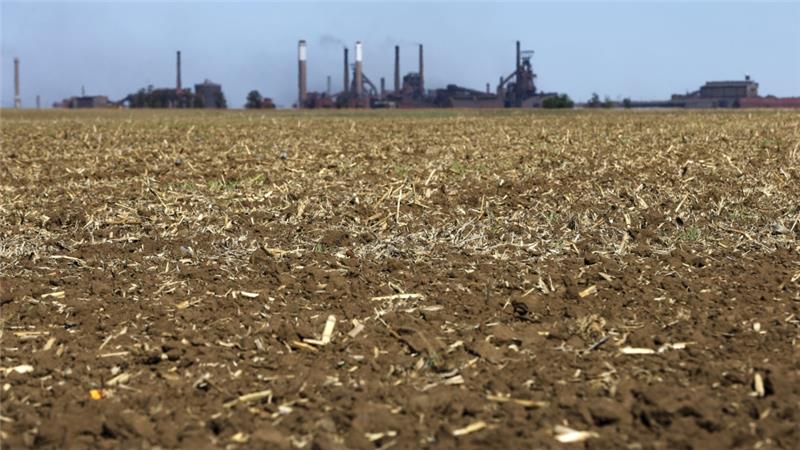
 South Africa is facing its worst drought since 1982, with more than 2.7 million households facing water shortages across the country, the government has said.
Lennox Mabaso, spokesperson for the local government department in KwaZulu-Natal, told Al Jazeera that the drought, concentrated in provinces of Free State and KwaZulu-Natal, was beginning to impact the livelihoods and drain the economy.
“The dams are at an all-time low. This is an epic drought and [the] government is doing the best it can do. As you can imagine, it requires a lot of resources, and it’s impacting everyone, rich and poor,” Mabaso said.
The ministry declared the KwaZulu-Natal and Free State provinces as disaster areas and warned that some 6,500 rural communities across four provinces face water shortages.
South Africa’s capital, Pretoria, has already implemented water restrictions.
On Wednesday, Reuters news agency, quoting an official, said the drought-hit northern Mpumalanga and Limpopo provinces would be declared disaster areas for agriculture in the coming days, a claim a spokesperson for the Department of Water and Sanitation would not confirm.
“The provinces of Limpopo and the North-West are currently under observation,” Mlimandlela Ndamase, ministerial spokesperson for the Department of Water and Sanitation, said to Al Jazeera.
The government has already allocated $26m to KwaZulu-Natal in a bid to mitigate the impact of the drought that has been blamed on the El Nino weather pattern. El Nino is expected to impact other parts of Southern Africa as well.
Wandile Sihlobo, an economist at Grain SA, told Al Jazeera that summer crops (soybeans, maize, sugarcane) and livestock farming are likely to be hardest hit by the drought, and consumers were likely to see food prices elevated for some time to come.
“The concern now is about the next crop. It’s the optimum time to plant, but it’s still too dry, and with the failure earlier in the year, farmers are under further strain,” Sihlobo said.
Read the full story at aljazzera.com