5 Historic Examples of Cooperative Economics (Ujamaa) That Advanced The Black Community


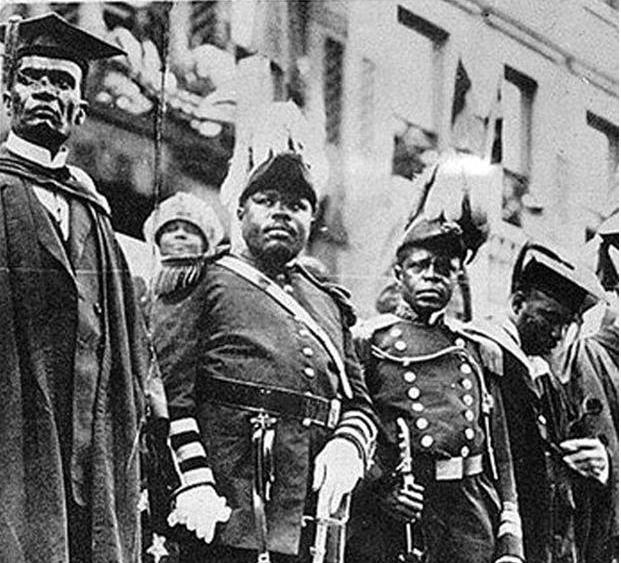
marcus garvey unia

Universal Negro Improvement Association (UNIA)

In 1914 Marcus Garvey founded the Universal Negro Improvement Association (UNIA), the largest movement across territorial borders among the African peoples during the 20th century. By the early 1920s the UNIA could count branches in almost every Caribbean, Latin America, and sub-Saharan African country with membership swelling to 8 million. Under Garvey’s leadership, the UNIA encouraged entrepreneurship, attracted millions of Black people to buying from Black-owned business.

Established in 1919,  the Negro Factories Corporation, one of the UNIA’s ventures, with a capitalization of $1 million, sought to build and operate factories in the big industrial centers of the United States, Central America, the West Indies and Africa.  It generated income and provided about 700 jobs by its numerous enterprises: three grocery stores, two restaurants, a laundry, a tailor shop, a dress-making shop, a millinery store, a printing company and doll factory.

Incorporated in Delaware as a domestic corporation on June 27, 1919, the Black Star Line Inc. was capitalized at $10 million. It sold shares individually valued at $5 to both UNIA members and non-members alike. Proceeds from stock sales were used to purchase ships to facilitate the transportation of goods and eventually African Americans throughout the African global economy.

 

Democracy needs journalism it can trust.

This election season, the stakes are higher than usual — and so is the pressure on newsrooms to soften their coverage, stay quiet, or just disappear. Independent reporting, the kind that answers to readers instead of advertisers or political pressure, matters more in a moment like this, not less.

For over 14 years, Atlanta Black Star has stayed independent and reader-funded. We have no corporate owner and no shareholders telling us what to cover or how to cover it. That independence is also our biggest vulnerability: nothing protects it except readers choosing to fund it directly.

Newspaper ad revenue has fallen more than 80% since 2005, and local newsrooms are closing at a rate of roughly two a week nationwide. When outlets go under in a moment like this, it's rarely the independent, reader-funded ones that get to stick around.

We know a request for support isn't why you came here. But without readers choosing to fund this work directly, the depth of reporting we can do at home and abroad shrinks along with everyone else's. If you're not in a position to give, that doesn't change how much we value you as a reader.

If you are able to, a recurring contribution does more for us than a single one-time gift, because it lets us plan the next investigation instead of just the next invoice. It takes about 30 seconds, no long form, no account. Thank you for continuing to support independent journalism and freedom of the press.

Back to top