
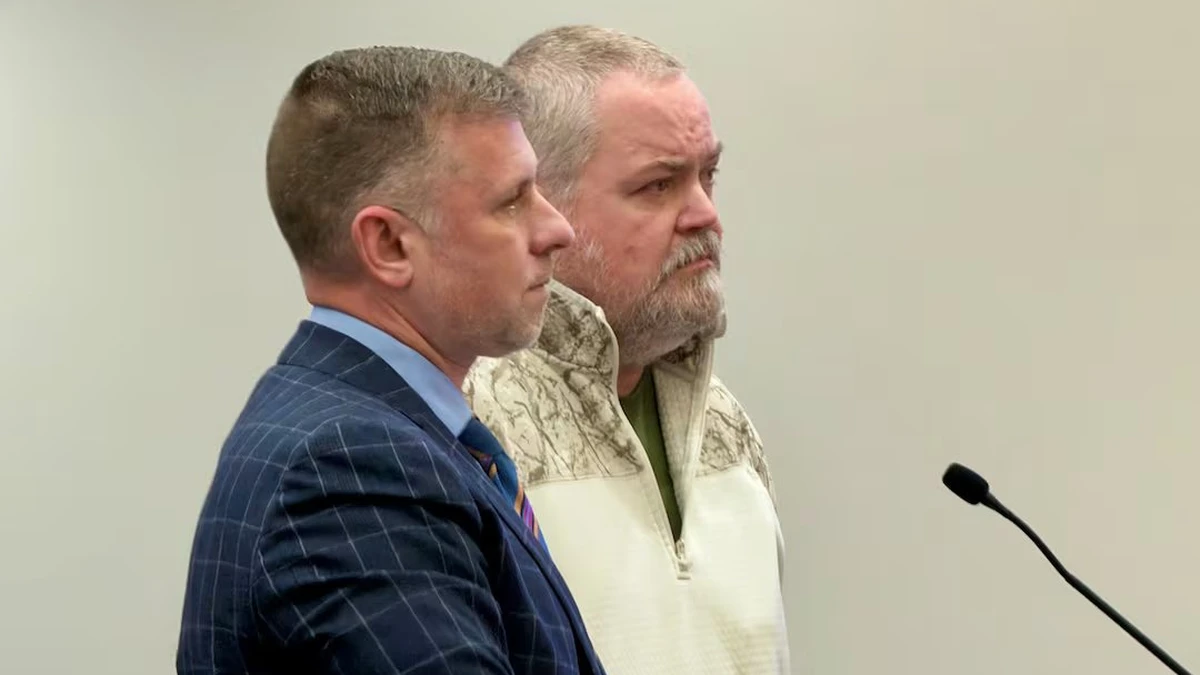
A Michigan man will spend time in jail after unleashing a racist tirade against a Black woman during a parking lot dispute, including remarks about bringing back lynchings that a judge called “outrageous.”
Randall Lee Miller, 55, pleaded guilty to a hate crime stemming from a March 10 confrontation outside an Aldi grocery store in Cascade Township, near Grand Rapids.
Kent County Circuit Judge George Quist sentenced him Monday, Nov. 23, to 30 days in the Kent County Jail, followed by two years of probation.
As per MLive, Miller declined to speak before the judge handed down his sentence. His attorney, Ryan Maesen, asked the court to avoid additional jail time, describing the confrontation as a “really rotten day” for his client and arguing that Miller had learned to “just keep your cool.”
Quist disagreed, focusing on the racial threats Miller directed at the woman during the encounter.
“That is an outrageous thing to say in modern society,” Quist said while reading from the police report. “I do believe that warrants 30 days in jail.”
The confrontation began when the woman, identified in court records as Stephanie Stevens, was pulling into the Aldi parking lot on 28th Street SE. According to her account, Miller, who was driving a red Jeep, cut her off, prompting an argument between the two motorists.
The exchange quickly escalated. Stevens told deputies that Miller began shouting racial slurs at her, including calling her a “—— —–,” before making comments about lynching Black people.
“You’re the reason why we need to bring back hanging ——- from trees,” Miller allegedly told her, according to court documents.
Miller also made remarks about white privilege, President Donald Trump, and the American flag while pointing at his skin, according to the probable cause affidavit. At one point, he began striking the side of his vehicle with his hand while continuing to yell.
Stevens initially laughed, stunned by what she was hearing. However, she said Miller’s behavior became increasingly aggressive, leaving her afraid the confrontation could turn physical.
She was speaking with a colleague over the phone during the incident. The colleague later told investigators she could hear Miller’s racial insults and threats during the exchange.
Stevens previously testified that Miller’s actions frightened her, particularly when he began banging on his vehicle.
“Because he was banging on the door (of his own car), that’s where I started to feel threatened because it had heightened. Then it went from words to, like, banging, like physical,” she said.
Although Miller did not strike Stevens or damage her vehicle, she said she interpreted his comments as a threat against her.
Miller later told investigators that he believed Stevens’ vehicle was going to hit his Jeep. He claimed she began yelling profanities at him first and acknowledged using racial slurs during the confrontation.
Deputies also said Miller admitted referencing lynchings, explaining that he made the comments “to get a rise” out of Stevens.
According to court records, Miller also told the woman he had advantages she would never have because she was a Black woman, specifically referencing “Trump and the law.”
Miller eventually left the parking lot. Stevens said she later saw him entering the store, where he denied the interaction. She contacted police the following day, and deputies identified Miller through his license plate before speaking with him.
During an earlier court hearing, Deputy Brielle Davenport testified that Miller also described what he would say to women of other racial backgrounds.
If he were speaking to a white woman, he allegedly said, “Shouldn’t you be fixing me meals and birthing babies right now?” In reference to an Asian woman, he allegedly said, “Thank God for Hiroshima. Have you had any barbecue lately?”
Miller initially faced a felony hate crime charge involving a true threat and could have received up to two years in prison and a $5,000 fine. He ultimately pleaded guilty to the hate crime charge in August.
The court ultimately sentenced Miller to 30 days behind bars and 24 months of probation, concluding that the racist threats warranted punishment beyond probation alone.


