Vice President JD Vance appeared caught off guard when a grieving military husband challenged him over the weekend, asking who would be held accountable for the leadership failures that led to his wife’s death in the Iran war.
The exchange took place Saturday during a CBS News town hall in Michigan, where Joey Amor challenged Vance over what he called “fundamental failures” in President Donald Trump’s war with Iran.
Amor pressed the vice president on how the administration planned to hold military leaders accountable for decisions that may have cost American service members their lives.
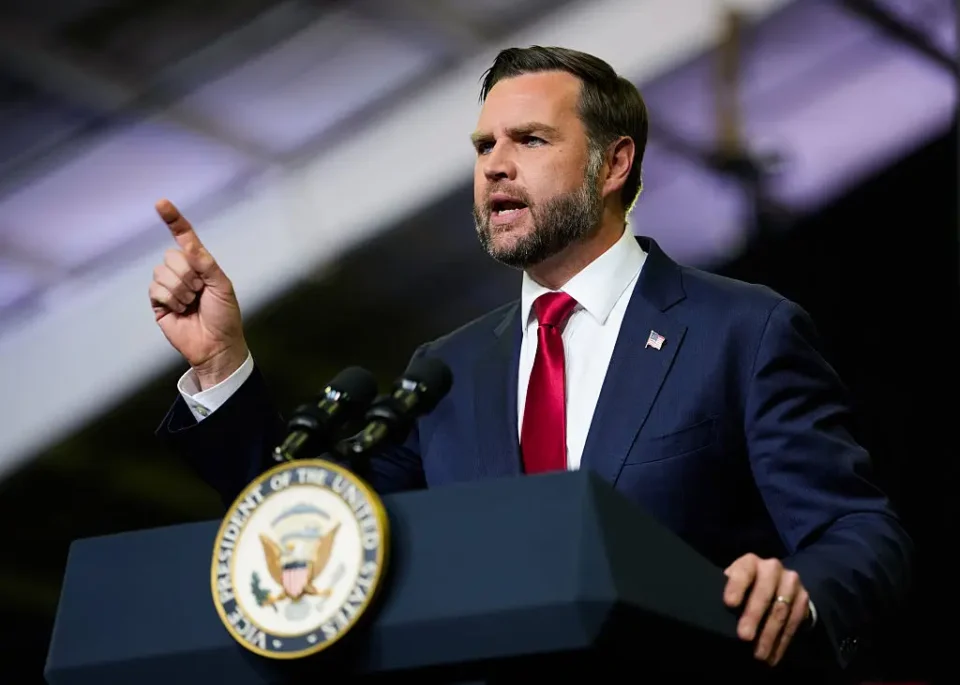
Vance responded that he had not heard of any such failures.
Amor then explained that his wife had told him things before she died and suggested that other soldiers were keeping quiet about what happened. Rather than directly address the reported breakdowns, Vance said the allegations were new to him, suggested officials had already corrected some problems and promised to investigate further, according to reports.
An Iranian drone strike on Port Shuaiba in Kuwait killed Amor’s wife, Master Sgt. Nicole Amor, 39, and five other U.S. service members on March 1. The attack also wounded more than 20 troops and has since prompted questions about whether military leaders adequately addressed potential threats and prepared for an assault.
“Though the Iranian drone was the weapon that killed my wife, there were a lot of mistakes and a lot of fundamental failures that led up to that,” Amor told Vance during the town hall.
“My wife has told me things before she passed. There are other soldiers that know things that are being quiet about certain aspects of this,” he continued, calling his wife’s death a “failure of leadership.”
He then asked the vice president to explain how the administration intended to hold those responsible to account.
“I want to know how this administration is going to start holding those leaders accountable for the actions and the deaths of the soldiers that we honor and that we love,” Amor said.
Vance initially expressed sympathy for the family, describing Nicole as a “precious human who served her country honorably” and saying the nation owed them a debt of gratitude. But when addressing the allegations about military decision-making, he did not directly answer Amor’s question about accountability.
“If there were failures… This is the first time I’ve heard of this,” Vance said, according to video circulating on social media. He later elaborated: “When you talk about failures that were, that we were implicated in…..this literally [is] the first time I’ve heard of this.”
CBS News previously reported that decisions before the strike may have exposed American troops to unnecessary danger. According to the network’s investigation, military leaders rejected plans to move personnel to safer positions in Saudi Arabia despite intelligence warnings that Iran could target the Kuwaiti port.
Vance acknowledged that at least some of the concerns raised might involve problems the administration had already recognized.
“Now, it may be that some of the things that you’re talking about are things where our tactics have already improved,” he said. “There were issues with where troops were located that we realized were a huge mistake and that we could do better on, and we have changed that.”
Vance vowed to look into the matter, adding, “This is not something I’m going to forget.”
The exchange drew harsh reactions online, with viewers questioning Vance’s response to questions about the deaths of American service members in the Trump administration’s war with Iran.
One commenter asked whether ignorance could excuse a senior administration official’s lack of answers.
“It’s always ‘this is the first time I’ve heard of this’ with Vance. At some point, ignorance stops being an excuse and becomes a failure of leadership.”
Others focused on the exchange’s emotional weight and Vance’s response to a husband seeking accountability.
“Awful response. Truly horrific.”
Another added: “This was so painful to watch!”
One person’s reaction was more scathing toward the vice president, saying: “Absolute soulless, craven, psychopath.”
Amor’s questions come amid growing scrutiny of the circumstances surrounding the deadly strike. CBS News reported that military personnel had considered relocating troops from Kuwait to sites in western Saudi Arabia before the war began. The proposed locations included a logistics support area near Yanbu and Prince Sultan Air Base southeast of Riyadh.
Instead, the unit’s commanding general, Brig. Gen. Clint Barnes, opted to move personnel to Port Shuaiba, despite intelligence indicating a potential threat to the site. Sources told CBS News that Army intelligence officials began briefing Barnes about the port’s vulnerability in January, weeks before the United States launched Operation Epic Fury.
One service member questioned the decision to return to the port, telling CBS News, “Shuaiba was the easy button.”
The investigation also raised questions about medical preparedness. Survivors said requests for additional medical personnel and supplies had gone unfulfilled before the attack. According to their accounts, wounded troops had to improvise treatment using makeshift bandages, braces and tourniquets before commandeering civilian vehicles to reach local hospitals.
Maj. Stephen Ramsbottom said the lack of medical support may have cost Nicole Amor her life.
“This was a failure,” he said in an interview with CBS, adding that she might have survived if a doctor, a fixed aid station or more than one ambulance had been available.
The Pentagon has pushed back against allegations that the military failed to protect the troops. Spokesperson Sean Parnell previously said “every possible measure has been taken to safeguard our troops — at every level,” adding that the facility had been fortified with “6-foot walls.”
The town hall exchange came as the administration faced broader questions about the war, which has killed at least 21 U.S. service members, according to The Hill, citing the Pentagon’s casualty database. The conflict began in late February, with Trump initially predicting it would end within weeks.
Vance defended the president’s decision to go to war during the event, arguing that preventing Iran from obtaining a nuclear weapon justified the campaign.
“The president of the United States did this because he believes it is very important, and I think he’s right; I think most people here would agree, even if they don’t agree with all the particulars of the policy, to say Iran, the largest state sponsor of terrorism in the world, cannot have a nuclear weapon,” Vance said.


