At 5 a.m. on an October morning in 2017, at least seven FBI agents busted down the front door of a Black couple’s Atlanta home.
Agents detonated a flashbang grenade inside, terrifying Hilliard Toi Cliatt and his then-fiancée, Trina Martin, into hiding inside a bedroom closet.
Tactical agents dragged Cliatt from the closet, forcing him onto the floor in handcuffs while holding Martin at gunpoint. Her 7-year-old son, Nathan Watson, cried in the next room.
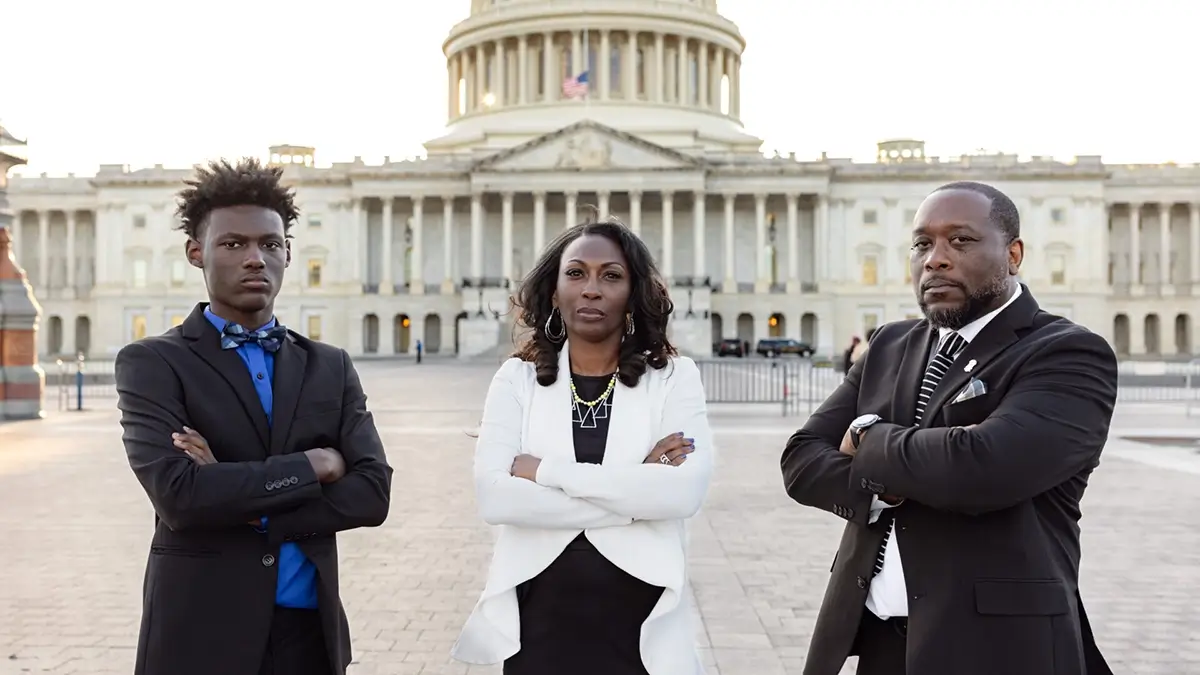
Only then did SWAT leader Lawrence Guerra notice that Cliatt lacked the facial and neck tattoos of their actual suspect, who lived three houses away on a different street. The agents left the traumatized family confused and shocked.
The couple sued but were denied justice by a district and appellate court under qualified immunity. They petitioned the U.S. Supreme Court, which overturned the decision and ordered a reconsideration.
On Wednesday, the 11th Circuit Court of Appeals ruled that the federal government remains protected but stripped Guerra of qualified immunity. Describing him as incompetent, the court allowed the lawsuit against the raid leader to proceed.
“Viewing the evidence in the light most favorable to the plaintiffs, a reasonable jury could fairly conclude that Agent Guerra failed to engage in reasonable efforts to avoid error and, therefore, violated the plaintiffs’ constitutional rights,” the 50-page decision states.
“Such plain incompetence has clearly violated the Fourth Amendment since at least 1995.”
The case now returns to district court with Guerra as the primary defendant. It is unclear whether the six unnamed agents remain in the suit.
Guerra blamed his personal GPS for directing agents to 3756 Denville Trace instead of the suspect’s address at 3741 Landau Lane.
However, Guerra threw the GPS device away shortly after the botched raid without explanation.
Guerra also claimed he took surveillance photos of the target house and drove by it the morning of the raid. Yet he never uploaded the photos to the FBI system.
Cellphone data also debunked his timeline, showing he only drove by the home after the raid took place.
“In addition to the evidentiary conflicts, there are also many undisputed facts that warrant denial of qualified immunity,” the court stated, noting the homes were separated by a cross street.
Citing past botched raids, the court ruled that modern technology gave Guerra multiple ways to confirm the address.
“This evolution makes Agent Guerra’s conduct more egregious because he had access to his GPS, his cell phone’s Google Maps, and text alerts providing a link to a Google Map with [the suspect’s] geolocation every fifteen minutes the morning of the raid,” the ruling states.
The court concluded that his actions showed a total failure to make a reasonable effort to identify the correct home.
Because the federal government has immunity protections, a multimillion-dollar judgment may be difficult for the couple to collect directly.
However, the Justice Department could cover damages through indemnification, a conditional process where an employer pays an employee’s legal liability.
The couple accuses Guerra of violating their Fourth Amendment rights through unlawful detention, false arrest, and entering the wrong home.
“When you’re not able to protect your child… that’s a feeling that no parent ever wants to feel,” Martin said in a 2025 interview with the Los Angeles Times.
“We’ll never be the same, mentally, emotionally, psychologically. Mentally, you can suppress it, but you can’t really get over it.”
Represented by the Institute for Justice, the couple vows to keep fighting.
“Our fight for justice is far from over, but this decision is another solid step forward,” Martin said.
“The raid on our home was a life-threatening mistake, it never should have happened, and the government needs to be held accountable.”


