Donald Trump has spent months turning Illinois Gov. JB Pritzker’s weight into political ammunition.
Now the Democratic governor has revealed that he was quietly transforming his health while Trump kept cracking fat jokes.
Pritzker previously dodged questions about his weight. The 61-year-old governor has now decided to tell his story.
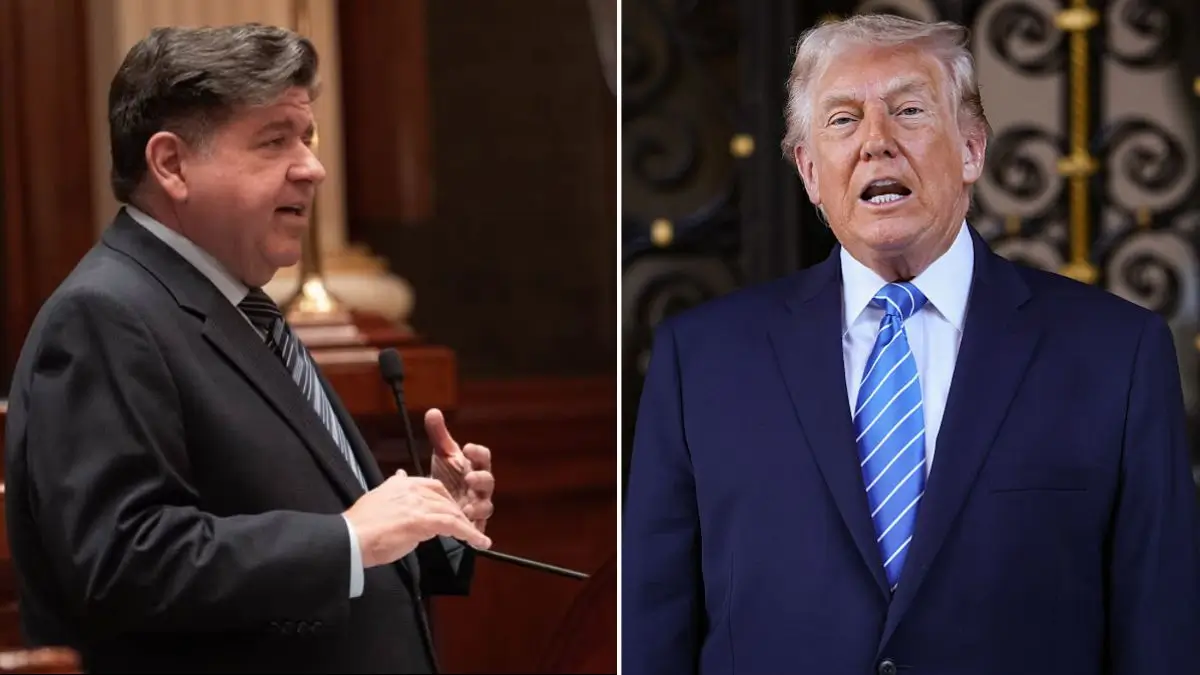
The governor told CBS News exclusively on Sept. 21 that he has lost approximately 80 pounds after taking a GLP-1 medication for nearly two years.
The treatment followed a Type 2 diabetes diagnosis that initially required insulin.
“I’ve been overweight most of my life, since I was probably 7 or 8 years old,” he said.
“The fact that I am now able to do it because this GLP-1 became available is truly like, I mean, it’s something that has meant a lot to me,” he added.
Pritzker no longer takes insulin and now walks nearly four miles most mornings.
The disclosure gives Pritzker a powerful response to Trump, who has repeatedly targeted his body during their escalating feud.
In August 2025, while criticizing Pritzker’s handling of crime in Chicago, Trump told reporters the governor “ought to spend more time at the gym.”
Trump returned to the subject at the White House turkey-pardoning ceremony on Nov. 25, when the president called Pritzker a “big, fat slob.” He then framed the insult as a joke he was refusing to make.
“They have a very cute little joke,” Trump said. “Some speechwriter wrote some joke about his weight, but I would never want to talk about his weight.”
“I don’t talk about people being fat,” he continued. “I refuse to talk about the fact that he’s a fat slob. I don’t mention it.”
Trump eventually conceded, “I’d like to lose a few pounds too, by the way.”
It was not the only time the former reality star admitted he is on the chunky side.
At a Sept. 8 ceremony honoring 9/11 victims and first responders at the Ellipse Park across from the White House South Lawn, Trump cast himself as an action hero, claiming two burly firefighters scooped him up when a nearby building began creaking. “Two firemen, big, strong guys, grabbed me under the arms. I’m not the smallest guy in the world. … They literally lifted me up. This is not easy to do. I’m big.”
While Trump and the GOP made Pritzker’s appearance part of their messaging, the governor said he was focused on avoiding the fate of his father, who died from a heart attack at 39.
When diet and exercise failed to lower his glucose levels, doctors determined he had progressed from prediabetes to Type 2 diabetes.
“I said, ‘Insulin? Wait a minute, I don’t want to be on insulin. That seems like something I’m going to have to do the rest of my life,'” he recalled.
Pritzker began taking insulin and a GLP-1 medication and committed to exercise.
He has not identified the drug because he does not want his experience interpreted as medical advice. However, he did joke in May 2026 at The Gridiron Club and Foundation Spring Dinner, “I’m the gov who put gov in Wegovy.”
When CBS shared Pritzker’s story on Instagram, one person wrote, “I’ve noticed he’s been slimming down. Good for him. People are horribly cruel in comments on his posts and memes online. I’m proud he is my governor.”
“Good for him. Love how he’s sharing his own journey to help others like him,” another Instagram user said.
On Threads, one supporter wrote, “Good for him. He’s a great governor. I’m sick of the jokes about his appearance.” Another added, “He is exactly who it was designed to help.”
One critic was less kind: “Lazy a– took the easy way. Go to a gym. Slob.”
Serena Williams’ story undercuts the notion that a GLP-1 is merely the “easy way.”
After decades of elite athletic training, Williams still struggled to lose weight after giving birth to her two daughters. She turned to a GLP-1 medication and lost more than 31 pounds, stressing it was not a “shortcut” but added help when disciplined eating and exercise stopped moving the scale.
Gym time and willpower alone cannot always address diabetes, hormonal changes, or medication-related weight gain.
Other celebrities agree. Oprah Winfrey said medication freed her from decades of shame surrounding her weight. Whoopi Goldberg turned to Mounjaro after steroid treatments pushed her toward 300 pounds.
Not every experience has been positive. Amy Schumer stopped taking Ozempic after severe nausea and fatigue, and Sharon Osbourne said she struggled to regain weight after losing about 42 pounds. Their stories show why these medications require medical supervision.
Pritzker insists his transformation was about his health and family, not a potential 2028 presidential run.
Still, should he enter the race, Trump may need fresh material. His favorite Pritzker insult just lost 80 pounds.
