A TikTok video of children walking in the desert in Arizona brought out the worst in humanity, leading a nearby school to go on lockdown and parents to wonder if their kids were safe.
Posted on Nov. 14 by TikTok user Canvas Tent Queen, whose account appears to be disabled, the video, set to dramatic music that would be at home in a movie like “Red Dawn,” opens with a wide shot of roughly 25 to 50 children who are instantly categorized as others.
But this was no invading force. They were Navajo students from a charter school east of Flagstaff completing their quarterly wellness walk. Needless to say, their American roots run deeper than any TikTok Karen’s.
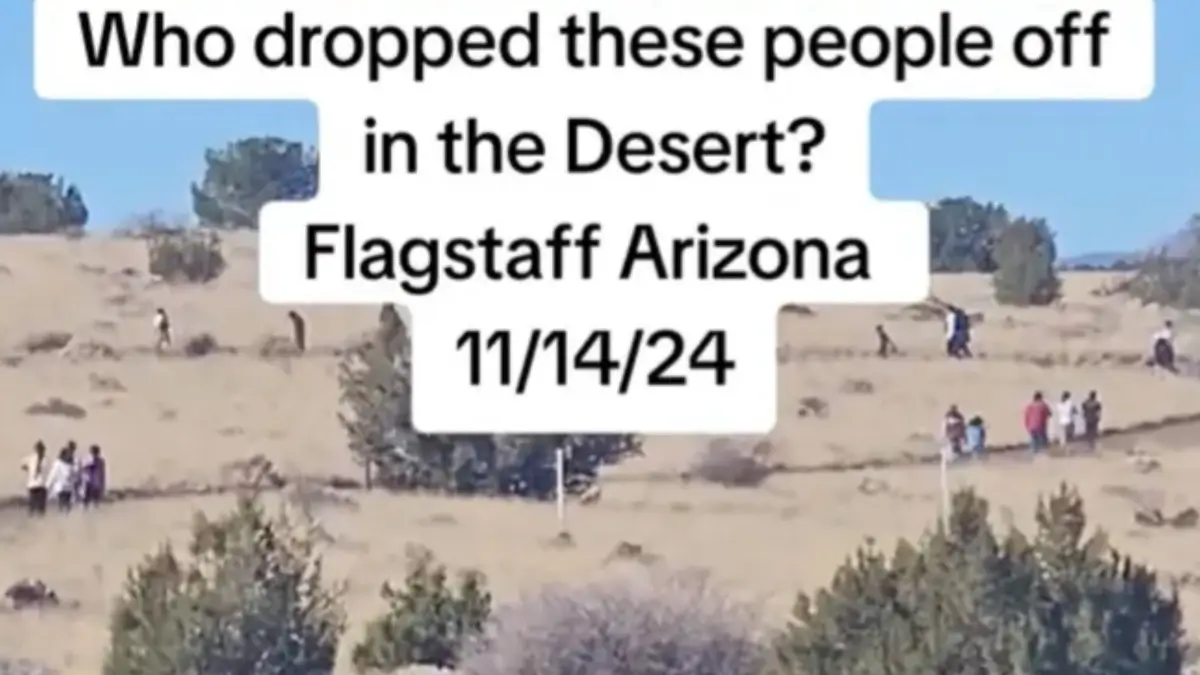
None of them could have known they would soon be subject to hundreds of violent threats from people reacting to Canvas Tent Queen’s video, which received more than 200,000 views. One commenter said it was time for people “to get your gun out,” while another said he’d use the children for “target practice.”
Comments were eventually disabled. However, administrators at nearby Star School had seen the threats and took action, imposing a soft lockdown and canceling after-school activities. A community meeting with representatives from the Coconino County Sheriff’s Department was held Monday.
“We are a small school. The unfortunate thing about this is it was very triggering for a lot of people,” Jeannie Gross, the principal of the K-8 charter school, told The Arizona Republic. “Middle school students are on TikTok, and they saw those comments before they were taken down. It’s fearful when people are talking about guns, target practice, and those types of things.” “
The video that created the ruckus was clearly intended to cause alarm. The woman narrating the video begins by anxiously pointing out that the children, accompanied by a few adults, are “speaking a foreign language … I can’t understand what they’re saying.”
What she heard was Navajo, or Diné Bizaad, the most widely spoken Native American language in the U.S.
The video maintains the fearmongering, with the woman telling viewers she’s “out here in the middle of nowhere … 36 miles from the nearest gas station” in Flagstaff.
“Where did these people come from?” she asked, the alarm in her voice matching the cheesy, pulsating soundtrack. “Who dropped them off here?”
“This doesn’t look good,” she concludes, adding she planned to contact her husband to see what they should do about what’s portrayed as an invading force.
Police would later interview the woman, who said she did not know she was filming students and was unaware of a school being located in the vicinity.
“It’s an open area,” said sheriff’s spokesman Jon Paxton. “She may have been aware of the school but was wondering what people are doing out in this area that she considers open. She worded many things wrong.”
It’s possible she was unaware that a vibrant Native American community resides in Flagstaff, including Navajo, Hopi, and Apache individuals who live, work and attend school in the area. The Navajo Nation spans 27,000 square miles and three states: Arizona, New Mexico, and Utah.
It’s not clear where the woman, who apparently lives in a canvas tent, is from. She faces no criminal charges, Paxton said.
“There was no overt threat,” he said.
She tried to explain herself in a follow-up video, which is no longer available online. The Arizona Republic printed parts of the woman’s comments, in which she repeated that she had no knowledge of the Navajos or the nearby reservation.
“There is nothing to worry about,” she said. “When you are in Arizona, you have to worry about these kinds of things. There is all kinds of stuff going on with the border and everything here in Arizona. It’s sad that we live in a day that you would have to immediately get that kind of fear in your heart, unfortunately, that’s the world we live in. But the sheriff did verify and everything is good.”
Gross said the incident won’t be that easily forgotten. Emotions were raw at Monday’s meeting, she said.
“A lot of our families have experienced racism in their lifetime to some degree, and that’s triggering,” the principal said.


