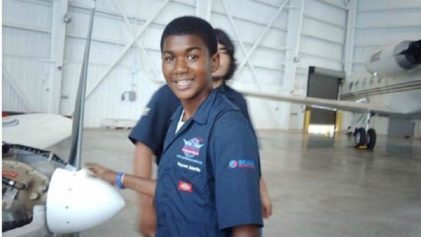
Tomorrow marks the one-year anniversary of Trayvon Martin’s death and mourners will gather for candle-light vigils at Fort Mellon Park in Sanford, Fla., and at the University of Central Florida. For others around the country, the anniversary will be acknowledged by a period of reflection on the impact of the shooting death of the unarmed 17-year-old black male at the hands of neighborhood watch captain George Zimmerman.
It took days for the story of Martin’s death and law enforcement’s failure to arrest Zimmerman to make its way into the national news. The weeks it took for the arrest to be made prompted criticism of Florida’s “stand your ground” gun laws, and outrage at the perceived racial bias in the case’s handling.
Some believed that the quiet Florida city would become a center for civil rights protests, as demonstrators donned hoodies in nationwide support of Martin, asking, “Am I next?”
A year later, the cries for justice and equality have been quelled. Zimmerman’s murder trial is set to begin in June, after the case judge rejected defense attorneys’ request for a delay. Zimmerman has pleaded not guilty to charges of second-degree murder.
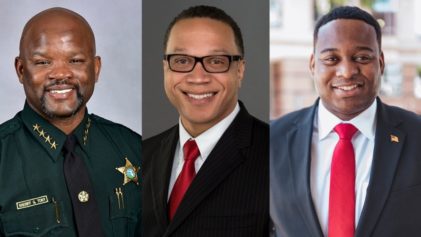
Sanford’s police chief was fired for the department’s handling of the case, and his replacement, Cecil Smith, is a black man. Smith will begin his job April 1, telling Florida’s WFTV, “My goal in the police department is to make sure nothing like this happens again.”
Even as Sanford recovers from the tragedy, the shooting has apparently had little effect on Florida’s rampant gun culture. A recent report from a state-commissioned task force, found that the “stand your ground” law is acceptable in its current iteration, though it acknowledged racial disparities in the application.
A study conducted last year found that 73 percent of defendants who enacted the self-defense statue where declared innocent in cases where the victim was black. Additionally, 61 percent of white voters polled after the Martin shooting were still in favor of the “stand your ground” law, while the majority of black voters were not.
Zimmerman has claimed throughout the proceedings of the case that he was attacked by Martin and feared for his life. He admitted to following Martin on the night of the shooting, despite a direct order from a 911 dispatcher not to follow the teen.
The neighborhood watch captain first followed Martin in his car, then by foot, leading to a direct confrontation. Defense attorneys claim that the confrontation went beyond the bounds of “stand your ground,” and into the realm of traditional self-defense.
Photos from the scene showed Zimmerman with bruises and wounds to his head, as well as a bloody nose, supporting his claims of a physical altercation. Initial reports suggested that the fatal shooting was largely unprovoked, leading Zimmerman to sue NBC for the use of “deceptive and exploitative manipulations” to increase interest in the case.
Large-scale national coverage is perhaps one of the most troubling components of the case, as an initial lack of information and coverage led to escalation. The under-representation by the media of crimes against minorities is an issue that extends far beyond Martin’s case, and often provokes underlying racial tension in America.
Racial bias permeated through many aspects of the shooting, from Zimmerman’s unwarranted suspicion, to the law enforcement’s lack of action and the media’s initial inadequate coverage.
One year later, those factors are still being questioned as Zimmerman’s trial date draws closer. Now, the case will have the full attention of the nation and more.
“It’s not just local eyes that are looking,” Sanford resident Shantree Hall told The Associated Press. “It’s the international eyes that are looking too. Sometimes you can fall weak and can’t stand upon your own feet to fight a battle, but people look at that battle and fight it for you. And that’s what happened in Sanford.”