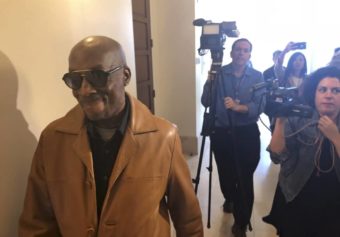
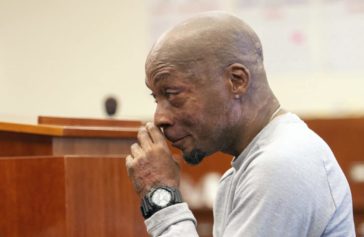
A California groundskeeper dying of cancer testified Monday before a jury hearing evidence in his lawsuit blaming popular Monsanto weed killer Roundup for his fatal illness, Agence France-Presse reported.
The trial is the first of its kind to accuse Roundup of causing cancer, a claim the agro-chemical company has vehemently denied. Lawyers for Dewayne Johnson, a 46-year-old school groundskeeper who used the product regularly, says evidence proves otherwise.
“For the past 40 years, Monsanto has known the primary ingredient in Roundup can produce tumors in lab animals,” Johnson’s attorney Brent Wisner said during opening remarks to the court, telling jurors his client would’ve never used the weed killer had he known it was carcinogenic.
“I would never have sprayed the product around school grounds or around people if I thought it would cause them harm,” Johnson also told the San Francisco Superior Court jury. “They deserve better.”
According to the San Francisco Chronicle, Johnson worked as a groundskeeper and pest-control manager for the Benicia Unified School District from 2012 until May 2016. He recalled being accidentally doused with the product on at least two occasions, one of which left rashes and lesions on his back.
Johnson said he called the Monsanto Co. twice to ask if the herbicide he was using was potentially harmful to humans. The representative on the other end said someone would call him back. They never did.
“If they just would have called him back, he would have stopped spraying, but his cancer got worse and worse and worse and during that time he was spraying,” Wisner said.
The ongoing legal battle, which is expected to last into August, involves competing studies about the weed-killer’s cancer-causing potential, as well as claims that Monsanto conspired to suppress potentially damning research about their product. The key to Johnson’s case is now convincing jurors the pesticide did indeed cause his illness.
Johnson was diagnosed with non-Hodgkin’s lymphoma in 2014 after using a generic, but stronger version of Roundup called “Ranger Pro” repeatedly at his job. In court, the former groundskeeper said he “wore a sturdy jacket, rubber gloves, goggles and a face mask while he mixed the herbicide with water in 50-gallon drums and sprayed it 20 to 30 times a year for two to three hours a day,” the San Francisco Chronicle reported.
His lawyer said the now-ailing man had little warning about the risk associated with using the herbicide, however, and claimed Johnson, who’s between rounds of chemotherapy, was even once told he could drink the product if he wanted.
“[Johnson] was told you could drink it, it was completely nontoxic,” Wisner told the court. “You will hear testimony from him that he got drenched in it, repeatedly.”
The lawyer also accused Monsanto of downplaying the suspected link between the herbicide’s active ingredient, glyphosate, and cancer and said it opted not to warn consumers about the potential risk. In 2015, the World Health Organization classified glyphosate as a probable human carcinogen.
The company has denied any link to Johnson’s terminal lung cancer, citing studies that proved its product is safe.
“Mr. Johnson’s cancer is a terrible disease. We all do and we all should have great sympathy for what he is going through,” said George Lombardi, a defense attorney for Monsanto. The scientific evidence is overwhelming that glyphosate-based products don’t cause cancer, and did not cause Mr. Johnson’s cancer.”