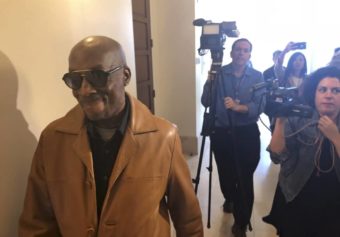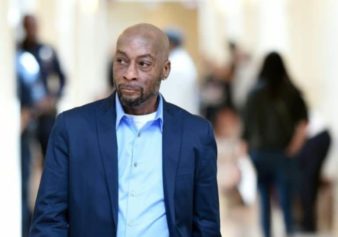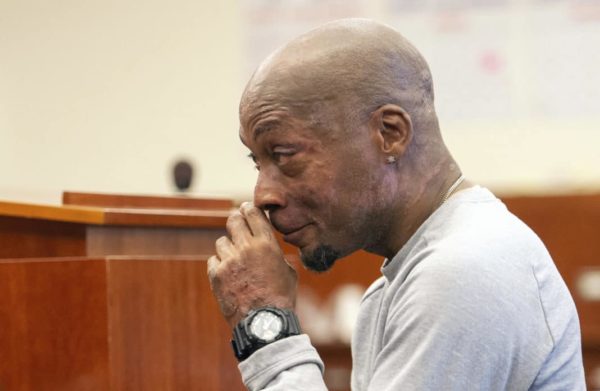
FILE – In this Aug. 10, 2018 file photo, Dewayne Johnson reacts after hearing the verdict in his case against Monsanto at the Superior Court of California in San Francisco. (Josh Edelson/Pool Photo via AP, File)
SAN FRANCISCO (AP) — A Northern California groundskeeper said Wednesday that he will accept a judge’s reduced verdict of $78 million against Monsanto after a jury found the company’s weed killer caused his cancer.
DeWayne Johnson’s attorney formally informed the San Francisco Superior Court that he would not contest the judge’s decision to reduce a jury’s original $289 million award.
Johnson could have demanded a new trial.
A jury unanimously decided in August that Monsanto’s Roundup weed killer caused Johnson’s cancer. His doctor testified that the 46-year-old has less than three years to live.
Johnson’s spokeswoman Robin McCall says his attorney disagrees with the judge’s settlement reduction, but will accept the lower amount in hopes of achieving “a final resolution within his lifetime.”
Monsanto spokesman Daniel Childs did not immediately return a phone call. He previously said the company planned to appeal every adverse verdict. The company is facing 8,000 similar lawsuits across the country.
The jury awarded $250 million in punitive damages to Johnson after it found that the St. Louis-based agribusiness had purposely ignored warnings and evidence that its popular Roundup product causes cancer, including Johnson’s lymphoma. But Judge Suzanna Bolanos ruled earlier this month that was too high and reduced the punitive damage to $39 million to match the other damages the jury awarded Johnson.
Punitive damages are designed to punish companies that juries determine have purposely misbehaved and to deter others from operating similarly.