
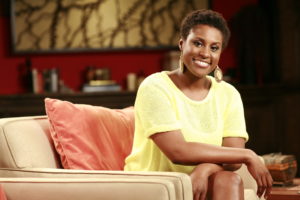
 Black Twitter was abuzz as HBO’s “Insecure” returned for its second season. Consequently, the show trended highly. Any sophomore effort runs the risk of not meeting expectations, but “Insecure” didn’t fall victim. The show’s fans seemed pleased that, despite the characters’ changing circumstances, main characters Issa, Lawrence and Molly were still as recognizable and as identifiable as they were the first season.
It’s no secret that as some Black shows have gained significant mainstream attention, their storylines and casting choices hint of second-guessing what got them there in the first place. Sometimes, in an attempt to satisfy that mainstream interest, they increase the numbers of white cast members or white guest stars and go for “broader” storylines in an effort to be more appealing. “Empire” immediately comes to mind, with guest stars like Marisa Tomei, Rosie O’Donnell and Rumer Willis. In contrast, the “Insecure” premiere included a Regina Hall cameo, as well as appearances from popular internet personalities and actors Keraun Harris, @Kingkeraun, Phillip Hudson, @PhillnMyself, and @LookAtDustin, who just goes by Dustin.
In February, the Nielsen report “For Us By Us? The Mainstream Appeal of Black Content” revealed that 61.54 percent of “Insecure” viewers were non-Black. Since “Insecure” had become a crossover hit, with Issa Rae even garnering a Golden Globe nomination for Best Actress in a Musical or Comedy TV Series, last month, at the American Black Film Festival (ABFF), “Insecure” panel moderator Bevy Smith asked Rae if that kind of attention affected the tone of the second season.
“We don’t worry about that,” said Rae, seated alongside co-stars Jay Ellis, who plays ex-boyfriend Lawrence, and Yvonne Orji, who plays the ultimate ride-or-die bestie Molly. Rae insisted that increased attention from white critics and white viewers had absolutely not affected the second season’s storylines.
“I think that once you start worrying about that, it becomes a different show,” Rae continued. “Nobody has ever, in the writers’ room, been like ‘Will white people get this? Will white people like this?’ Nobody cares. It’s this very specific voice and this very specific story about three main characters [Issa, Lawrence and Molly] at the end of the day. And, if that’s through a specific lens, then so be it.”
“We’ve been watching shows about white people for years and it’s not like they’re like, ‘Will Black people get this? Is this for them?’” she added.
But Rae admitted that the show’s heightened profile did induce some fear. “One of the biggest fears [about] season two [was] the pressure to go big or go harder, go crazier,” Rae told Smith before the intimate crowd gathered at Colony Theatre. But she said focusing on what mattered most in the story she wanted and needed to tell took away the pressure.
“At the end of the day, we’re a show about regular people,” Rae explained. “For me, it was about combating that [impulse] and making sure whatever we did felt real and felt like it could happen in real life.”
For many viewers, Issa’s fictional relationship with Lawrence, her longtime live-in boyfriend last season and ex-boyfriend this season, is of keen interest. So is her interaction with Molly, as well as Molly’s individual issues with her own relationships. Work and other issues affecting Black college-educated millennials transitioning from their late 20s into their early 30s also have resonated.
Lawrence finding out that Issa cheated on him has set off a chain of events that fuels the second season. Both of them are living apart and trying to figure life out. Issa is dating, for example. Lawrence is also going through a lot of changes.
“When you’ve been in a relationship for a long time and something like that happens to you, you don’t know which way to go and your feelings are kind of all over the place,” Ellis told Smith. “Maybe you run to something because it’s easy. Maybe you want to go back to something because it’s familiar and it kind of puts you in this push-and-pull [dynamic].
“I think, as men, we don’t necessarily use our words, as Yvonne [Orji] likes to tell me, and so we live in our heads and just get confused. And I think that’s kind of what’s happening with Lawrence.”
As for Molly, Orji said, “She’s trying to get help, but she gets in her own way a lot.”
Insecure airs Sunday nights at 10:30 p.m. ET on HBO.


