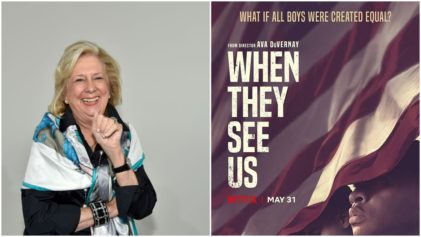
Director Ava DuVernay has been in the Hollywood spotlight for two years now after the mega success of her film Selma. After a 2015 Oscars shutout of her film, DuVernay has become a voice speaking out against Hollywood’s diversity problem in regards to people of color and women.
She has challenged the notion that Black filmmakers are left out because they are just not good enough, and she has already improved the industry by creating her film distribution company ARRAY, which focuses on films made by POC.
New York Times film critic Manohla Dargis created the term “DuVernay test” as a counter to the Bechdel test. The test was created/influenced by the work of cartoonist Alison Bechdel in a 1985 comic strip that requires two women to talk to each other about something other than the men in their lives.
Dargis said her “DuVernay test” would require “African Americans and other minorities [to] have fully realized lives rather than serve as scenery in white stories.”
So far there has been some response to the proposed test.
“Perhaps it’s just as well that Dargis doesn’t propose any specific measure for the DuVernay test; rather than producing a simply binary yes/no, it can serve similarly as a way to begin discussing the diversity, representation, and depth of the stories of minority characters in the films we make and watch,” explains Megan Logan for Slate Magazine.
The Bechdel test has been in the cultural zeitgeist for years, but it has not influenced studios to change the way films treat women. The “DuVernay test” may be more successful because 2015 has shown that Black-led films are extremely profitable. Only time will tell, but the “DuVernay test” looks promising.