7 Things You May Not Have Known About an Average Day for an Enslaved African in the Americas

slave quarters

Lived in Huts, Not Homes

Despite many depictions of enslaved people living in small, cramped quarters that resemble small fully wooden homes, even those quarters are much too luxurious for what enslaved people really had, historians Daniel Littlefield, William Dusinberre and Peter Wood explained, according to the article “The Lives of African-American Slaves in Carolina During the 18th Century.” Rather than small shacks with windows and small rooms, many enslaved people lived in incredibly small huts built with upright poles and usually covered in clay. These huts didn’t have windows, doors or real floors. Enslaved people who did live in small shacks that closely resembled small log cabins were usually drivers, the enslaved person who was in charge of watching and punishing the other enslaved people as they worked in the fields. Other larger abodes housed an incredible number of enslaved people, which made the quarters extremely cramped and unhygienic.
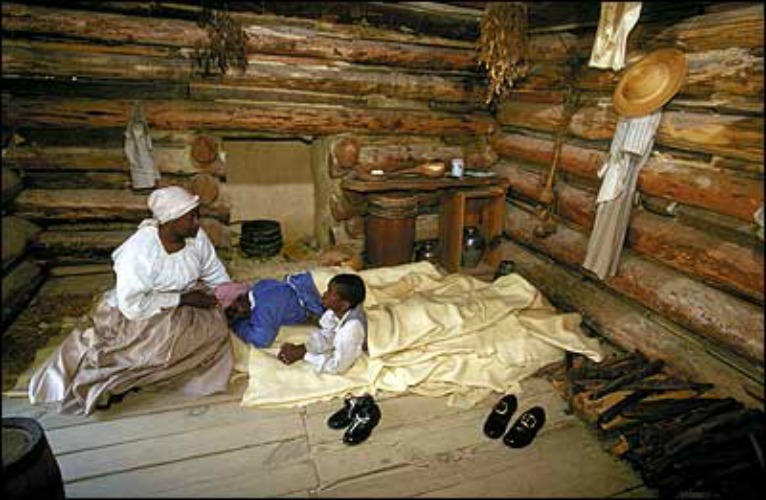


living conditions for enslaved people

Slept on the Ground

According to a report published by PBS, many enslaved people had nothing else to sleep on but a thin, dirty blanket, and they only received a new blanket once a year at the most. Some masters would not even replace the blanket that often, forcing some enslaved people to lay on a tattered blanket filled with holes. For enslaved people with wealthier masters, they would have wooden slabs to lie on but they still had to make do with very few blankets.

The ABS Newsletter — Stories that matter, in your inbox.

Independent journalism still matters.

We hope this story was worth your time. For over 14 years, Atlanta Black Star has stayed Black-owned and independently run. We didn't get here by waiting on ad budgets that were never built to prioritize us. Our readers did that.

Corporate support for Black media has always been thin. Outlets like ours get roughly 1% of the $170 billion spent on U.S. advertising each year, and that margin is shrinking further as advertisers walk back the DEI-linked commitments they made in 2020. That's the backdrop. It's not why we're asking.

The wider picture isn't any steadier. Newspaper ad revenue has fallen more than 80% since 2005, and local newsrooms are closing at a rate of roughly two a week nationwide. When outlets go under, it's rarely the ones built to center a Black perspective from the ground up that get to stick around.

We know a request for support isn't why you came here. But without readers choosing to fund this work directly, the depth of reporting we can do at home and abroad shrinks along with everyone else's. If you're not in a position to give, that doesn't change how much we value you as a reader.

If you are able to, a recurring contribution does more for us than a single one-time gift, because it lets us plan the next investigation instead of just the next invoice. It takes about 30 seconds, no long form, no account. Thank you for continuing to support independent journalism and freedom of the press.

Latest from Atlanta Black Star

Back to top