 To gain a valuable understanding of Black frustration in America, consider this statistic: the typical Black household has accumulated less than one-tenth of the wealth of a typical white one. And, according to researchers at Brandeis University, it’s only getting worse.
In five simple graphics, CNN.com outlined the economic disadvantages faced by African-Americans because of centuries of structural racism. But while Blacks in America have been facing inequality and discrimination for centuries, what’s especially disheartening is that researchers found the wealth gap between Blacks and whites has nearly tripled in the past 25 years.
While median household wealth for African-Americans was $6,446 in 2011, it was $91,405 for whites, a staggering difference. Homeownership is a major reason for the gap — the home ownership rate for African-Americans this year is just 43.5 percent, compared to a rate of 72.9 percent for whites.
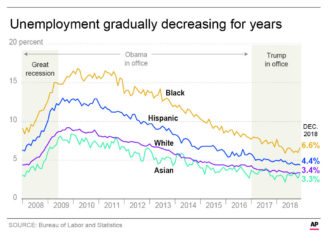
Of course, much of this starts in the workplace. The unemployment rate for African-Americans has consistently been double that of whites for many decades. In July, the rate for whites was 5.3 percent, compared to 11.4 percent for Blacks.
And once they are in the workplace, Blacks typically earn less than whites, making it harder to save, build wealth and buy homes. The median income for Black households ($35,416) is less than 60 percent than that of white households ($59,754). That adds enormous additional pressure on Black households and Black relationships.
Underlying it all is the huge difference in the poverty rate for Blacks and whites in America. While 9.7 percent of whites live in poverty, more than one of every four Blacks d0 (27.2 percent).