5 Historic Examples of Cooperative Economics (Ujamaa) That Advanced The Black Community

 “There exists today a chance for [Blacks] to organize a cooperative State within their own group.  By letting Negro farmers feed Negro artisans, and Negro technicians guide [Black] home industries and [Black] thinkers plan this integration of cooperation, while [Black] artists dramatize and beautify the struggle, economic independence can be achieved.  To doubt that this is possible is to doubt the essential humanity and the quality of brains of [Black People].”

W.E.B. DuBois, 1935
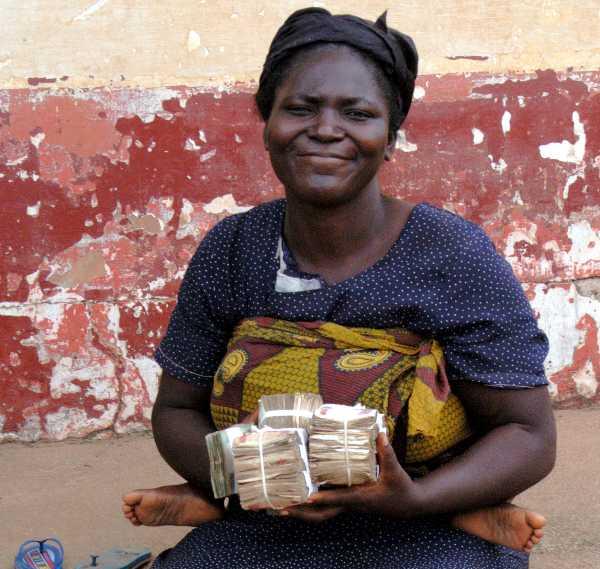
 

Microentrepreneur Stella Sabang

Susu

In parts of West Africa and the Caribbean an ancient version of cooperative economics exists, called “susu.” As one of the oldest forms of microfinance in Africa, the practice is run by one of Africa’s oldest financial groups, susu collectors.  They run their businesses from kiosks in the marketplace and act as mobile bankers.

Clients make low but regular deposits on a daily or weekly basis over the course of a month into a susu account. At the end of this period the susu collector returns the accumulated savings to the client but keeps one day’s savings as commission. Susu collectors may also provide advances to their clients or rotate the accumulated deposits of a group between individual members.

Today, susu collectors provide many West Africans who would otherwise be denied credit with access to money they need to start up small venture projects that in many cases benefit the community as a whole. In the United States, Black immigrants from the Caribbean have enjoyed one of the highest economic growth rates using a form of the susu and leveraging this practice to establish successful credit unions.

 

Democracy needs journalism it can trust.

This election season, the stakes are higher than usual — and so is the pressure on newsrooms to soften their coverage, stay quiet, or just disappear. Independent reporting, the kind that answers to readers instead of advertisers or political pressure, matters more in a moment like this, not less.

For over 14 years, Atlanta Black Star has stayed independent and reader-funded. We have no corporate owner and no shareholders telling us what to cover or how to cover it. That independence is also our biggest vulnerability: nothing protects it except readers choosing to fund it directly.

Newspaper ad revenue has fallen more than 80% since 2005, and local newsrooms are closing at a rate of roughly two a week nationwide. When outlets go under in a moment like this, it's rarely the independent, reader-funded ones that get to stick around.

We know a request for support isn't why you came here. But without readers choosing to fund this work directly, the depth of reporting we can do at home and abroad shrinks along with everyone else's. If you're not in a position to give, that doesn't change how much we value you as a reader.

If you are able to, a recurring contribution does more for us than a single one-time gift, because it lets us plan the next investigation instead of just the next invoice. It takes about 30 seconds, no long form, no account. Thank you for continuing to support independent journalism and freedom of the press.

Back to top