
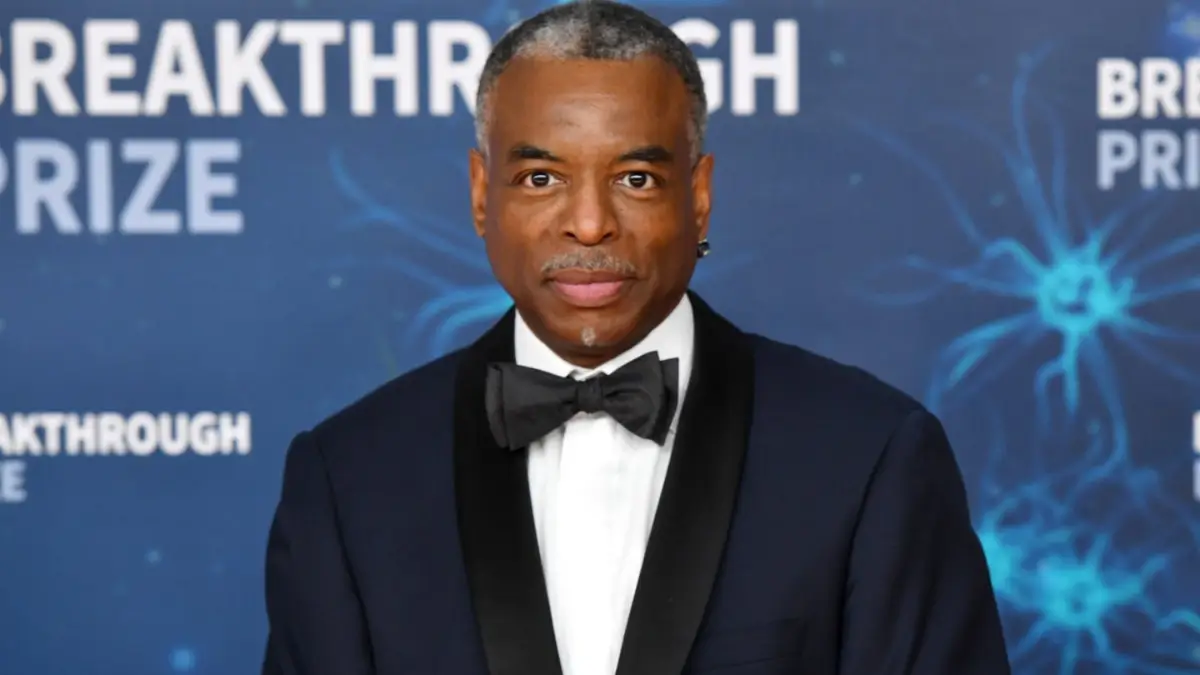
After decades of on-screen work, LeVar Burton is one of television’s most recognizable faces.
Burton won 12 Daytime Emmys and a Peabody Award during his 23 years hosting “Reading Rainbow.”
But real fans remember his breakthrough acting role as Kunta Kinte in the groundbreaking miniseries “Roots,” in 1977.
Despite feeling familiar on screen, Burton had a whole life outside of his roles that included domestic violence in his childhood. He also faced a mental health crisis while working at “Reading Rainbow.”
Still, the show gave him purpose and stability during a difficult chapter of his life. He explored these topics and more in his book, “Take My Word for It.”
In a Nov. 10 interview with PEOPLE magazine, Burton revealed how the educational children’s series shaped his life beyond the screen.
“Reading Rainbow” encouraged young viewers to love reading by featuring a different children’s book in each 30-minute episode.
Burton also took viewers on video field trips tied to each book’s themes, helping them explore real-world experiences and places connected to the stories.
The show ended each episode with children recommending their favorite books to other kids.
“I didn’t get its impact until the original ‘Reading Rainbow’ generation was old enough to confront me themselves,” Burton told the outlet.
He continued, “I’ve been through this moment enough to know that it is an offering of gratitude, that they are emotionally located in a moment of familiarity with me that came through the TV.”
The 69-year-old said it eventually hit him that the show wasn’t about him. It was about what he could give to others without even seeing them.
He found meaningful work hosting while looking for acting roles after “Roots.”
However, during his tenure on the show, Burton experienced a mental breakdown that was exacerbated by the stress of the entertainment industry. The actor had also been diagnosed with bipolar II disorder.
Still, Burton said the show provided stability and purpose during a difficult period in his life.
“It gave me an anchor and someplace to put my purpose while I was figuring myself out — figuring the parts of myself out that were still out there wandering around looking for a home,” he said.
Fans reacted to Burton’s recollection of “Reading Rainbow”’s impact in the comments.
One person who recalled his on-screen work said, “I remember him on Reading Rainbow and Star Trek. He was great.”
Another person complimented him, writing, “He looks like, dapper and grand in that photo lol. I loved Reading Rainbow when I was a kid, he had the most soothing voice. I like that the man behind the persona is just as warm and caring. Rare stuff.”
A third person showed Burton gratitude, typing, “What an impact he has made on SO many people in his life. Thank you, LeVar.”
Despite “Reading Rainbow” being beloved by Burton and generations of viewers, he revealed during a Nov. 10 appearance on “The View” that his relationship with the show’s producers wasn’t always smooth.
He said, “I fell in love with this beautiful woman…and she took me to get my ear pierced. And I was digging it, because she was digging. And they asked me to take the earring out.”
Burton never identified the woman. Therefore, it remains unclear if he meant his wife, Stephanie Cozart Burton, whom he married in 1992, or someone else.
In the 2022 documentary “Butterfly in the Sky,” Burton said Larry Lancit and Cecily Truett Lancit — who were the creators and producers of the show — also took issue with his changing hairstyles and facial hair.
Burton filmed the pilot without facial hair, so producers were surprised when he arrived for the first season with a mustache. They wanted him to keep the same look each season, but his changing appearance led to tense discussions.
He told “The View,” “They wanted me to conform with a version of me that they felt America would be more comfortable with.”
Burton stood his ground, insisting on staying true to himself and his personal style throughout the show.
Burton was born in West Germany to parents Levardis Robert Burton Sr. and Erma Jean Christian Burton. His father served in the U.S. Army as a photographer, requiring the family to move between Germany and the United States.
However, Burton’s parents had a violent marriage, and after his mom moved to Sacramento with him and his sisters, Letitia and Valencia Burton, his father did not accompany them. The couple later divorced.
Burton went on to study theater at the University of Southern California, where he learned about a casting call for “Roots.”
He told PEOPLE, “Roots is what brought to my attention the need, necessity, to connect to my ancestors. That’s been such an invaluable relationship, such an invaluable connection.”
The miniseries followed a Black family across several generations, tracing their experiences from enslavement in America through emancipation and its aftermath.
Burton’s memoir, “Take My Word for It,” co-written with Tracey Michae’l Lewis-Giggetts, is out now.


