Virginia police drove past a hospital as Allan Tucker II pleaded for medical help, then kept him handcuffed in a patrol car outside a jail until he became unresponsive, a federal lawsuit claims.
Tucker, a 32-year-old Black man, was hallucinating and showing signs of severe drug-related distress when Alexandria officers arrested him on Aug. 15, 2025. His mother, Sandra Jones, accuses officers of denying him urgently needed treatment and violating a department policy requiring hospital care for arrestees who request it.
“Please take me to Alexandria Hospital,” Tucker pleaded as Officer Chelsea Henry drove past the hospital’s entrance, according to the complaint Jones filed Oct. 22.
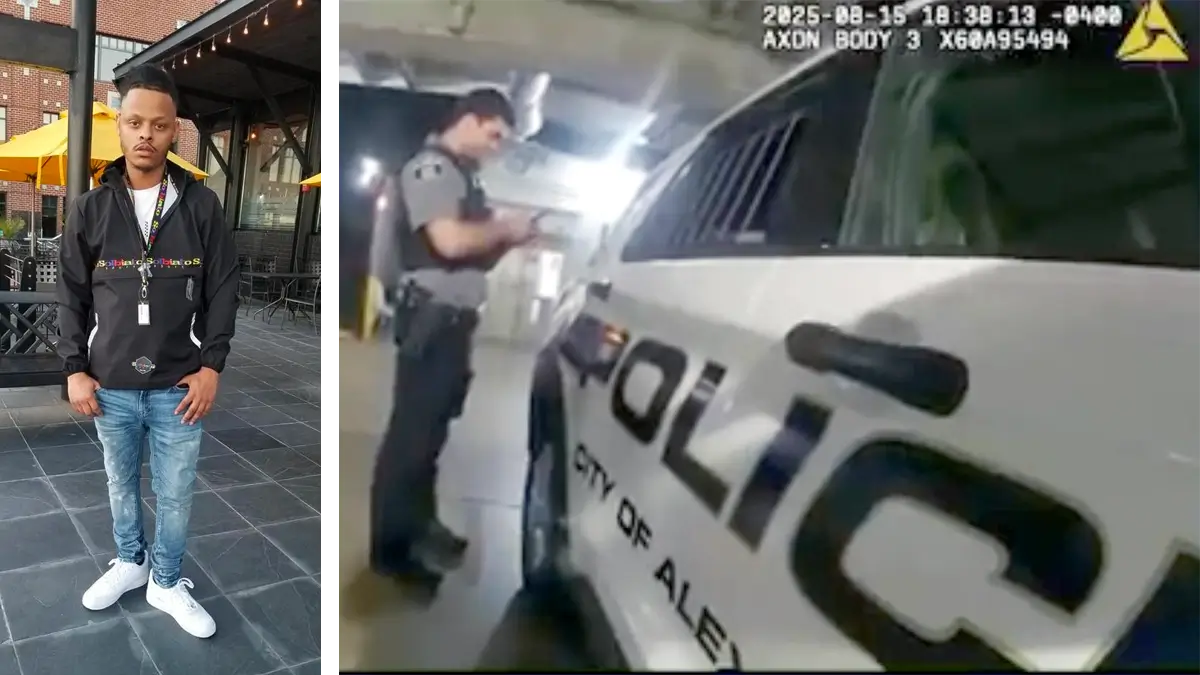
“Please take me to Alexandria Hospital. Please take me … Take me to Alexandria Hospital please. I need to go to the hospital. I need to go to the hospital, please.”
Henry continued to the Alexandria Adult Detention Center, where a shift change delayed intake. Tucker remained in her patrol car for about 40 minutes before officers recognized he was unresponsive, the claim states.
Retired NYPD Cop Still Free Despite Murder Charge In Black Father’s Road-Rage Killing
Toddler’s Hair Found in Oven After Dad Allegedly Waited Hours to Get Help, Then Police Say His Story Started Falling Apart
The complaint accuses Henry and Officer William McGinnis of chatting and checking their phones rather than obtaining medical care as Tucker’s condition deteriorated. Officers eventually administered Narcan and attempted resuscitation, but Tucker never revived. Responders pronounced him dead at 7:27 p.m.
The medical examiner attributed his death to cocaine and cocaethylene intoxication. Cocaethylene is a toxic substance the body produces when someone consumes cocaine and alcohol together. Jones believes prompt treatment likely would have saved her son.
Tucker was running through his apartment building’s hallways, banging on doors and screaming “call 911” before police arrived, according to the lawsuit. He also called police himself after telling his brother he believed someone was inside his apartment.
Officers found Tucker sweating, speaking rapidly and insisting someone inside had a gun. They searched the apartment he shared with his father twice and found no intruder. When Tucker refused to go back inside, officers arrested him for public intoxication.
Police suspected drugs. McGinnis allegedly told Tucker he was seeing things “because you’re on drugs.” Henry later told colleagues he was “tripping out bad.”
Once officers placed Tucker in the patrol car, his fear intensified.
“As Mr. Tucker sat in the back of the police car, his demeanor deteriorated into visible panic and terror,” the complaint states.
Tucker believed Henry had drawn a gun, according to the lawsuit, which does not establish that she actually had.
“Please, please don’t kill me. I didn’t do anything. I don’t sell drugs or nothing any more,” he said, according to the complaint.
Minutes later, he repeatedly asked to go to Alexandria Hospital. The complaint quotes a police directive requiring officers to take arrestees who request medical treatment to a hospital before booking them in jail. It claims Henry acknowledged his requests but continued to the detention center.
Henry and McGinnis arrived at the detention center around 6:11 p.m. Staff told them a shift change would delay intake, leaving Tucker in the jail’s secure vehicle-entry area in the patrol car.
“The two officers chatted, complained about the inconvenience of the ongoing delay, checked their phones, and waited,” the complaint states.
“They hardly looked at him, and did nothing to assist Mr. Tucker.”
The lawsuit acknowledges that officers looked through the window around 6:36 p.m. and thought Tucker appeared to be breathing. But it claims they failed to respond as he later convulsed and stopped moving.
Police offered a different account of the monitoring. At an August 2025 briefing, the department said officers stayed near the car, conducted periodic visual checks and contacted jail staff three times about the delay, The Alexandria Brief reported.
Around 6:51 p.m., McGinnis noticed Tucker was unresponsive and called for a jail medic. Henry reported a “possible overdose.” Officers administered Narcan, removed Tucker from the car and attempted resuscitation.
Narcan reverses opioid overdoses, not cocaine or alcohol poisoning. According to the complaint, officers did not know what Tucker had taken.
Jones claims they should have summoned emergency responders, secured immediate care from jail medical staff, or driven Tucker to a hospital rather than continuing to wait.
The medical examiner classified Tucker’s death as accidental, and prosecutors declined to charge the officers in January 2026.
But Alexandria Independent Policing Auditor Ameratu Kamara later found that the transporting officer violated department policy by failing to obtain medical care despite Tucker’s repeated requests to go to the hospital. She also found that the officer failed to adequately monitor him, The Alexandria Brief reported.
Whether the department imposed discipline after those findings remains unclear to the public. Two responding officers returned to full duty in February, before Kamara released her report in June. Police did not answer The Alexandria Brief’s October questions about the officers’ current employment status.
The city declined to comment on the lawsuit, citing pending litigation, the publication reported.
Jones claims both officers violated her son’s constitutional rights and that inadequate city policies and training contributed to his death. She seeks unspecified damages and a jury trial.
Tucker lived with and served as the primary caretaker for his seriously ill father, according to the complaint.
“Allan asked for help, and unfortunately he didn’t get the help he asked for,” Jones told reporters, according to The Alexandria Brief.
“He wasn’t perfect. None of us are. But he was genuine. He cared for people. … He would have helped anybody that needed it.”
Watch the video below.


