President Donald Trump’s personal physician or another doctor must remain within three minutes of him at all times, according to a new report detailing the medical precautions surrounding the 80-year-old president.
The Wall Street Journal report comes as questions about Trump’s health continue, with outside physicians questioning his glowing medical assessments and a former doctor’s account showing how Trump once shaped his own public health report.
Navy Capt. Dr. Sean Barbabella, Trump’s primary physician, oversees his medical evaluations and prepares the health summaries released by the White House. A person familiar with his work told the Journal that staff members often leave the room during his meetings with Trump, describing the doctor as “low-key and direct.”
Keeping a doctor close does not necessarily indicate a medical emergency. Dr. Jeffrey Kuhlman, a former White House physician who served under three presidents, has said past medical teams kept a doctor and critical care nurse within two minutes of the commander in chief.
Mother Who Exposed White North Carolina Cops’ Lies About Son’s Fatal Crash Scores Legal Victory
Parents Stunned After Discovering What School Made Black Student with Disability Do After Lunch
Still, the report has renewed attention on how much the public knows about Trump’s health and the sweeping assurances his doctors have offered.
In May 2026, Barbabella declared Trump in “excellent health” after an examination at Walter Reed National Military Medical Center. He described the president’s cognitive and physical performance as “excellent” and said he remained fully fit to carry out his duties.
The assessment also said an artificial intelligence-enhanced electrocardiogram estimated Trump’s cardiac age at about 14 years younger than his actual age. But the report recommended reducing his aspirin intake, increasing physical activity and changing his diet to support weight loss.
Some outside physicians questioned whether the summary included enough information to support its conclusions. They pointed to missing measurements that would help them assess the president’s heart health.
Dr. Jonathan Reiner, a cardiologist who previously treated former Vice President Dick Cheney, said the cardiac-age claim drew laughter among his colleagues.
“When I discuss this with some of my colleagues in cardiology, everyone laughed!” Reiner told CNN.
Trump has received similarly glowing descriptions before. In 2015, his longtime personal physician, Dr. Harold Bornstein, declared that Trump would be “the healthiest individual ever elected to the presidency.”
Three years later, Bornstein told CNN that Trump had dictated the letter.
“He dictated that whole letter. I didn’t write that letter, I just made it up as I went along,” Bornstein said.
Social media users have been quick to comment on the new information.
One user wrote, “If I were rotting from within and had unlimited stolen taxpayer money I’d probably also keep my doctor close at hand.” Another added simply, “He’s a mess.”
“I want Donald Trump’s doctors to lose their medical licenses when this is over. It is a criminal offense and absolute dereliction of duty to not report this level of dementia. If you want the same for Biden’s, fine. This cannot happen again,” Another Threads user wrote.
The White House has defended the current medical disclosures, saying summaries don’t include every detail and that missing information doesn’t mean doctors failed to monitor or treat a condition, according to The Daily Beast.
White House communications director Steven Cheung also criticized outside physicians for drawing conclusions about a patient they do not treat.
Trump continues to face intense public scrutiny over his health. Recent episodes have included questions about swollen ankles, speech lapses, and nodding off during public appearances, fueling online speculation.
A recent video showed Trump briefly recoiling from the roar of a military jet while standing beside Chinese President Xi Jinping. Another appearance prompted discussion after Trump appeared to lose track of the name of Republican New York attorney general candidate Saritha Komatireddy.
Neither episode, by itself, establishes a medical diagnosis, and social-media speculation about dementia or other conditions has gone well beyond what the footage can establish.
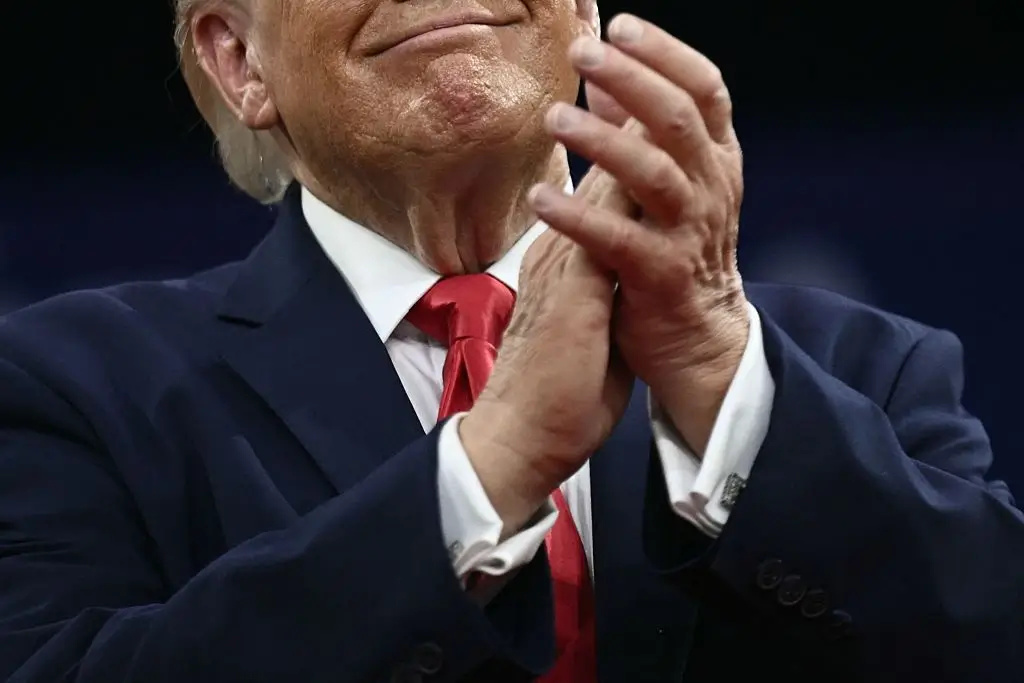
Trump, meanwhile, has acknowledged resisting some medical advice. Barbabella attributed bruising on his hands to frequent handshaking and aspirin therapy. Trump previously told the Journal that he takes more aspirin than his doctor recommends because he wants “nice, thin blood pouring through my heart.”
At an Ohio rally, Trump recalled pushing back when doctors questioned how much he took.
“They said, ‘Sir, you don’t need that!’ I said, ‘Do me a favor, I’ve been doing okay for 35 years. Leave me alone.’”


