Black students in Santa Barbara, California, walked out of class and railed against the district at a board meeting after a troubling blackface incident at San Marcos High went viral.
In September, four white female students smeared dark makeup over their faces, arms, and legs, and photographed themselves in the classroom of a Black Studies teacher when he wasn’t there.
The girls struck the same poses as four Black children in a popular AI meme and posted their version to TikTok with ninja emojis to stand in for the N-word.
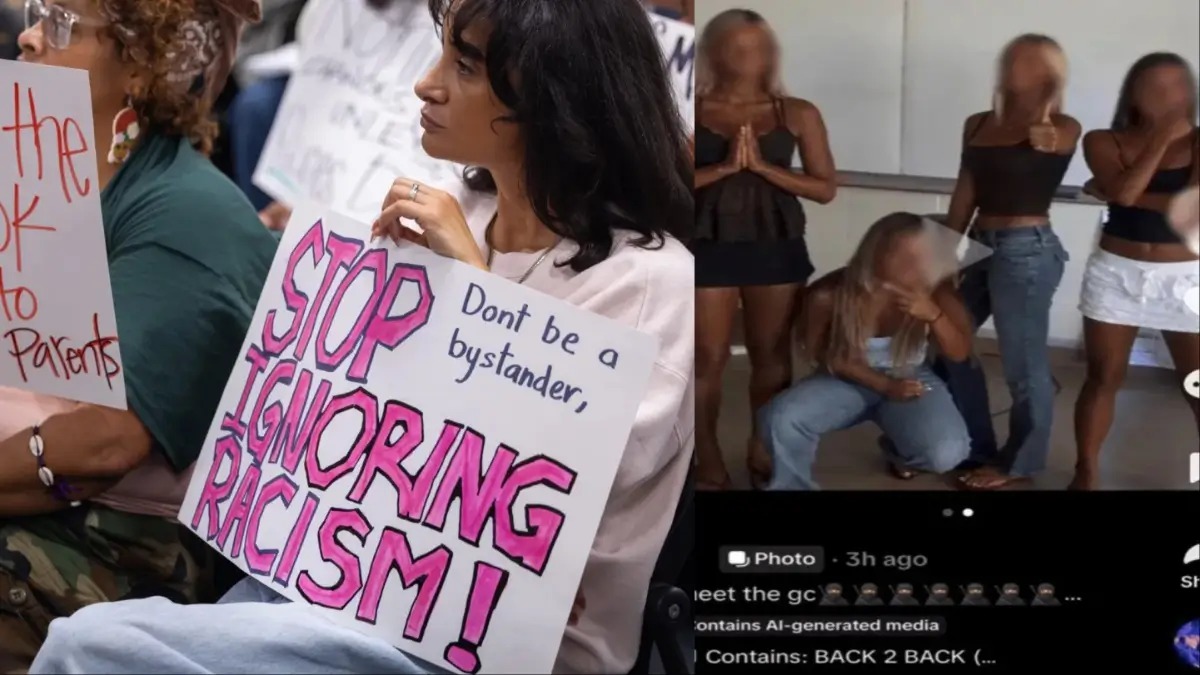
The post reportedly circulated online for two weeks before the Santa Barbara Unified School District notified parents. According to the Santa Barbara Independent, students described the offenders’ punishment as a “slap on the wrist.”
San Marcos Principal Dare Holdren said the school contacted the girls’ families to “educate the students about the impact of their actions,” but did not confirm whether there would be any further consequences.
Students and community members who flocked to the Oct. 13 board meeting to criticize the school’s lackadaisical response talked about a pattern of racism in the district that goes back years.
Racist Video Rocks New York High School as Students Walk Out to Protest District’s Response
A community member identified by The Independent as Faith Kinsbury said: “When these continuous anti-Black hate crimes happen and your response is nothing, it really shows where your priorities land.”
Joel Block, a local teacher, said it is the district leadership’s style “to hide embarrassing and inappropriate situations until there is such a public outcry that the board is forced to deal with it.”
Advocates held signs reading “Stop Ignoring Racism” and “We Want Justice” as they demanded the offenders’ expulsion and called on the district to make structural changes.
These included a zero-tolerance policy against racism, expanded ethnic studies and racial justice curriculum, and more Black teachers and staff, among other improvements.
Superintendent Hilda Maldonado addressed the crowd, condemned the blackface incident as “racist and harmful,” and pledged to listen to their concerns.
The outlet reported that several board members agreed that the district has fallen short in addressing racism.
By the meeting’s end, Board President Bill Banning said that although it may “sound hollow at this point,” he intends to ask the superintendent to put the issue on an upcoming board agenda when there is enough time to give it more attention.
But for many Black students, the district’s handling of the blackface incident had already cost it their trust.
“I’m here today as a Black student to say that the Santa Barbara Unified School District has handled this entire situation horribly,” said one student, who identified herself to the outlet as Sedenia.
“Instead of making your Black students feel safe, you have made us aware that we cannot trust you.”


