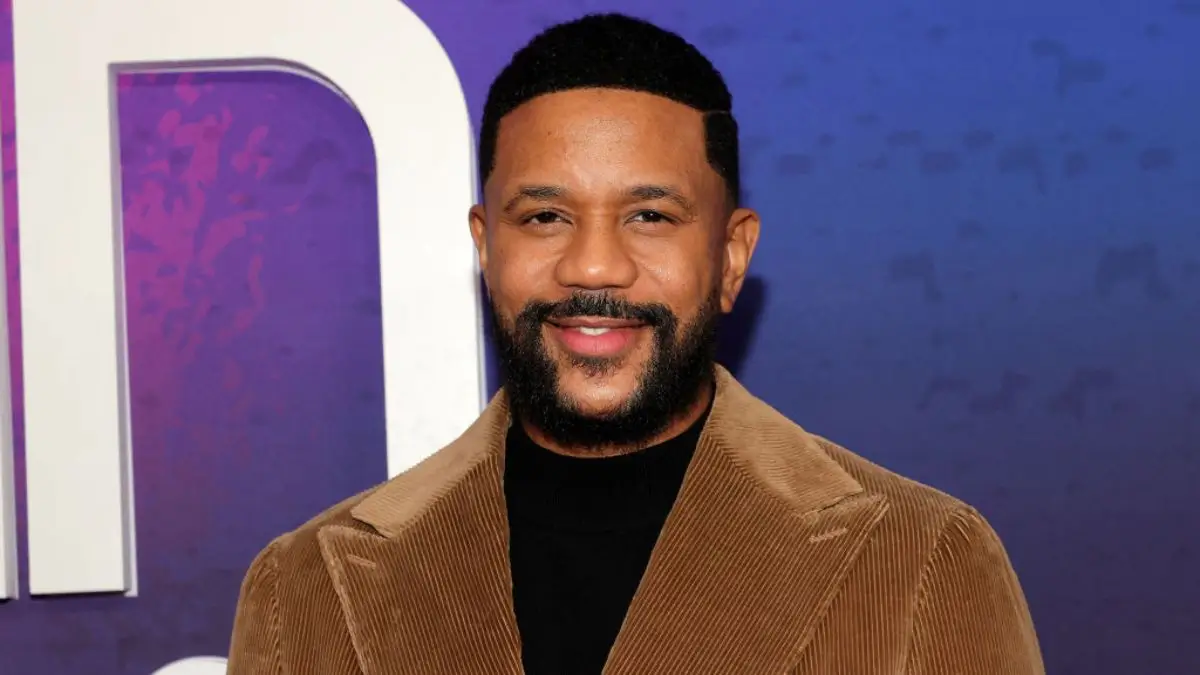
It’s been twenty years since “The Game” introduced audiences to Hosea Chanchez’s memorable portrayal of the often-controversial Malik Wright.
The actor and entrepreneur is reflecting on the role that helped shape his growth as an actor.
First introduced in 2005 through a backdoor pilot on “Girlfriends,” “The Game” became a cultural phenomenon, particularly among Black audiences, following its official premiere in October 2006.
After its original nine-season run on The CW and BET, the beloved series returned for a two-season revival on Paramount+.
For Chanchez, revisiting Malik’s journey in the reboot gave him a meaningful chance to showcase his character’s growth. It also allowed him to bring that chapter of the story to close and to another that changed his life.
“I think the one thing that we all didn’t really understand about him was that he really was searching for love, and he really did want to be loved,” Chanchez exclusively told Atlanta Black Star.
He pointed to that desire as the source of Malik’s passion and larger-than-life personality.
“The love that he was searching for from so many other people (…) he found it in himself,” Chanchez said.
Despite his convincing portrayal, Chanchez has always been drastically different from the character he’s best known for playing.
Throughout the series, he recalls advocating for Malik’s continued growth in the writers’ room.
He wanted the character’s evolution in the reboot to be all the more rewarding.
“There were many, many moments I fought really hard for his choices to be different, the whole time,” Chanchez shared, emphasizing the importance of portraying a Black man who could evolve.
“What meant the most to me was, as a Black man myself, personally getting to play this character, but knowing how important it was to be a Black man who had some type of influence to evolve,” he said. “Which is one of the things that I think that, culturally, […] we get that wrong quite often with Black men.”
Malik’s impact extended beyond “The Game,” influencing Chanchez’s performances in future series, including “Black Lightning” and “All American,” where the Alabama native drew on the confidence and bravado that made his breakout character so memorable.
“I think Malik gave me a sense of self-worth, because that’s one thing that I loved about him the most was that he really loved himself,” Chanchez said.
Now 45, Chanchez is expanding beyond acting to promote the self-love and confidence he admired in Malik Wright.
Through his men’s grooming brand, The Dawn of Good, he puts his passion for wellness into practice. The brand offers skincare, beard care and body care essentials that simplify men’s daily routines.
“I just wanted to create something that would […] open that discussion for us to talk about skin care,” Chanchez said, highlighting the need to expand conversations about men’s wellness beyond physical fitness.
“We’ll always talk about men […] building your pecs, fill your arms, build your chest, you know, and work out and things like that. But I wanted to introduce a more holistic conversation,” he explained.
The Dawn of Good uses clean, minimalist formulas that focus on hydration and results. The brand challenges outdated notions of masculinity by framing self-care as an extension of discipline and strength.
Launched in February, the brand quickly gained traction. It sold out within its first 48 hours, signaling strong demand for its approach to men’s grooming.
The response reinforced Chanchez’s belief that he was “on the right track” in encouraging more conversations about men’s health and wellness.
As he continues to grow his body care line, the “Major Crimes” star is also addressing a subject that can get overlooked in broader discussions about men’s self-care: basic hygiene.
“Wash your ass. You’d be surprised,” he joked.
Beyond personal hygiene, Chanchez is expanding his commitment to men’s health and wellness through his latest venture, GOODNCO.
Built around the slogan “A Good Place to Start,” the platform makes men’s healthcare more personal and accessible. It offers telehealth, treatments, wellness resources, education and ongoing support for men’s health. The platform also helps users find local professionals for in-person care.
The mission is deeply personal for Chanchez, who launched the venture after a health scare.
As Chanchez shared his struggles, he realized other men faced similar challenges but struggled to overcome stigma and find help.
“I had gone through a really, really tough time, and I did not know what was wrong with me,” Chanchez shared. “My body was changing. My mind was changing. I was lethargic throughout the day.”
Despite recognizing that something was wrong, he admitted that stigma kept him from seeking answers.
“It took me about a year or two to actually do something about it because I had that stigma in my mind the whole time,” he added.
After speaking with friends and other men experiencing similar struggles, Chanchez realized how many were navigating their health concerns without knowing what resources or solutions were available. As he put it, “we were all suffering.”
Through GOODNCO, Chanchez hopes to break that silence and encourage men to prioritize self-care as part of living fuller lives. At its core, the platform reflects his belief that wellness extends beyond physical health to encompass the mind and spirit.
“A healthy man to me is a man who cares for his mind, body and spirit,” he said.
That commitment to helping others extends beyond his businesses to Watch Me Win, his youth empowerment initiative.
The work earned Chanchez a proclamation from his hometown just one month after his father’s tragic death. The honor reminded him of the legacy he hopes to carry forward while honoring the men who shaped his life.
“Once you lose your father and the people who have come before you, the men that have come before you, you really come to a place in your life where you realize, you know, now the torch is yours,” he said.
Today, Chanchez pursues entrepreneurship and youth empowerment with renewed purpose. He recognizes his responsibility to use his platform to influence the next generation.
“It’s important, especially for young men, especially for young Black men, to know your worth,” he said.