A Black firefighter in Charleston, South Carolina, filed a federal racial discrimination lawsuit against the St. John’s Fire District and its fire chief, alleging they failed to fully investigate a noose he discovered tied around the neck of a dark-skinned CPR training mannequin and then treated him as a suspect.
Randy Brown, who has been a firefighter in the Low Country Area Fire District for 18 years, says he immediately reported the September 2025 incident to his captain and a battalion chief. He urged the department to investigate the incident and issue a statement condemning racial harassment to its workforce.
Brown discovered the noose in an area of the station not open to the public immediately after another district crew had manned his station while he was out of the facility, according to his lawsuit filed in U.S. District Court in South Carolina on Sept. 23 and obtained by Atlanta Black Star. Brown identified members of that crew as the suspects.
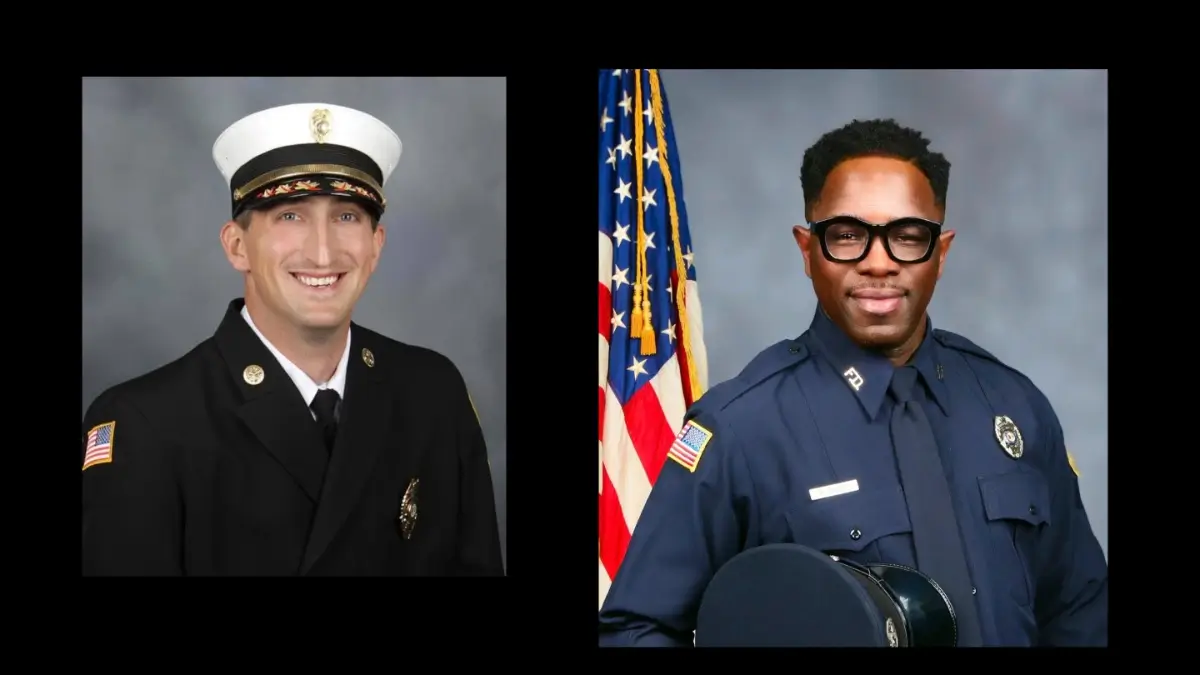
The lawsuit says Brown, one of the district’s few Black firefighters, found the noose tied around the neck of a dark-skinned human figure disturbing. It describes the figure as “an unmistakable depiction of the lynching of a Black person” that “communicated a racial threat” directed at Brown and “other African American personnel.”
Initially, Brown says he didn’t seek the termination of any employee. He wanted an apology and for the chief and the fire district to acknowledge what had happened and to “make clear that such behavior is unacceptable.”
An internal investigation didn’t identify who was responsible for the noose, the lawsuit says. Neither did interviews with district employees by outside counsel retained by the district.
The Charleston County Sheriff’s Office then conducted polygraph examinations of the crew members Brown identified as suspects. However, Brown says investigators did not test every crew member who worked the shift before someone found the noose.
The district reported that some polygraph results were “inconclusive,” including the examination of firefighter Joseph Crawford.
The lawsuit says the district should have looked harder at Crawford, who had a history of “identity-based hostility toward District employees who are not white men.”
It cites a May 2026 incident when a female firefighter participating in a training led by Crawford, who then held the position of senior engineer, conducted that training in an “unreasonable” manner allegedly intended to exhaust the woman and induce her to quit or transfer.
During the training, her helmet came off, a ladder struck her in the head, and she fell to the ground nearly unconscious, sustaining a head injury, the complaint says. Crawford declined to assist her, turned and walked away, leaving her injured on the ground.
When a female firefighter reported the incident, her superior directed her to ask Crawford to prepare an incident report, and Crawford allegedly responded, “No, I’m not doing an incident report. I don’t do incident reports for DEI hires.”
The district did not discipline Crawford for abandoning an injured colleague, refusing to document the incident or disparaging her, the lawsuit says. Instead, the district kept him in a senior role overseeing personnel training, despite his membership in the crew suspected of placing the noose and the inconclusive results of his polygraph exam.
Failing to further investigate Crawford amounted to abandoning a compelling material investigative lead, the complaint contends, and revealed both the district’s and Fire Chief Ryan Kunitizer’s “custom of tolerating identity-based hostility.”
The district never acknowledged to its workforce or to the public that the troubling racial incident had occurred, Brown claims.
On Oct. 13, 2025, about a month after Brown discovered the noose, the St. John’s District Fire Commission held its regular monthly meeting. Attendees included Kunitzer, a battalion chief, the district’s human resources manager and its attorney.
According to the lawsuit, meeting minutes show that officials did not discuss the noose incident during the open session. Instead, they addressed it during a closed executive session focused on personnel matters.
Afterward, the fire commission never publicly addressed the noose, informed the district’s workforce that it would not tolerate such conduct, or adopted any policies or measures to address the incident.
In November 2025, Kunitzer sent a department-wide email to the district’s workforce addressing mental health and the importance of supporting one another after a firefighter from another department died by suicide. It said nothing about the noose.
That demonstrated to Brown that Kunitzer “had both the means and the demonstrated willingness to address the entire workforce on matters of workplace well-being but chose not to address the racial threat displayed in one of his own stations.”
In March 2026, Brown’s attorney notified Kunitzer in writing that he represented Brown in the noose investigation and demanded that the district preserve all related communications, documents, reports, photographs and other materials.
In May, the district’s general counsel responded that the Charleston County Sheriff’s Department needed to conduct a polygraph exam of Brown, referring to him as “the only employee involved in any manner in the investigation who has not already complied with this requirement.”
On June 2, the district’s outside employment attorney sent Brown a letter stating that he had to take the polygraph under a federal law that exempts government employers from the general ban on workplace polygraph testing.
Brown’s lawyers fired back that the Employee Polygraph Protection Act permits a governmental employer to use a polygraph but does not require any employee to submit to one.
The district had asserted that it did not subject Brown to any questioning or measures that it had not imposed on other witnesses.
The lawsuit notes that Brown “was not a witness to the placement of the noose. He was its target and the complainant who reported it.”
It further argues that the district has no written policy requiring any employee to submit to a polygraph, and that the district has “never before required a complainant of workplace harassment to submit to a law enforcement polygraph examination as a condition of the District’s investigation of that complaint.”
Brown refused to submit to the police polygraph “as the victim of the harassment while remaining willing to cooperate fully with a good-faith investigation into the misconduct he had reported,” the lawsuit says.
On June 18, Brown submitted a racial discrimination claim concerning the noose incident and complained of the fire chief’s failure to issue a department-wide communication about it to the Equal Employment Opportunity Commission (EEOC).
A week later, on June 25, the EEOC emailed a letter transmitting a notice about the complaint to Brown and his counsel and identified Kunitzer as a copy recipient.
The next day, Kunitzer sent a letter to Brown informing him that he was closing the district’s investigation of the noose incident. The letter told Brown, “Given that you have declined to cooperate with the polygraph efforts, we believe that all reasonable efforts to investigate and identify the culprit have been exhausted.”
Brown alleges retaliation. A day after learning that he had filed a legal complaint against the district, the fire chief “branded Plaintiff as uncooperative, … terminated the only process capable of identifying the person who targeted him … and made any further investigation contingent on his submission to law-enforcement examination as though he was a suspect,” the lawsuit says.
Despite a request from his lawyer to “treat the unresolved inconclusive examination of Crawford as an open lead” and to reopen the investigation, the district has not done so, Brown says.
As a result of the fire district and Kunitzer’s acts and omissions, the complaint says, Brown has suffered emotional distress, humiliation, and concern for his personal safety in the workplace, as he “must continue to report for duty alongside co-workers, among whom remains the person who tied a noose around the neck of a dark-skinned figure in [his] station.”
The complaint notes that the Gullah Geechee people, descendants of Africans enslaved on the region’s plantations, have historically called the Sea Islands served by the fire district, including Johns Island, Kiawah Island and Wadmalaw Island, home.
And racial violence is not a thing of the past in the Charleston community, the lawsuit observes, recounting that a white supremacist murdered nine Black worshippers at Mother Emmanuel African Methodist Episcopal Church in downtown Charleston in 2015 in the same county the district serves.
The lawsuit further notes that the “EEOC has since described the noose as a longstanding symbol of violence associated with the lynching of African Americans and has explained such symbols are inherently threatening and significantly alter the workplace environment for Black workers.”
The defendants in this case “knew or should have known the meaning of the noose and the harm its display would inflict on Plaintiff.”
The complaint alleges that the fire district created a race-based hostile work environment in violation of federal civil rights law, and that it failed to take prompt and remedial action calculated to end the harassment of Brown.
The fire district commission and Kunitzer, as policy makers and administrators in charge of personnel, workplace harassment investigation and discipline, maintain “a custom and practice of treating racial harassment as unsolvable, declining to acknowledge it in the workforce, declining to discipline members of the suspected crew for identity-based hostility, and shifting the burden of investigation onto the victim.”
The district’s written personnel manual contains no policy prohibiting racial harassment in the workplace, no procedures for reporting or investigating harassment, and no protection for employees who do report it, the lawsuit claims. The manual only addresses racially harassing statements in a provision governing employees’ use of district computers and communications systems.
The district did provide anti-harassment training to its employees after Brown retained counsel, the complaint says, according to a district announcement in May. But the district “has not trained its officers and supervisors on how to respond to a display of racially threatening symbols, how to investigate such displays, or how to protect the employees targeted by them.”
Besides a race-based hostile work environment and retaliation, Brown is suing the St. John’s Fire District and Kunitzer for deprivation of equal protection.
He is seeking compensatory and punitive damages, along with court orders requiring the district to acknowledge the noose incident, adopt policies against racial harassment and retaliation, stop requiring polygraph tests of employees who report harassment, reopen its investigation and remove claims that he failed to cooperate.
When contacted regarding his response to the allegations in the lawsuit, Kunitzer told Live 5 News in Charleston that the department takes the matter very seriously and that it conducted a full investigation. Due to the pending litigation, Kunitzer said he could not provide further comment.
The defendants have not yet responded to the complaint in the U.S. District Court for South Carolina’s Charleston Division. They typically have 21 days after receiving the complaint and summons to respond


