A traffic dispute took an ugly turn when a white woman resorted to racial slurs and trash-throwing.
Jamie Reid, the intended target, said he was called the N-word multiple times on a roadway in Connecticut. The woman called 911, and police reportedly cited him to appear in court.
Reid filmed key parts of the exchange.
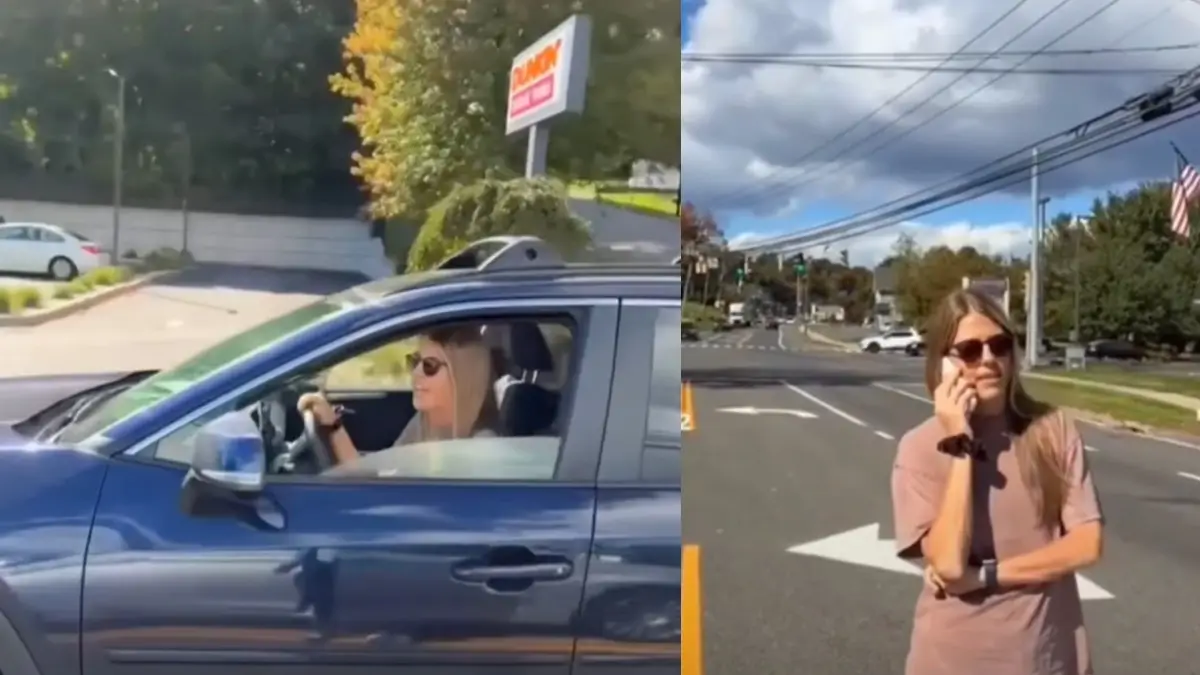
In the caption of his video, Reid claims the woman exploded because “she couldn’t wait for traffic and cut me off.”
In the comments on TikTok, where he posted the footage on October 6, he said he’s looking for “a good lawyer to take my case.” He did not go into detail about what his case would be.
The dispute happened at the corner of Main Street and Beller Road in Watertown, a west-central Connecticut suburb that is 80 percent white (non-Hispanic) and 2.4 percent Black, according to the Census Bureau.
The video shows her swerving in front of his car to make a U-turn, as he presses her to admit to using the slur.
“Everybody wants you to shut the f*ck up. Get in your car and move,” she told Reid, who was standing outside of his vehicle filming. As she drove past him, she said, “You’re an unhinged n*gger, actually.”
But while Reid was loudly defending himself in the street, at least two drivers passing by yelled back. One said “bullsht” and another told him to “Shut the fck up!” The woman laughed and added, “Seriously.”
The woman also called the police, noting his New York license plate, saying she was afraid, and telling 911 that he threw a drink at her car. Reid accused her of throwing trash at his car first. Neither incident was caught on camera.
According to an Oct. 7 Instagram post by The Sidewalk School, a nonprofit humanitarian organization, the woman allegedly told police Reid threatened her life. “She even told cops I was going to kill her,” he told the group, adding, “But she was the one who got out of her car and walked toward me.”
Police reportedly cited Reid to appear in court. However, it’s unclear why they issued the citation.
After he shared the video on social media, many commenters urged him to buy a dash camera and not engage. Some saw a bigger problem with how police respond to white accusers:
“They weaponize the police, and if we don’t record them, the police will always give them the benefit of the doubt. No matter the situation or circumstance. The police will make us prove our innocence,” wrote one.
Other commenters were stunned by how quickly it turned racist. “The audacity. As a white woman, I cannot believe how people just throw this word around. It is so foul,” wrote a person on TikTok. Another got to the heart of the matter, asking, “Why do we constantly see people resort to race when in these situations?”