Provocative luxury fashion brand Matières Fécales (or Fecal Matter in English) sparked heated debate online following Paris Fashion Week.
In their Sept. 28 show, Sudanese model Abuk Yurr strutted down the runway enrobed in metallic gold with two white male “dummies” slumped over her back.
Both mannequins sported boardroom-ready suits and ties, and one — who looked suspiciously like Trump — wore a money blindfold over its eyes.
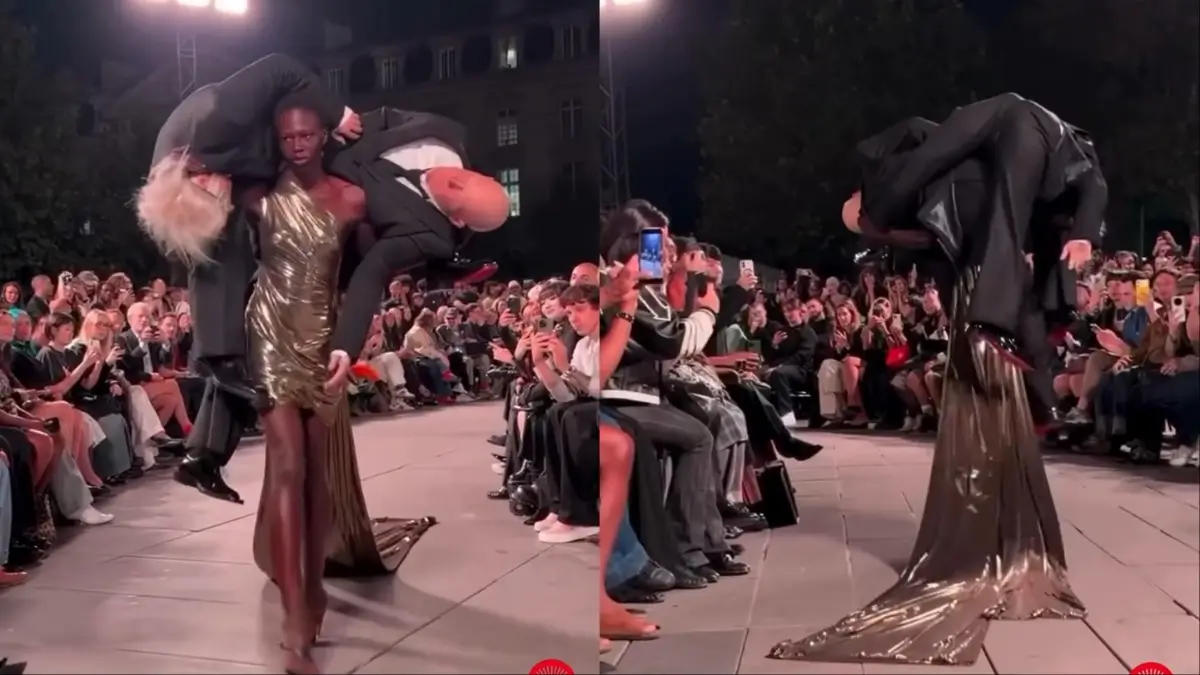
A clip of the catwalk went viral, with some calling it a “power image,” and others saying it was “giving racism.”
“Black women carrying the load… like usual,” said one commenter on the Instagram account for Nigerian news outlet African Folder, adding, “She’s still on point. This is about the resilience of Black women. Except calling Black women resilient isn’t a compliment. Fix the systems.”
Another weighed in: “It feels so wrong, but at the same time she’s so strong to carry [these] old men with heels on at the same time.”
A third person agreed, reading the image as a symbol of how men want to be treated these days “like princesses” while “some women end up carrying all the men’s duties by themselves.”
But others saw the image in a different light: “It’s giving racism, it’s giving slavery,” wrote a commenter.
Another said it echoed historic illustrations of Africans carrying their white colonizers.
One commenter even lodged the accusation that it was “meant to humiliate us.”
As a debate over the symbolism rages online, the designers say critics may be missing the point.
The Paris-based design duo Hannah Rose Dalton and Steven Raj Bhaskaran created the collection, “The Ninety-Nine Percent,” as an explicit statement against systems that concentrate wealth and power among a small group of elites.
“This collection is an homage to the strength of the 99 percent, and the soul of a lot of people who don’t have access to fashion, or beauty, or luxury,” Bhaskaran said in a Sept. 29 interview with W.
He added, “It’s a way of taking all of those struggles that I went through, that so many people go through.” Bhaskaran, who is of Indian descent, grew up in Guyana with his single mother in extreme poverty.
The designers layered on the symbolism, casting 99 models of color, including Rihanna — who opened the show — a pregnant woman, bodybuilders, and a mother holding a newborn.
They all walked through the Place de la République, the symbolic epicenter of working-class protest and anti-elitist demonstration in Paris. It was the first-ever fashion show to take place in the historic square.
Last season, Matières Fécales’ show mined the tropes of the 1 percent, inspired by Dalton’s upbringing. This season, Bhaskaran told W it was time to tell his story and explore the idea of freedom.
“Freedom can mean a lot of things,” he said. “But for us, it’s about our living experience and our journey with freedom. There’s also the idea of: is freedom even possible?”


