Jaimie Bethea spent 11 months aboard the USS Fort Lauderdale, photographing life at sea, staying in touch with friends and family, and trying to cope with the death of her mother.
The 21-year-old Navy communications specialist took her own life on June 20, weeks before the ship was scheduled to return to Norfolk, Virginia.
Now, Bethea’s family is questioning whether the Navy did enough to help her after she began struggling with her mental health during the deployment.
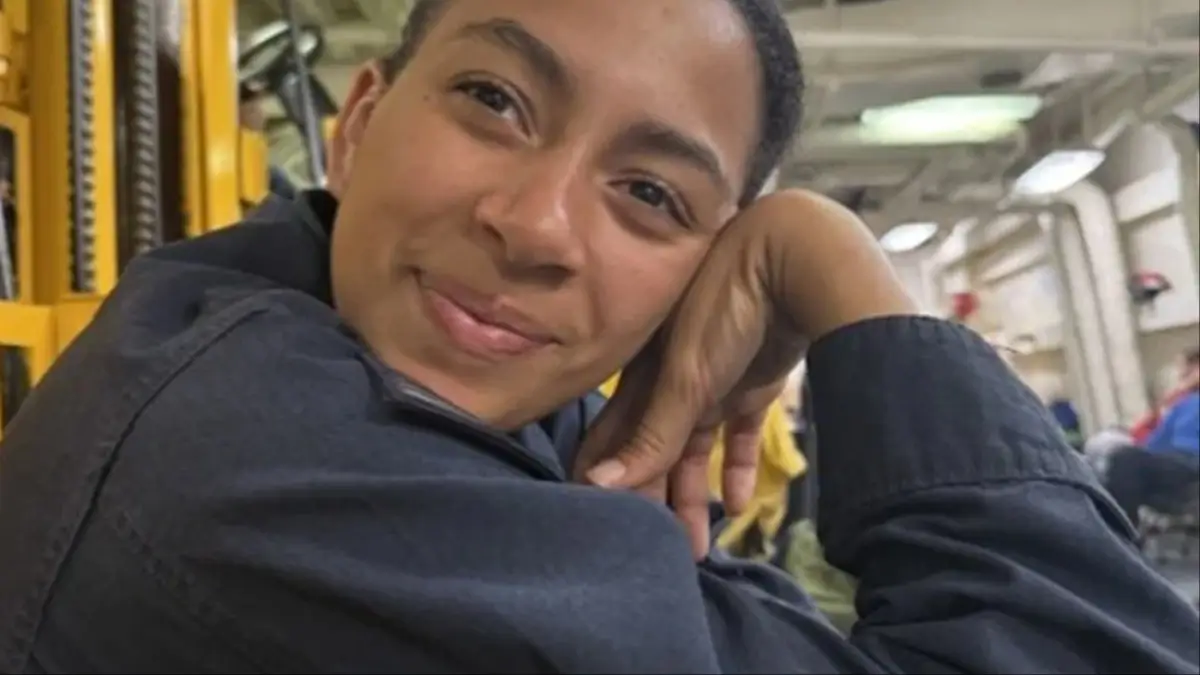
“Nothing matters to me more than my sister,” Bethea’s older sister, Arianna Calderon, told NPR. “I lost my world, genuinely.”
Bethea’s deployment came shortly after her mother died of cancer. Calderon told NPR that their mother died about three months before Bethea left on the ship, prompting the Navy to give Bethea a month of shore duty so she could spend time with her mother in a South Carolina hospital.
Bethea later sought mental health treatment and doctors prescribed antidepressants, according to her sister.
But once she returned to the ship, Calderon said her sister began having nightmares about their mother.
“Definitely, I mean, I’m not a psychologist, but she was definitely experiencing symptoms of PTSD,” Calderon told NPR.
The Navy deployed the USS Fort Lauderdale to the Caribbean as part of a military operation involving Venezuela. According to NPR, its mission included operations related to the capture of Nicolás Maduro, attacks on boats suspected of transporting drugs, and earthquake relief efforts.
The length of the deployment also became a source of stress for Bethea.
Calderon said her sister repeatedly learned that the Navy had extended the ship’s deployment, sometimes with little warning.
“It was constantly like getting texts like, ‘Guys, you’ll never f***ing believe it. We just got extended again,’” Calderon said. She said the extensions happened several times, adding to the uncertainty surrounding when Bethea would finally return home.
Bethea’s friends noticed changes as well.
Tiana Cook, a former high school marching band classmate who remained in frequent contact with Bethea, told NPR that the sailor complained about shortages aboard the ship and struggled to consistently obtain her medication.
Cook said Bethea described waking up crying, sleeping frequently and feeling exhausted and depressed.
Messages Bethea exchanged with family and friends also showed that she experienced a panic attack that lasted for hours. She sought medical assistance aboard the ship but later told people close to her that she was surprised by how easily she could leave the ship’s hospital.
Officials found Bethea early on June 20.
Cook said Bethea’s final message to her came around 12:30 a.m.
“She said, ‘I love you guys. I need you to know that,’” Cook told NPR. “That was it. That was the last I heard from her.”
After Bethea’s death, Cook and another friend aboard the Fort Lauderdale told her family that Bethea had previously attempted suicide several months into the deployment.
Calderon believes that should have prompted the Navy to intervene.
“There just needed to be some sort of intervention. They should have removed her from the ship,” she said.
The Navy has not responded to NPR’s questions about Bethea’s death, according to the report.
Her death also comes amid broader concerns about mental health resources available to sailors during lengthy deployments.
The Fort Lauderdale carries a crew of about 350 sailors as part of the Iwo Jima Amphibious Ready Group, which deploys roughly 4,500 sailors and Marines. Unlike larger Navy vessels, the Fort Lauderdale lacks onboard mental health specialists. Instead, a medical officer and Navy corpsmen manage daily healthcare, while chaplains handle suicide-prevention support.
A 2023 Department of Defense Inspector General’s report identified a significant shortage of mental health professionals throughout the Navy, including aboard ships.
The issue has received renewed attention as sailors spend longer periods away from home.
The USS Abraham Lincoln recently began returning to San Diego after more than eight months at sea during the war with Iran, according to NPR. The Navy also announced additional mental health initiatives following a cluster of suicides aboard the USS George Washington in 2022.
Acting Secretary of the Navy Hung Cao later announced a Suicide Prevention Task Force to examine Navy practices following concerns about mental health during Lincoln’s extended deployment.
Navy officials have acknowledged that lengthy deployments are likely to continue.
Before the USS Stout departed Norfolk, Capt. Bryan Carmichael told sailors they should prepare for the possibility of spending as long as a year deployed.
“We’re telling them the same thing,” Carmichael said, explaining that commanders were trying to keep sailors informed about the potential length of their assignments.
For Bethea’s family, however, the questions surrounding her final months at sea remain.
“I lost everything, and all I care about now is getting some semblance of justice,” Calderon said.


