The White House ballroom was still little more than drawings and plans when architect James McCrery II began raising concerns about what could happen if something went wrong inside it.
The preliminary design had emergency exits McCrery considered inadequate and little protection against a fire spreading from the kitchen into the event space.
Then came a reported exchange that distilled the dispute: When McCrery warned that the plans did not meet fire and safety codes, President Donald Trump pushed back with an arrogant declaration.
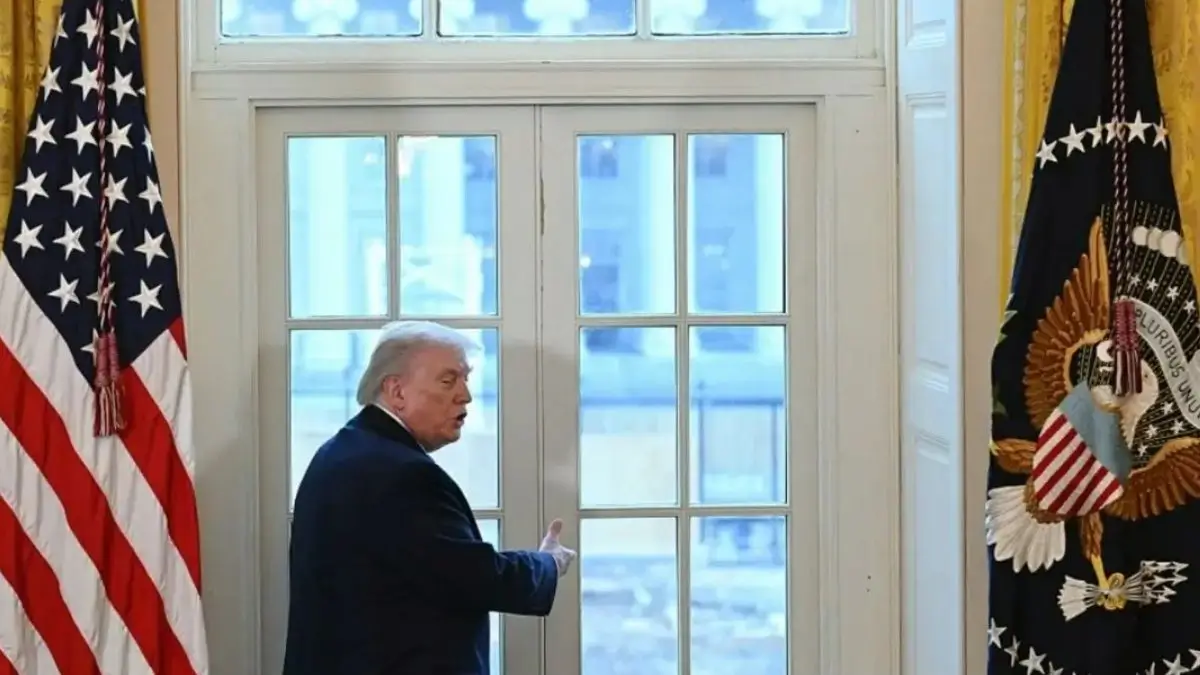
“I am the code,” Trump said, according to The Washington Post.
The episode adds a safety dispute to the long-running controversy surrounding Trump’s $400 million White House ballroom project. McCrery, the original lead architect, withdrew from the project last October after repeatedly warning about emergency exits and fire containment, according to people familiar with the discussions and documents the Post reviewed.
The White House disputes that code concerns prompted his departure and says it addressed safety issues as the design evolved.
Trump had selected McCrery, a D.C.-based classical architect, to lead the project in July 2025. In the weeks before McCrery left, he reportedly raised concerns that most guests could not swiftly exit through the main entrance during an emergency and that alternative exits were “insufficient.” The preliminary design also offered “little in the design” to stop a fire from quickly spreading.
The concerns went beyond fire. An early design gave the women’s bathroom only seven stalls, even though planners expected the ballroom to hold far more people.
At a Sept. 30, 2025, meeting, White House officials discussed “areas of concern” raised by contractors. One notation reportedly read: “Life safety — big concern,” the Independent reports.
The Post also obtained preliminary drawings marked up in Trump’s familiar black Sharpie. On one drawing, apparently reacting to McCrery’s concerns about the ballroom’s size, Trump wrote, “James. And you think this is big enough.” On another, showing a White House colonnade, Trump wrote, “James – great look – but Corinthian columns.”
McCrery did not give The Post a specific reason for leaving. In a statement, he said he was “truly grateful” to have worked with Trump and added: “Having completed the earliest designs, I stepped aside and a new firm was engaged.”
The White House offered a different account, saying it was “factually false and totally inaccurate” to suggest McCrery left because of code issues and describing him as a “valued member of the initial design team.”
A White House official said the administration had always prioritized safety codes and had addressed and resolved life-safety concerns throughout the project.
Shalom Baranes Associates, a Washington firm, now designs the project. The firm has worked on the Pentagon, the Treasury Department and other federal buildings.
Its principal later said, “As the architect for the project, I can unequivocally state that the ballroom complex has been designed to conform to applicable national building code standards.”
The change in architects came as Trump and McCrery were already clashing over the scale and design of the 90,000-square-foot addition.
McCrery’s firm was initially described as having been replaced because of its size and inability to meet deadlines, while White House officials said McCrery would remain involved as a consultant, according to The Architect’s Newspaper. The administration said the new firm would help carry Trump’s vision forward.
The ballroom project has also drawn legal and political scrutiny over the demolition of the East Wing, its cost and the use of public funds.
Trump has repeatedly described the project as costing about $400 million and said private donors would pay for it. But contractor documents obtained by The Washington Post showed a $600 million estimate, with more than half coming from taxpayers.
Federal records also showed tens of millions of dollars in public payments had already gone toward the project.
The administration has defended the ballroom project on national security grounds, pointing to plans for an expanded underground bunker and medical facilities.
In August, Solicitor General D. John Sauer asked the Supreme Court to permit above-ground construction to proceed, calling the work “vitally required by national security.”
The emergency filing followed a federal appeals court ruling that the White House likely lacked the authority to demolish and rebuild the East Wing without congressional approval.
Against that backdrop, the newly reported dispute over fire safety brings another piece of Trump’s history back into view.
In 2018, 67-year-old Todd Brassner died after a fire swept through his 50th-floor apartment in Manhattan’s Trump Tower.
Completed in 1983, the building’s residential section lacked sprinklers because municipal code did not mandate them at the time of construction. In the late 1990s, Trump joined other developers in opposing proposed New York City legislation requiring sprinkler retrofits in older residential towers, arguing the mandate was unnecessary and expensive.
However, he later installed a $3 million sprinkler system during the construction of Trump World Tower, which opened in 2001 under updated city regulations.
Online, one commenter pointed to the Trump Tower fire and argued that the president had resisted safety measures at his own property before the law required them.
“Notably, 45 didn’t even put fire alarms or sprinklers in his own building until forced by law.”
Another commenter went further, invoking the death of Brassner while sharing a headline from NBC4 New York that read, “Trump Organization Sues Man Who Died in Trump Tower Fire.”
“Yes, he has a murderous history of this. Some have also attributed nefariousness to this needless tragedy as well,” the commenter wrote.
Others focused less on the Trump Tower history and more on the reported exchange with McCrery.
One person reacted to the president’s declaration about building codes with a reference to the Book of Revelation, writing, “Sounds like some book of revelations stuff right there….”
Another took the line as evidence of what they viewed as Trump’s attitude toward authority and regulations.
“‘I am the code.’ Dude really thinks he’s a king and can do whatever he wants.”
A final commenter focused on the role of architects and the potential consequences of ignoring fire-safety concerns, writing, “Amazing response. Trump doesn’t care about anyone but himself. An architect’s first priority is designing for life and fire safety.”


