Donald Trump‘s fight to control who gets access to the White House just took another dramatic turn.
Days after the president barred CNN, MS NOW and Politico from the White House, reporters from all three outlets were allowed back onto the grounds Thursday after a federal judge ordered the Trump administration to restore their access temporarily. The judge said the ban was likely unconstitutional.
The reversal did not happen smoothly.
Some journalists were initially turned away Thursday morning despite the court order, prompting the three news organizations to seek an emergency hearing before midday restored access.
And the timing could not be more awkward for Trump. His attempt to sideline major news organizations came just as his administration rolled out “Trump TV” and began relying more heavily on its own White House feed — only for persistent audio problems to make even some of the president’s handpicked media moments difficult to hear.
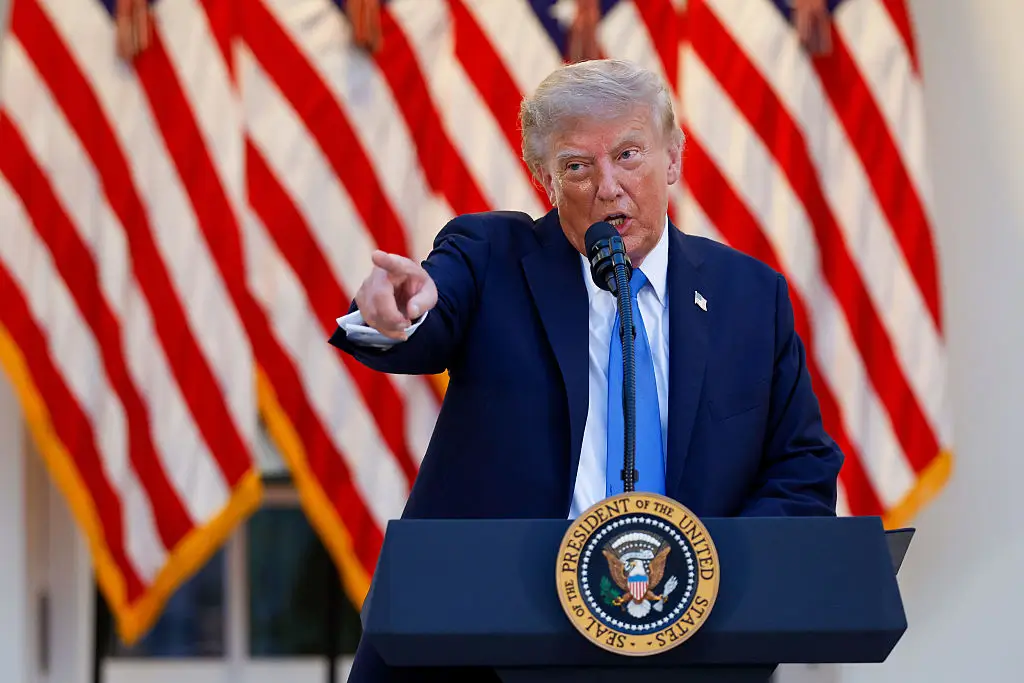
On Wednesday, Sept. 23, Trump attempted to give the world an update on the status of his new ballroom.
However, something in the air did its best to disrupt any conversation on the White House lawn.
The press that met him on hump day avoided asking the complicated questions. Instead, reporters gave him an alley-oop with a question about one of his favorite subjects.
A reporter asked the question directly: “Mr. President, ballroom update. Can you give us a ballroom update?”
“Everything is going up really fast. Go there today, take a look. And we’re very much ahead of schedule,” Trump replied.
Trump seemed eager to discuss his unfinished party space. He said construction was ahead of schedule, though the room would not be ready for Thursday’s dinner with Chinese President Xi Jinping, according to ABC News.
But an unexpected problem ruined the moment for him and the approved press. In the background, a loud ruckus appeared to be competing for airtime.
According to Time, the audio problems first became apparent on the same day as his streaming service’s launch.
That same day, the White House unveiled a new helipad. Marine One’s engines drowned out much of Trump’s speech on the White House feed. The sound was messed up.
The television pool typically provides microphones along with the footage. Without its crew, viewers struggled to hear the president, as ambient background noise drowned out his remarks for both television audiences and reporters at the scene.
The incident echoed sound and audio issues that had affected a recent outdoor interview.
Undeterred by the poor audio, Trump touted his upcoming Thursday dinner with Chinese President Xi Jinping: “I wish we had it for tomorrow night, because we have a packed house tomorrow night for President Xi.”
The reporter followed up, “And who are some of the attendees that will be at the dinner tomorrow? Can you share with us?”
Trump offered categories rather than names.
“Everybody. Everybody. Everybody wanted to be here,” he said. “I would say you have the entire tech world, the entire banking world, a lot more.”
He called it “the ultimate crowd” and said demand exceeded the available space. “I wish we had more seats. That’s the only problem.”
One person on Threads thought the questions were too easy.
“With the White House pool boycotting, Trump now has nothing but MAGA propagandists following him around, so he’s facing hard-hitting questions like ‘Ballroom update?'” the person wrote.
But the sound was a bigger part of the online discussion, as many struggled to hear him over the background noise.
“Why is it so loud?” one person asked. Another said, “Speak up, Piggy. No one can hear you.”
Yet, some suspect Trump will soon back down and remove the ban, stating, “He’s probably going to get bored of this. He needs to be seen as ‘strong’ by yelling at the “evil fake news.”
Five major news networks — ABC, CBS, CNN, Fox News, and NBC — form the rotating television pool that supplies shared broadcast feeds across the national press corps. That technical infrastructure becomes crucial when tight security footprints or deafening Marine One engines threaten broadcast audio.
The muffled sound at the recent helipad ceremony underscored the system’s value, exposing how easily the White House’s internal feed fails without professional pool equipment.
Meanwhile, “TRUMP TV: The Essentials Station” promises a continuous stream of presidential highlights and administration updates. The administration will use this and fill the channel with the moments he wants to replay. Wednesday’s ballroom exchange gave him another one.
Trump wanted the ballroom update to dominate the story, but viewers were stuck on the noise. Handpicking reporters did little to solve the issue: even his own feed struggled to carry his voice over the roar of the presidential helicopter.
The president may control the ballroom guest list. Controlling the press has been a much louder failure.
View on Threads


