Nikole Hannah-Jones is reconsidering a choice she made nearly a decade ago, when she and her husband enrolled their daughter in a predominantly Black, low-income public school in Brooklyn — a decision she previously championed in her effort to confront educational segregation.
Now, Hannah-Jones acknowledges the decision grew far more complex when her daughter, Najya, reached an age where she could grasp the academic fallout and question why her parents had made that choice on her behalf.
Hannah-Jones, the journalist behind The New York Times’ 1619 Project, revisited the decision in a New York Times Magazine essay titled “In Fighting for Every Black Child, Did I Betray My Own?” published Sept. 20.
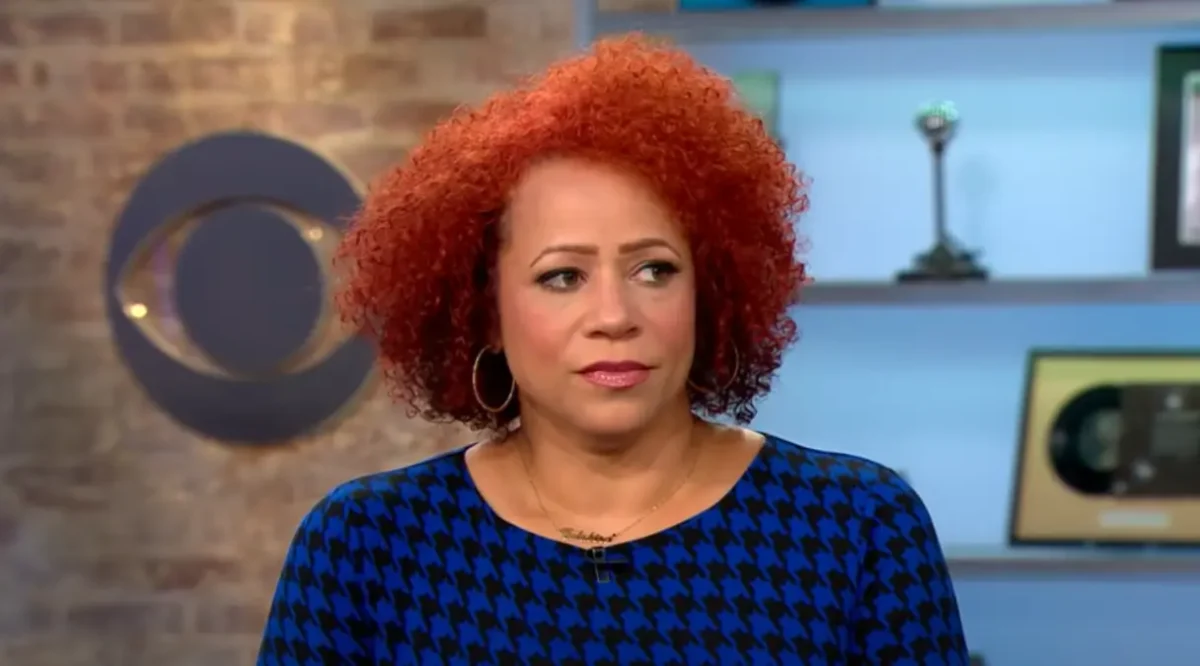
In the piece, she reflects on the tension between her commitment to improving public education for Black children and her responsibility as a parent to make sure her own daughter received the strongest education possible.
The family enrolled Najya at P.S. 307 in Brooklyn in 2015. The school was located near the Farragut housing projects and served a largely Black, low-income population. Hannah-Jones and her husband, Faraji, had other options because of their financial resources, but they deliberately chose the public school.
At the time, Hannah-Jones believed their decision could benefit more than just their daughter.
She wrote that she and her husband “thought by sending Najya to a mostly low-income and Black school, we could help improve it for all the children there.”
The decision became the subject of a 2016 essay in The New York Times Magazine, “Choosing a School for My Daughter in a Segregated City.” That article drew national attention and placed Hannah-Jones’ personal experience inside the larger debate over racial segregation and unequal educational opportunities.
At the time, Hannah-Jones defended the choice despite acknowledging problems within the school.
Years later, her daughter had a different view.
As Najya approached the end of seventh grade, she began comparing New York City high schools with her peers and realized the stark academic divides between schools. During a conversation with her mother, she directly confronted Hannah-Jones about the quality of the education she had received.
“Did you know my school was bad like this when you decided to put me here?” Najya asked, according to her mother’s account.
Najya also questioned why her parents, who had the financial ability to consider other schools, had not used those resources to give her access to a more academically rigorous education.
The academic consequences became clearer after Najya eventually moved on to Urban Assembly Unison School, another Brooklyn school that did not use academic screening to determine admission. Although she had earned strong grades, including an A in algebra, she discovered that she had not fully learned some of the material she was expected to know.
Hannah-Jones wrestled with the contradiction.
How could her daughter have received an A in algebra while lacking a solid understanding of the subject? And how could a student considered an honor student arrive at a more demanding school without the preparation needed to keep pace?
Najya received additional academic assistance, including private tutoring, and eventually caught up. By the end of the semester, she was earning mostly As and Bs and later passed the state algebra exam.
But academics were not the only issue.
Hannah-Jones said her daughter had also experienced a shift in the racial environment around her. At the predominantly Black schools she attended, Najya did not feel that her intelligence was questioned because she was Black. At a school with a predominantly white and Asian student population, however, she encountered racist remarks and stereotypes from some classmates.
That left Hannah-Jones confronting two different problems within New York City’s education system: schools where Black and low-income students can face academic disadvantages, and higher-performing schools where Black students may encounter isolation or racism.
The numbers show how widespread those divisions remain. New York City Public Schools served more than 906,000 students during the 2024-25 school year. About 75.3% of students were classified as economically disadvantaged, while 19.3% were Black.
The UCLA Civil Rights Project has also documented pervasive racial segregation in New York public schools. An analysis using data through 2018 found that roughly 85% of Black students in New York attended schools considered heavily segregated. A separate national study published in 2024 found that the share of U.S. schools considered heavily segregated had nearly tripled over the three decades examined.
For Hannah-Jones, the experience has forced a more personal examination of arguments she has spent years making publicly.
She wrote that her daughter was never supposed to be viewed as more deserving than other children. In an earlier reflection, she wrote, “My daughter is not worth more than any other child.”
But her daughter’s experience ultimately caused Hannah-Jones to question whether her family’s decision had placed too much responsibility on one child to bear the consequences of a system her parents hoped to change.
“Najya was asking what I’d accomplished by not choosing the ‘best’ school for her,” Hannah-Jones wrote. “The honest answer is, I don’t know.”
She continued: “When it comes to the choices my husband and I have made about public education, these days I feel that I failed both my values and my child.”
The essay has also prompted a wide range of reactions online, with some readers expressing sympathy for Hannah-Jones’ dilemma while others questioned whether the choice was as limited as she presented it.
One reader described the essay as an examination of a difficult question facing Black parents, writing, “How do you choose what is ‘best’ for your Black child when every choice comes with a cost?”
Another reader pushed back on that characterization, arguing that Hannah-Jones had other options available to her.
“Point of clarification: this was not an ‘impossible choice,’” the commenter wrote, pointing to what they described as academically rigorous schools with majority-minority student populations in New York City. “For black parents with money and access in NYC, this is an unnecessary false dichotomy. There are several majority-minority, academically rigorous schools in NYC. She intentionally chose to send her kid to a low-performing school.”
A third commenter defended the larger context behind Hannah-Jones’ decision, arguing that many Black families attend under-resourced schools because those are the schools available to them.
“Millions of Black families drop their kids off at schools like this EVERY DAY because it’s what’s available to us,” the commenter wrote, adding that Black parents can face difficult trade-offs regardless of whether they choose predominantly Black schools or predominantly white schools.
Another sympathized, “Every kid has different needs, and rarely do those needs mirror your own from the past….It’s an IMPOSSIBLE choice (especially early on) but involving what her daughter needed outside of her personal politics would have made this easier.”
Another reader questioned whether Black cultural connection necessarily required choosing a low-performing school.
“Her daughter could have had Black cultural enrichment and community in a plethora of ways outside of attending a poor or failing school,” the commenter wrote.
The same commenter argued that changing the conditions at P.S. 307 would have required more than financial contributions or involvement from one family, writing that the school’s problems would have required “deep-rooted community work.”
The reactions underscore the core tension of Hannah-Jones’ essay. Some readers focused on the systemic inequities impacting Black students and the compelling reasons families with means choose to stay in under-resourced schools. Others questioned whether any parent should accept academic disadvantages for their child when better options exist.
Hannah-Jones responded directly to the criticism, defending the broader purpose behind the decision. “I don’t regret, and won’t ever regret, caring about more than my own child,” she wrote, arguing that much of the online discussion had focused on the idea that she had sacrificed her daughter without considering the other children who attended the schools.
View on Threads


