The father of a Fort Hood soldier who died in August is demanding answers about what happened in the hours before someone found his son dead in the barracks. Including whether military officials failed to intervene when he became seriously ill.
Pfc. Leroy Stroud Jr. died between Aug. 13 and Aug. 14, according to his father, Leroy Stroud Sr., who has repeatedly pressed the Army for details surrounding his son’s final hours.
In a Facebook post, Stroud Sr. accused his son’s chain of command of failing to secure medical evaluation while the soldier was experiencing an acute health crisis.
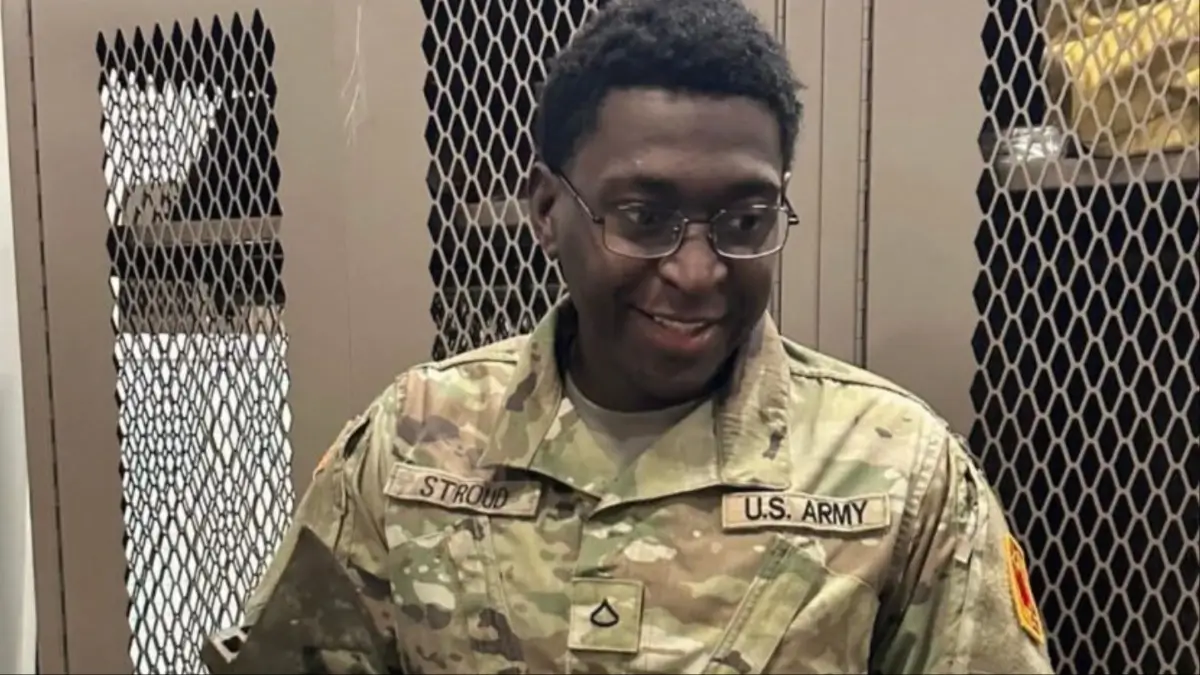
“Instead of immediately securing emergency medical care for a soldier in acute crisis, his commanding officer engaged in a prolonged back-and-forth dispute with him,” Stroud Sr. wrote. “Sick, suffering, and denied medical intervention, my son stormed off and not a single leader went after him to check on his welfare or provide aid.”
In an email to KDH News, Stroud Sr. cited accounts from fellow service members and their families detailing how Pfc. Stroud returned from duty exhibiting severe symptoms, including a high fever, heavy sweating, and persistent vomiting.
He also told KWTX, “My son was sick and vomiting and sweating and feverish. So, my question is, what did they do after that? They said my son engaged in an argument about being sick and told them he needed medical help. Why didn’t anyone call a medic?”
Stroud Sr. added that he was later informed his son was found dead in the barracks roughly 15 hours after returning from duty, prompting him to demand accountability for what occurred during those unmonitored hours.
A Fort Hood official told Atlanta Black Star that military leadership has remained in contact with the Stroud family and expressed condolences following the soldier’s death. The official said the Army recognizes that the Stroud family “has questions and wants answers” and is taking those concerns seriously.
“We extend our deepest condolences to the family of Pfc. Leroy Stroud Jr. as they grieve the loss of their son,” III Armored Corps and Fort Hood spokesman Lt. Col. Joey Payton said.
Three investigations into Stroud’s death remain underway, including an Army Regulation 15-6 investigation, a line-of-duty investigation and a separate U.S. Army Criminal Investigation Division investigation. Because the investigations are ongoing, the official said it would be inappropriate to speculate about what happened.
The official who provided a statement to ABS added that Stroud’s unit, fellow soldiers and leaders “all feel his loss deeply” and said the Army remains committed to completing the investigative process thoroughly.
Stroud Sr. said he believes someone should have physically checked on his son, particularly after he missed roll call and stopped answering his phone.
“I cannot bring my son back,” Stroud Sr. wrote in that email to KDH News. “But I can ask questions…(and) demand accountability.” He added that he wants to make sure “PFC Leroy Stroud Jr.’s story is not forgotten.”
Stroud also said his son had been dealing with mental health issues but remembered him as a caring person who loved traveling and being an older brother.
“He was a loving big brother. Always bragged about his little brother. He is very loving and caring,” Stroud said. “Why did my son have to die? We want justice. He was very loved.”


