CNN is facing fierce backlash over the photo it selected for a story about a promising Black Haitian student who died by suicide.
The network used a casual image of 20-year-old Pierre Damas Bel in a white tank top and backward baseball cap, wearing a large chain around his neck.
Critics quickly pointed out that Bel had numerous photographs in suits, with academic honors, and in his Marine Corps JROTC uniform.
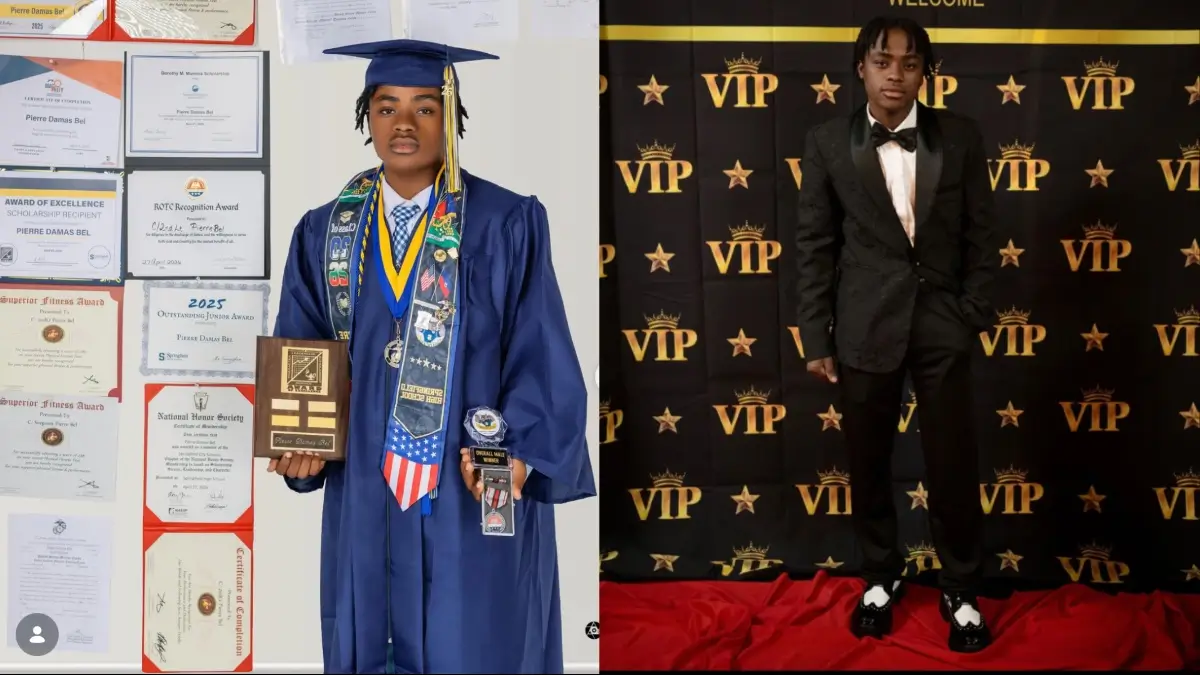
They accused CNN of choosing an image that played into racist stereotypes while ignoring photographs reflecting Bel’s achievements.
The criticism also reignited a familiar debate over how the media portrays Black victims compared with white men accused of violent and serious crimes.
Social media users noted that news outlets often showcase polished family portraits, wedding photographs and professional headshots of white defendants. That includes men accused or convicted of killing their wives and children.
Meanwhile, Black victims frequently appear in casual photographs that critics say newsrooms deliberately frame as threatening or suspicious.
“Pierre Damas Bel had more photos in suits and his JROTC uniform than he did in casual street wear,” freelance news writer Kevin Ortega-Rojas wrote.
“And yet this is the photo CNN used of him to cover his story,” he continued. “Not that anyone needs to dress a specific way to deserve dignity and respect but we know what they’re doing.”
Another person wrote, “You know they must make us out to be ‘gangsters.’ @CNN shame on you.”
“Of course they would,” another critic added.
View on Threads
CNN Accused of Feeding Racial Stereotypes
The outrage reflects a long-running concern about racial bias in news coverage. Critics say flattering images can humanize white suspects, even after appalling allegations emerge.
Black people, including victims, do not always receive that same consideration.
In Bel’s case, social media users argued CNN had many photographs that accurately reflected his life. Instead, the network chose one that critics said invited viewers to make assumptions before reading his story.
Critics said CNN’s photo selection was especially disturbing because Bel was a college freshman, athlete, decorated student, and aspiring doctor whose family said he struggled with the humiliation of wearing an Immigration and Customs Enforcement ankle monitor.
“Dear @CNN, what’s up with you using this picture to tell the story of this young man?” one person asked.
“You are not helping [combat the] spirit of hatred against Black and brown people in this country,” the critic continued. “You are feeding the false narrative that ‘some’ people deserve to be feared.”
Another commenter accused the network of deliberately choosing the image.
“They chose this image on purpose,” the person wrote. “Respectability politics be damned. He died because of this administration.”
One critic compared CNN’s treatment of Bel with mainstream media’s portrayal of white suspects in a separate criminal case.
“The drug dealers caught in Penn State were displayed in suits,” the person wrote. “Shame on them for the blatant dog whistle.”
Who Was Pierre Damas Bel?
Pierre Damas Bel was an honor student, athlete, and Wright State University freshman.
Bel entered the United States through the Brownsville-Gateway Port of Entry in Texas on March 5, 2024. He arrived for an appointment scheduled through the CBP One application to seek asylum.
ICE said the Biden administration released Bel into the country while his immigration case proceeded.
Bel later attended Springfield High School in Ohio, where he built an impressive academic and extracurricular record.
He joined the school’s Marine JROTC program and was recognized for his exceptional physical fitness during a ceremony last year.
Bel also belonged to the National Honor Society and was awarded the Dorothy M. Mumma Scholarship.
This spring, he became one of eight graduating seniors awarded a college scholarship through the school district’s Business Advisory Council Award of Excellence.
Bel was also a talented soccer player.
Wittenberg University recruited him to play for its men’s soccer team, according to reports. He previously played for the Springfield High School Wildcats.
“Pierre was a bright young man we recruited to Wittenberg University and our men’s soccer program,” coach Dwight Burgess said in a statement. “We were excited to have him on our team and to watch him learn and grow as a member of the larger Wittenberg community.”
His plans reportedly changed after ICE required him to wear an electronic ankle monitor shortly before preseason training began.
Bel enrolled at Wright State instead. His social media posts indicated that he planned to study neuroscience and physiology before attending medical school.
Some of his final Instagram posts showed him playing pool and exploring the Wright State campus.
Older photographs captured him holding, wearing or standing beside the Haitian flag.
Why Was Pierre Damas Bel Wearing an ICE Ankle Monitor?
ICE placed Bel in its Alternatives to Detention program in late July while his immigration proceedings continued.
The program allows immigration officials to monitor certain migrants outside detention facilities. It can include GPS ankle monitors, smartphone applications or scheduled check-ins.
Bel publicly described the monitor as a source of intense shame and humiliation.
On July 30, he shared photographs of his academic recognition and awards on Instagram. He also included an image of the device strapped to his ankle.
“I came to this country to pursue my education,” Bel wrote. “I didn’t come here to commit a crime or hurt anyone.”
“Yet now I’m walking through the streets of the United States with a GPS monitor on my leg,” he continued, describing a level of humiliation he never imagined experiencing.
Supporters encouraged him to remain hopeful.
“We will fight for you,” one person wrote.
“Keep praying Young King, please don’t give up on your dreams,” another added.
Bel’s family said the monitor left him feeling like a criminal. They also claimed other students bullied him because of it.
His family and local advocates believe the emotional distress surrounding the device contributed to his death. Authorities were still investigating the circumstances.
Bel died Monday, only weeks after beginning college.
“Rest in peace, you didn’t deserve this,” one mourner wrote following his death.
What Is Temporary Protected Status?
Temporary Protected Status, commonly called TPS, allows certain foreign nationals to remain and work in the United States temporarily.
The federal government can designate a country for TPS when conditions make returning there dangerous. Those circumstances may include war, natural disasters, political instability, or extraordinary humanitarian conditions.
TPS does not automatically provide permanent residency or a path to citizenship. However, recipients generally cannot be deported because of their immigration status while the protection remains active.
The United States first granted TPS to eligible Haitian nationals following Haiti’s devastating 2010 earthquake.
Haiti has since endured political instability, deadly gang violence, widespread displacement and the collapse of essential public services.
What Happened to Haiti’s TPS Designation?
Former Homeland Security Secretary Kristi Noem announced the termination of Haiti’s TPS designation in November 2025.
A group of plaintiffs challenged the decision, arguing that the administration acted unlawfully.
In February 2026, a federal judge temporarily blocked the termination. That order allowed affected Haitian nationals to maintain their protections and employment authorization while litigation continued.
However, the Supreme Court intervened on June 25 and cleared the way for the termination to take effect July 27.
The U.S. District Court for the District of Columbia formally acknowledged on Aug. 5 that its previous stay was no longer effective.
U.S. Citizenship and Immigration Services subsequently confirmed that Haiti’s TPS designation ended July 27, 2026.
The underlying lawsuit remains active. The court must still consider major constitutional questions raised by the plaintiffs, including their equal protection claims.
Haitian advocacy organizations have blamed the Trump administration’s immigration policies for creating the conditions surrounding Bel’s despair.
His death has also shaken Springfield’s Haitian community, which previously became a national political target following inflammatory claims about Haitian immigrants.
If you or someone you know is experiencing a mental health crisis, call or text 988 to reach the Suicide and Crisis Lifeline.


