Target has pulled a children’s Halloween costume from its website after social media users accused the retailer of selling a design that appeared to resemble racist blackface and minstrel imagery.
The costume, listed under the name “Kids’ Glows under Blacklight Circus Clown Halloween Costume Bodysuit,” was being sold for $25. Target identified Hyde and EEK! Boutique as the maker of the product.
The product image showed a Black child wearing a black-and-orange clown outfit alongside a face mask with an exaggerated, oversized grin. The child also posed for photos as if he were about to run or give someone a high-five.
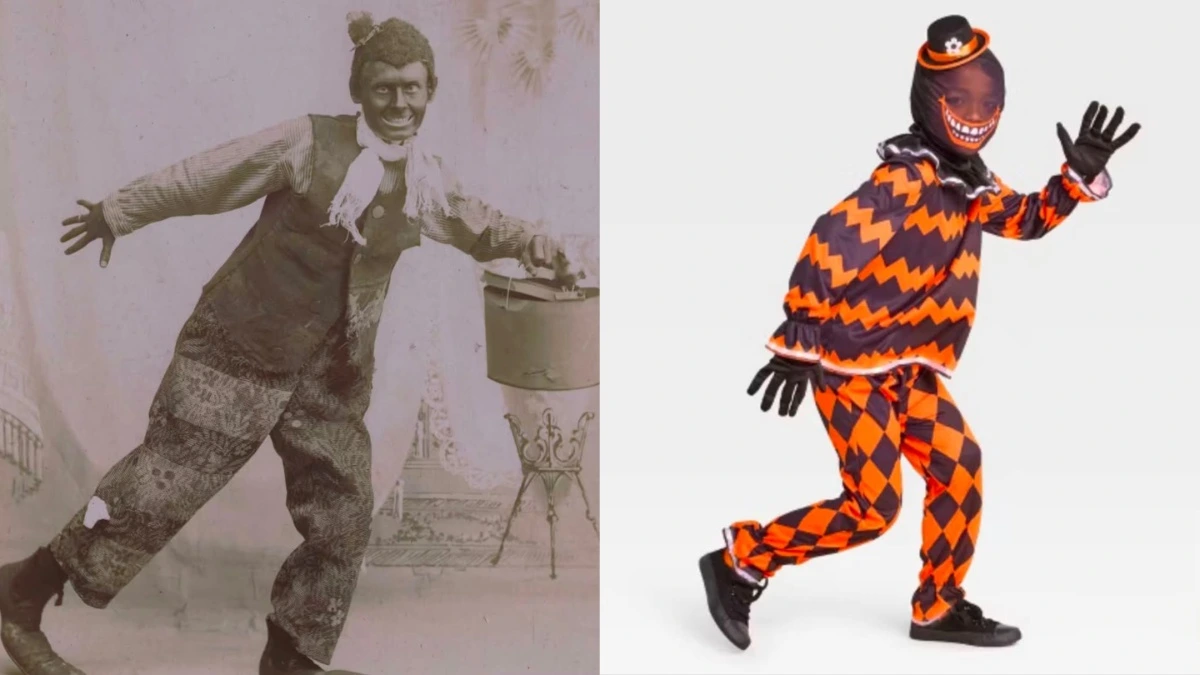
The image quickly drew online comparisons to racist imagery associated with historical blackface and minstrel stereotypes.
History of Blackface Minstrel Performances
Blackface minstrelsy involved white performers using burnt cork or paint to darken their skin and adopting exaggerated facial features to mock African Americans.
Did Texas Roadhouse Employees Spit In Black Customers’ Food? What We Know About the Viral Post
Thomas Dartmouth Rice, a white performer often dubbed the “Father of Minstrelsy,” popularized the Jim Crow caricature through blackface performances in the 1830s.
Blackface performances became particularly popular after the Civil War and continued into the early 20th century, particularly in Northern and Midwestern cities.
Some social media users said the Target costume’s imagery was too similar to historical blackface caricatures to be ignored.
“Thanks Target! I will be using you as a reference to the ongoing racism in the United States when I teach Jim Crow this year. Teachers across the country now have primary source evidence of modern day racism,” @tyrannosaurus.valley commented on Threads.
The social media user also posted a picture of a man in blackface in a similar position to the child in Target’s product image.
“Someone made a child pose for this picture. I hope they are fired, shunned, and shamed,” another Threads user said.
‘I’ve Seen This Before’
The controversy drew comparisons to a 2018 incident involving H&M.
“H&M all over again,” a user wrote, adding a picture from a former H&M ad campaign.
In January 2018, H&M faced severe backlash and accusations of racism after featuring a Black child wearing a green hooded sweatshirt printed with the words “coolest monkey in the jungle.” Celebrities including The Weeknd and LeBron James criticized the brand.
The company pulled the image, apologized and stopped selling the item globally.
A Mountain of Backlash
Target has also faced criticism over its handling of diversity, equity and inclusion initiatives. The company became the subject of a nationwide boycott in 2025 after scaling back its DEI programs. The ultimately concluded in March 2026.
The latest controversy has prompted some social media users to question how the costume and its accompanying image made it through the company’s approval process.
“I need to see more than a removal of the item, I need to see who designed it, who photographed it, who approved it on all levels. Hell, I need to see the parent that let their child be used this way,” said one social media user.
Target released a statement on their Instagram on Aug. 24 about the incident.
“As a company, we know we got this wrong, and we are deeply sorry,” the statement said.
“We know this is especially hurtful for our Black guests, team members and partners. Removing the costume is an important first step, and we are looking closely at how this happened and what needs to change to ensure this won’t happen again.”


