A group of lawmakers, local leaders, and citizens are working to investigate hundreds of graves at the site of a former Maryland juvenile detention center.
The commission met earlier this month to discuss how to conduct its study. They are tasked with finding out how hundreds of Black youths died at the former state-run center, House of Reformation and Instruction for Colored Children.
The Maryland General Assembly passed legislation to form the group earlier this year. It’s chaired by Maryland Attorney General Anthony Brown.
“They were beaten… forced to labor,” Brown told NBC 4. “They were denied an education. They were malnourished and medically neglected.”
Horrifying History
Between the 1870s and 1941, hundreds of Black children – some as young as five years old – died while confined at the House of Reformation. It became the South’s first juvenile “reformatory” for Black boys.
‘I’m a Kid!’: Ring Camera Catches Ohio Cops Detaining Black Child
Before the center was formed, Black boys facing charges would be locked up in adult prisons. Juvenile detention centers were for white children only.
Years later, the House of Reformation was established, pulling 400 Black children out of adult prisons – the youngest being 5 years old.
As the institution operated for decades, children were forced into unpaid labor while experiencing severe neglect and physical abuse.
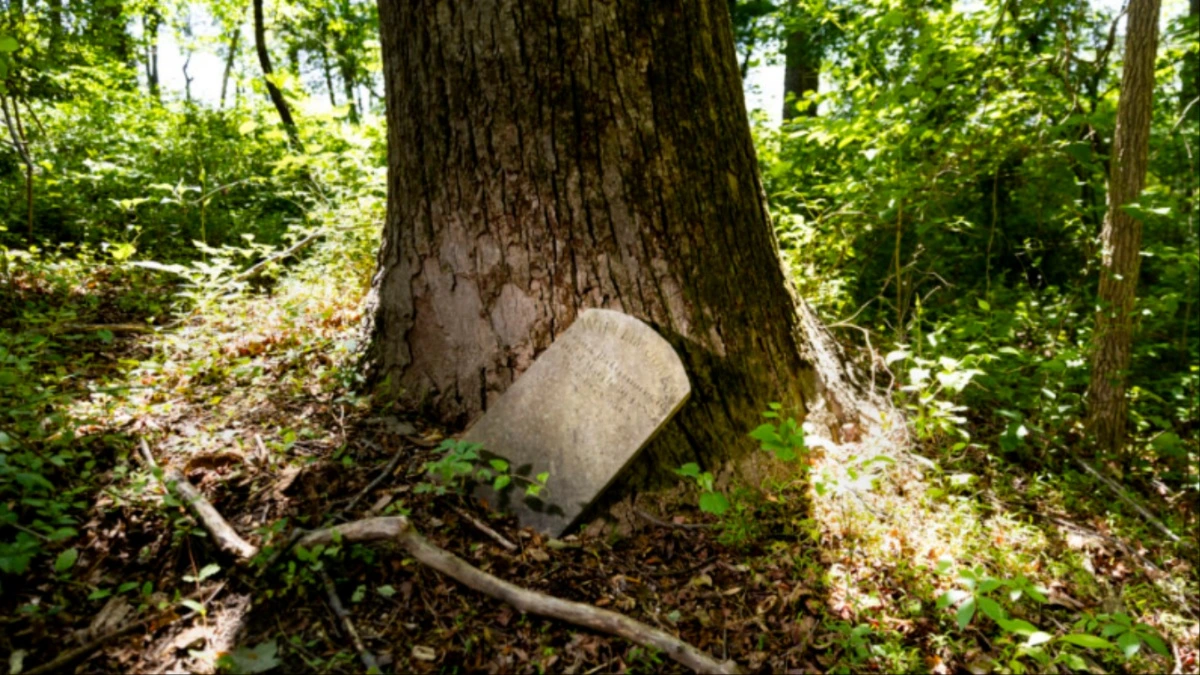
Maryland Department of Juvenile Services uncovered a burial site within a mile of the current facility, the Cheltenham Youth Detention Center in Prince George’s County, according to the governor’s office. It is believed to be the final resting place for more than 230 children who died in state custody.
Vinny Schiraldi was among the group who rediscovered the cemetery. The former Maryland Department of Juvenile Services secretary described to NPR in 2025 what it’s like to visit the site.
“There are two parts to the site, one where there are a bunch of gravestones with young people’s names on them, and you see 13-year-olds, 15-year-olds. But the other, to me, is worse because that’s just a row of old, dilapidated, moss-covered cinder blocks,” Schiraldi said.
He explained that as he looked around that specific area, he noticed more and more of the moss-covered cinder blocks.
“You know you’re in a site where many, many children have been buried in unmarked graves,” he said. “I cannot imagine what the conversation was like between the state and the parent that ended with the kid being buried in an unmarked grave.”
Study Begins
Commissioner Phyllis Hammond told NBC 4 her uncle, Amos Hammond, was buried at 18-years-old at the graveyard. Only a cinderblock marked his grave.
“It’s heart-wrenching,” she said. “They didn’t grow up easy. I think that’s why my father never talked about his family.”
According to Amos’ death certificate, obtained by the outlet, he died at the House of Reformation in 1921 of acute peritonitis, which can lead to a life-threatening infection.
“They try to have a good reasoning for most of the deaths that happened there,” Hammond said. “And, you know, questionable, very questionable as to how these young men died. And especially when you’re looking at over 300 and some young men.”
The commission has four purposes: to research the history and operations, provide a complete account of the children who died, promote healing, and make recommendations for systemic reform.
The group will also decide if any of the bodies should be exhumed or if there are some graves that should be left alone. It’s also unclear if they will work with families to move the remains to other burial sites.
“I’m grateful to be on this journey,” Hammond said. “It’s not going to be an easy journey. It hasn’t been. I’m still grieving; all the families are still grieving. But I’m just so thankful that this has been revealed.”
Honoring Hundreds of Black Children
The state of Maryland recently honored the memory of the hundreds of Black children buried at the House of Reformation. In May, Maryland Gov. Wes Moore unveiled a roadside historical marker.
“Loving our state does not mean lying about its history. It means telling the truth—even when the truth is hard,” he said.
“What happened on these grounds was state-sanctioned harm, and acknowledging that is only the first step. My administration, in partnership with the Legislative Black Caucus, is dedicated to the work ahead — to find these children, learn their stories, and ensure they have eternal peace.”
Atlanta Black Star reached out to the commission to learn more about its efforts, but has not heard back.


