A Wisconsin woman says she is still shaken after police pulled her over at gunpoint because a license plate reader identified her vehicle as being connected to a Milwaukee homicide.
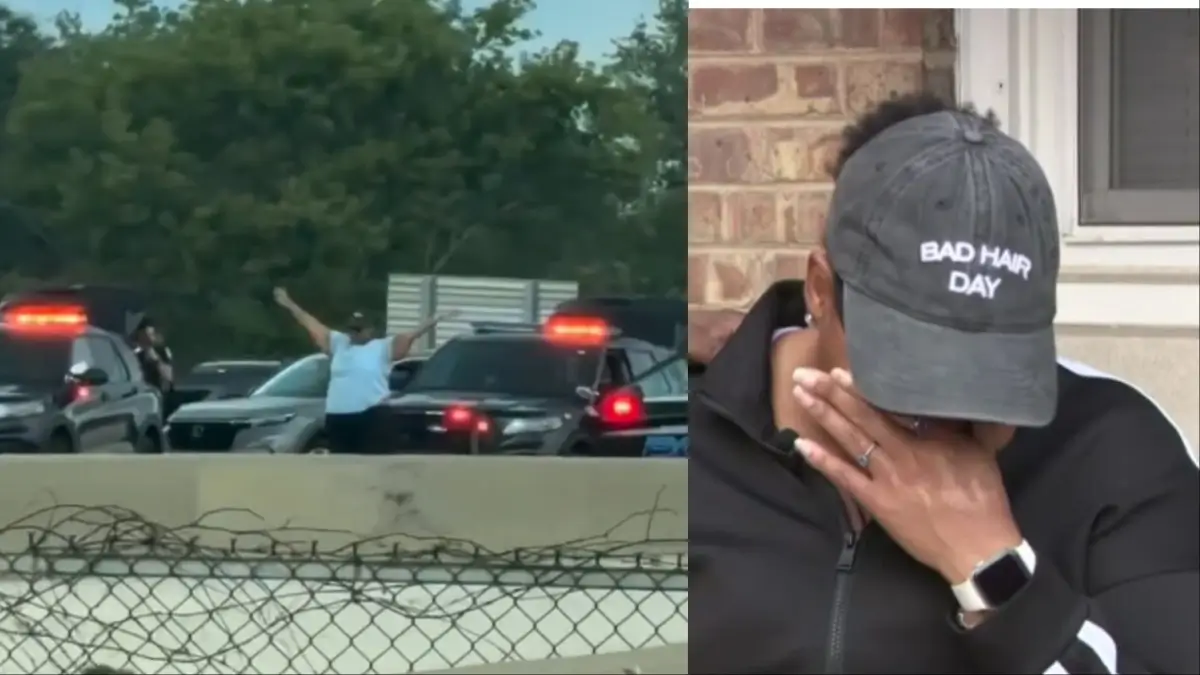
Amber Newell was driving on I-94 in Brookfield, Wisconsin, on Aug. 6 when multiple officers surrounded her vehicle with their guns drawn. Video from the scene shows officers ordering the occupants out while a passenger holds their hands outside the window.
But when Brookfield officers contacted the Milwaukee Police Department, they learned that officers no longer needed the vehicle or the people inside it. They then released Newell and the other occupants.
The Error
The error, according to Milwaukee police, came from inside the department. Officials told FOX 6 that the Flock camera itself did not malfunction. Instead, department staff failed to remove an outdated alert for a wanted vehicle from the system.
That distinction did not stop Brookfield police from defending the traffic stop. Police Chief Christopher Garcia said his officers acted “consistent” with the information available to them when they encountered Newell’s vehicle.
Newell, however, said the experience left her terrified.
“I haven’t been asleep since this has happened,” she told the outlet. “Every time I close my eyes, all I can see is guns.”
She said officers surrounded her car, pointed their weapons at the occupants, and ordered them to come out with their hands raised. Newell said she wanted to call her mother during the encounter but feared that reaching for her phone could trigger a deadly response.
“My momma is like my go-to person, I wanted to call her so bad yesterday, but I’m like, if I make a sudden move, it’s gonna be over, it’s going to end my life,” she said.
Officers eventually placed Newell and the other occupants in handcuffs. She said the situation became humiliating as people driving along the interstate watched and recorded the stop.
“It was very embarrassing because after they put us in cuffs, they walked us to the car. I don’t know what’s going on. I’m scared, all you see is people in they cars recording,” Newell said.
Newell said the officers repeatedly told her that Milwaukee police were responsible for the mistake.
“The only thing they said was to contact Milwaukee Police Department, it’s their fault,” she said. “That’s all they kept saying: it’s their fault, it’s not our fault, it’s their fault.”
Not the First Time
The Aug. 6 incident was also not Newell’s first encounter with officers that week. She said Milwaukee police pulled her over the previous Monday with their guns drawn. She said officers never explained why they stopped her, towed her vehicle, and eventually released her.
The repeated encounters have left Newell afraid to drive. She said her daughter has also become frightened of getting into the car.
“My daughter keep asking me, ‘Mama, is the police going to get us?” Newell said. “She doesn’t want to ride in the car no more because she don’t know if the police going to pull us over and do it again.”
Newell said she wants Milwaukee police to acknowledge what happened and explain how the outdated alert remained active.
“I’m really mad at Milwaukee, MPD because y’all failed, y’all failed the system, y’all failed me, y’all failed everybody – I’m traumatized now,” she said.
It’s still unclear what homicide detectives had connected Newell’s car to.
Flock System Scrutiny
The incident has also renewed scrutiny of Flock cameras, which use AI license plate readers to scan vehicles and record where they appear. The technology can operate without a warrant and has faced criticism from communities concerned about privacy and potential misuse.
That concern is not limited to Newell’s case. Two Milwaukee police officers have faced separate criminal cases involving allegations that they improperly used the department’s Flock system to track citizens for personal reasons.
Flock acknowledged that communities have questions about law enforcement surveillance but said agencies control their own data and can review searches for potential misuse.
“We understand that people have legitimate questions about any technology used by law enforcement, and we welcome that conversation,” the company said. It added, “We do not believe communities should have to choose between privacy and public safety.”
Flock also said, “Any misuse of the Flock system is unacceptable,” and deferred to Milwaukee police, prosecutors and the courts regarding the specific facts of the case.
For Newell, the explanation has not erased what happened on the interstate. She remains afraid to drive and is seeking answers from the department whose outdated alert triggered the encounter.


