Robert F. Kennedy Jr. holds one of the most powerful jobs in the federal government, helping make decisions that affect the health of millions of Americans. But there is one basic thing the Trump administration official says he currently cannot do: vote.
The Health and Human Services secretary made the bizarre admission Tuesday while appearing with Housing and Urban Development Secretary Scott Turner at an event in Los Angeles.
Asked about the upcoming Los Angeles mayoral election, Kennedy said he is stuck in a “very strange position” because he has no legal residence in any state.
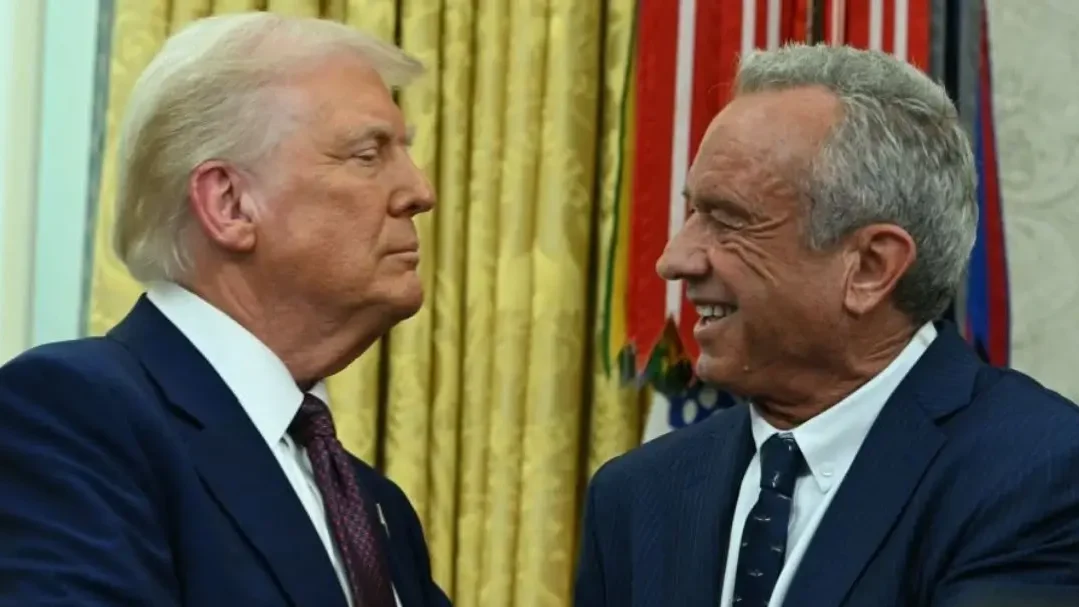
“I’m in a dilemma where I literally have no state where I can legally vote right now,” Kennedy told reporters.
The unusual problem dates back to Kennedy’s failed independent presidential campaign in 2024, and a court fight over whether he was actually a New York resident.
Kennedy blamed Democrats for his predicament, saying the party initially sued to remove him from ballots in several states before trying to keep him on ballots after he dropped his presidential bid and endorsed President Donald Trump.
“And in the course of one of those lawsuits, it was declared that I had no legal residence,” Kennedy said.
But that explanation leaves out some important details about what happened in court.
New York Judge Christina Ryba ruled in August 2024 that the Katonah, New York, address Kennedy listed as his residence on presidential nominating petitions was invalid.
Kennedy maintained that he rented a bedroom in a friend’s Westchester County home and intended to eventually return to New York. He had been living in California with his wife, actress Cheryl Hines.
The judge wasn’t buying it. Ryba called Kennedy’s claimed New York residence a “sham” and found the idea that he would eventually move into the small rented room “highly improbable, if not preposterous.”
The ruling ultimately kept Kennedy off New York’s presidential ballot. He appealed but lost. Then the residency controversy took another turn.
Watchdog group Accountable.US later accused Kennedy of voter fraud after he reportedly voted in New York during the 2024 election using the same Katonah address the judge had rejected.
Kennedy has since established another connection to Washington, D.C. In 2025, he purchased a roughly 4,800-square-foot Georgetown property that CBS News reported was originally listed for $4.85 million.
Still, Kennedy now says he has yet to figure out where he can legally cast a ballot.
“I’m probably the only person in the country who’s a legal citizen who has that dilemma,” he said. “But I’m still trying to figure it out before the next election.”
The timing could hardly be more awkward. Kennedy’s voting dilemma comes just months before the 2026 midterm elections, when every House seat and roughly one-third of the Senate will be on the ballot.
Trump has made keeping Republican control of Congress a major priority and has openly warned Republicans about what could happen to him if Democrats take back power.
In January, Trump warned Republicans they needed to win the midterms or risk his impeachment.
Kennedy, meanwhile, has become one of the administration’s most controversial Cabinet officials.
The former environmental lawyer rose to greater political prominence during the COVID-19 pandemic while promoting vaccine skepticism and challenging public health institutions. Since taking control of HHS, his leadership has continued to draw criticism over vaccine policy and clashes with scientists and medical groups.
He has also generated attention for an extraordinary collection of personal stories, including his disclosure that doctors once found a parasitic worm in his brain and his admission that he dumped a dead bear cub in Central Park.
Kennedy has also recounted cutting the head off a dead whale with a chainsaw and, more recently, removing the genitals from a dead raccoon because he wanted to examine them later.


