Richard Pryor’s legacy lives on as the world remembers his raw and edgy jokes.
Through his vulgar storytelling and profanity-laced skits, the late comedian built a career exposing life’s contradictions through raw comedy that tackled poverty, racism, and the Black American experience.
Offstage, the father of seven children led a family life that was just as complex.
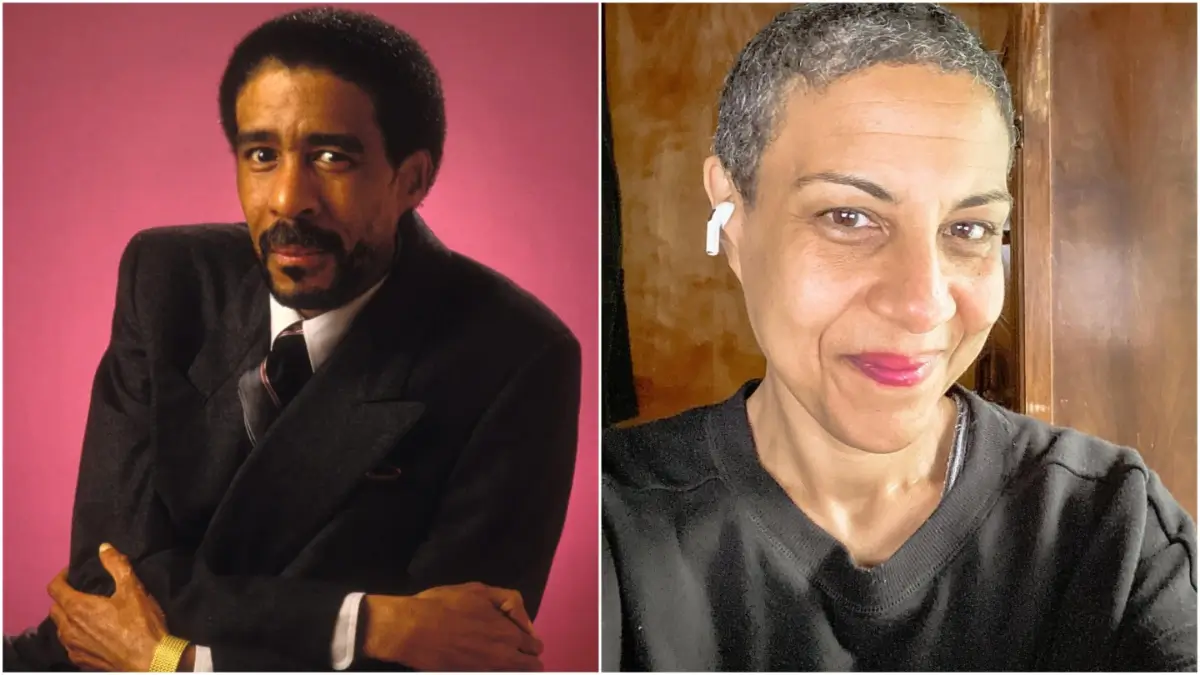
Pryor fathered seven children with six different women: Renee, Richard Jr., Elizabeth, Rain, Steven, Mason, and Kelsey.
They grew up with their mothers in cities across the country, including Illinois, New York, and Los Angeles. Some followed their father’s path into entertainment, while others built lives far from the spotlight.
But one moment stuck with his third-oldest daughter, Elizabeth Stordeur Pryor, and nearly altered her view of her own family.
While Pryor made history onstage, his daughter built a career challenging America’s understanding of race as an acclaimed author and professor.
Last month, Elizabeth released her memoir, “Something We Said: Richard Pryor, a Notorious Word, and Me.”
In it, she reveals the jarring moment she was called the N-word during a heated argument at 12.
Though she saves the details of the altercation for the book, she spoke candidly about the painful memory in a July 1 interview with People.
“Even with what my mom said, with the ways my mom mishandled — that’s the light way of saying it — the racial dynamic in our relationship, she loved me,” Elizabeth shared.
She continued, “I’ve always known that my family has, but to be entirely honest, it’s still not a conversation that I’ve been able to sink into and have with them perhaps on the level that I would like to.”
Elizabeth said she’d like to discuss it with more “curiosity like, ‘Did you know that I was Black?’ or ‘Were you told to behave in a particular way around it?’ to my cousins mostly. Those kinds of questions, because they’re the ones who are living now.”
In 1963, Pryor moved to New York City to pursue his comedy career. While there, he met a Jewish woman named Maxine Silverman, with whom he had a daughter, Elizabeth, born in 1967.
They broke up shortly afterward, and Elizabeth moved to Los Angeles with her mother.
Pryor married another woman that same year, Shelly Bonis, the mother of his daughter Rain. They divorced that same year.
Fans responded to the story with their own reactions. One fan candidly said, “And that woulda been the day my mama caught hands.”
Another person responded, “Blame your dad for playing in the snow.”
A third person who seemed unfazed commented, “She can’t be that shocked as much as her dad used it in his standup comedy.”
“She was married to Richard Pryor lol she probably said worse things than that,” suggested a fourth person.
Pryor passed away in 2005 after suffering a fatal heart attack following a years-long battle with multiple sclerosis. Silverman passed away nearly a decade later in 2014.
While many admitted that Pryor is just as raw in his rhetoric, they also agreed that no one should be called out by name by their parents.
“Every body saying ‘what Richard Pryor said’ that’s not the point…. it still does not justify the fact that she was called outta her name. Richard Pryor was a comedian, he said s–t to make ppl. So I’m sure when he said it, if he said it, it’s not the same as when ur mom ( white lady) says it or calls you that.”
Stordeur Pryor’s book explores the historical and contemporary use of the N-word and how her father helped popularize it.
As a professor at Smith College in Massachusetts, she won a 2016 award for an essay on the slur and later gave a 2020 TED Talk on “Why Is It Hard to Talk About the N-word.”
Her interest began in 2010 after a white student quoted a line from 1974’s “Blazing Saddles, a film Pryor reportedly wrote several scenes for.