“The Fresh Prince of Bel-Air” actress Tatyana Ali is using her platform to amplify Black maternal health advocacy. Ali, 47, knows first-hand how it feels to be treated harshly during one of the most vulnerable experiences in a woman’s life.
The former child star is a mother to two sons, Edward “Aszi” and Alejandro Vaughn, both of whom she shares with her husband of ten years, Stanford University literature professor Vaughn Rasberry.
However, her journey into motherhood is a tale of harrowing coercion.
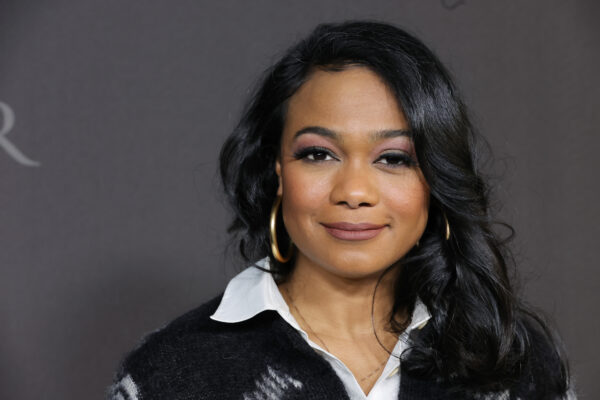
Ali reflected on the trauma during the April 27 episode of the “Pod Meets World” podcast with “Boy Meets World” stars and co-hosts Rider Strong, Danielle Fishel, and Will Friedle.
Ali and her husband welcomed their firstborn in 2016. Her healthy pregnancy spiraled into a challenging delivery made unforgettable due to “obstetric violence.” “Our birth plan wasn’t followed,” said Ali, adding, “I was held down, my arms and legs” by the restraints that preceded aggressive medical intervention.”
The “Abbott Elementary” standout shared, “I mean, I’ll be real with you, they pushed him back inside me… that’s what happened. My baby was all the way crowned… That’s not a real procedure.”
Ali said her medical records don’t explain the reason for the intervention, even noting that she touched her baby’s hair despite files showing inconsistencies in his position in the birthing canal. “It’s an incredibly dangerous thing that they did; they could have snapped his neck, but this is after hours of them holding me down,” she said.
Aszi spent four days in the NICU after his birth. The “Daydreamin’” singer revealed, “He couldn’t pee on his own for a long time, for about five or six days.”
Ali says a pediatric urologist came to her bedside and said, “‘I saw what happened during your birth, the things that resulted in this emergency C-section.’ And she said, ‘I think the traumatic nature of his birth is what is causing this.’ That was the only person in the whole hospital who mentioned what happened. There was a lot of gaslighting.”
On X, a fan tweeted, “That’s a heavy testimony… and it really highlights what many Black women have been saying for years about bias and mistreatment in maternity care. It’s a conversation that needs real accountability, not just awareness.”
Annually, Black maternal health is championed with a week-long campaign led by the Black Mama Matters Alliance. Ali is among the legion of women and men advocating for safer birth outcomes and treatment of Black mothers.
Statistics reveal that mortality rates among that group are three times higher than those of white women; disparities in the quality of health care are among the contributing factors.
The National Bureau of Economic Research also states that Black women have a greater risk of birthing complications, after determining they are 25 percent more likely to have a C-section than white women.
“When I became pregnant with my youngest, that’s when my journey really started because I couldn’t let it happen again,” said Ali, of her advocacy work. The birth of Alejandro in 2019 brought back fears when plans for a natural, home birth were derailed by a required a C-section.
Only this time was different. “There was somebody there who respected me, respected us as a family, got to know us as a family, guided us through everything, and gave us choices. It was incredible,” Ali told SheKnows in 2021.
Ali is among those lobbying to get the Momnibus Act, legislation aimed at eradicating medical disparity that would deter any preventable maternal deaths.

