A U.S. Olympian is speaking out after President Donald Trump publicly criticized him over comments about representing the country at the Winter Games.
Last week, Trump posted a sharp attack that pulled the Team USA skier into a political fight over patriotism and loyalty.
The controversy stemmed from a routine media exchange related to the 2026 Milan-Cortina Winter Games, during which American athletes were asked standard questions about competition and what it means to represent the country on a global stage.
Hunter Hess didn’t distance himself from the team or reject the uniform, but spoke honestly about how he feels about the country that he lives in.
“It brings up mixed emotions to represent the U.S. right now, I think. It’s a little hard. There’s obviously a lot going on that I’m not the biggest fan of, and I think a lot of people aren’t,” Hess said.
He explained that his connection to representing the country is grounded in personal relationships rather than politics, adding, “I think for me, it’s more I’m representing my friends and family back home, the people that represented it before me, all the things that I believe are good about the U.S.”
“If it aligns with my moral values, I feel like I’m representing it,” Hess continued. “Just because I’m wearing the flag doesn’t mean I represent everything that’s going on in the U.S. I just kind of want to do it for my friends and my family and the people that support me getting here.”
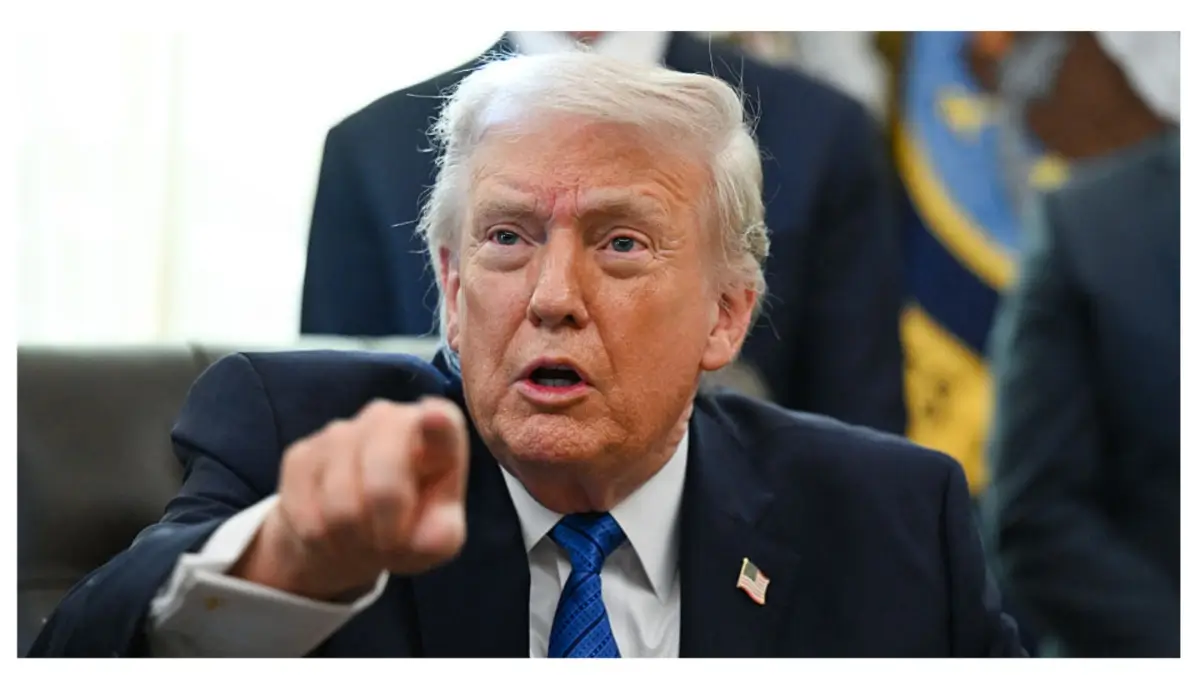
Trump responded publicly on Truth Social, framing Hess’ remarks as disloyal.
View on Threads
“U.S. Olympic Skier, Hunter Hess, a real Loser, says he doesn’t represent his Country in the current Winter Olympics,” Trump wrote, before writing, “If that’s the case, he shouldn’t have tried out for the Team, and it’s too bad he’s on it. Very hard to root for someone like this. MAKE AMERICA GREAT AGAIN!”
After seeing the post, Hess issued a clarification on Instagram on Monday, but didn’t back down.
“I love my country,” he wrote.
“There is so much that is great about America, but there are always things that could be better. One of the many things that makes this country so amazing is that we have the right and the freedom to point that out.”
He ended his message by emphasizing unity over division.
“The best part of the Olympics is that it brings people together, and when so many of us are divided we need that more than ever. I cannot wait to represent Team USA next week when I compete.”
Fans quickly piled on support for his “bravery.”
“You are so brave!”
“Proud of you for speaking up.”
“Calling an Olympian a loser? GTFOH.”
Moments like this are not new to the Olympic stage. Long before athlete protests became routine headlines, U.S. Olympians were already challenging America in full view of the world. At the 1968 Mexico City Olympics, Tommie Smith and John Carlos raised Black Power fists on the medal podium, calling out racial injustice at home and signaling that the nation’s ideals did not always match its reality.
However, unlike Trump, President Lyndon Johnson did not condemn the athletes.
This particular controversy with Hess and Trump played out as Olympic attention overseas was already heightened. During the Opening Ceremony in Milan, Team USA athletes were met with cheers as they entered San Siro Stadium. The mood shifted when Vice President JD Vance and his wife, Usha Vance, appeared on the stadium’s Jumbotron.
Cheers faded into boos, a moment that spread quickly online before the broadcast cut away.
Back in the U.S., Trump’s post sparked immediate reaction on Threads, where users criticized the former president and defended Hess.
One person wrote, “Dodged the draft 5 times, 2 impeachments, 2 divorces, 6 bankruptcies, 34 felony convictions. But Hunter Hess is a loser?”
Another added, “Imagine using the power of the presidency to bully an Olympic skier because he didn’t perform the required loyalty ritual. That’s not strength. It’s insecurity with a megaphone.”
A third comment focused on irony, writing, “Calling an Olympian a LOSER when he cant accept that he was a fkn LOSER in 2020 election..is pure irony….fkn.”
Supportive messages also circulated.
“GO HUNTER!!! American’s on the right side of history are rooting for you,” one Threads user wrote.
Another posted, “We support you, Hunter Hess. Don’t listen to the guy who just s—t himself.”
One comment broadened the scope beyond Hess alone.
“The athletes get ZERO funding from the United States. Zero tax dollars support their work,” the critic wrote, adding, “They get to the Olympics through years of hard work & dedication to their sport. Anyone who doesn’t understand the 1st Amendment rights of the athletes does not understand the Constitution applies to all citizens all the time. Your VP is being booed on the world stage. It’s not just people like Hunter Hess speaking out. Nobody likes you. At all.”
Team USA declined to comment on the situation, according to AXIOS.
Hess has not responded directly to Trump’s remarks and remains focused on preparing for competition.
What began as a measured answer about personal values has instead become another example of how Olympic moments, once intended to unify, now routinely double as political flashpoints.


