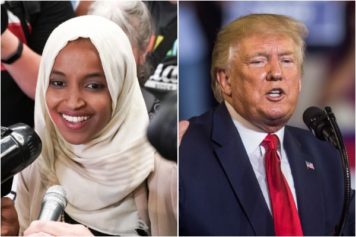
President Donald Trump tried to stage a moment of vindication from inside the White House, but the spectacle collapsed on contact with the public — turning a celebratory post into a referendum on recklessness, distortion, and an administration that mistakes outrage for power.
It exposed an administration that no longer seems able, or willing, to distinguish between propaganda, provocation, and the responsibilities of governing.
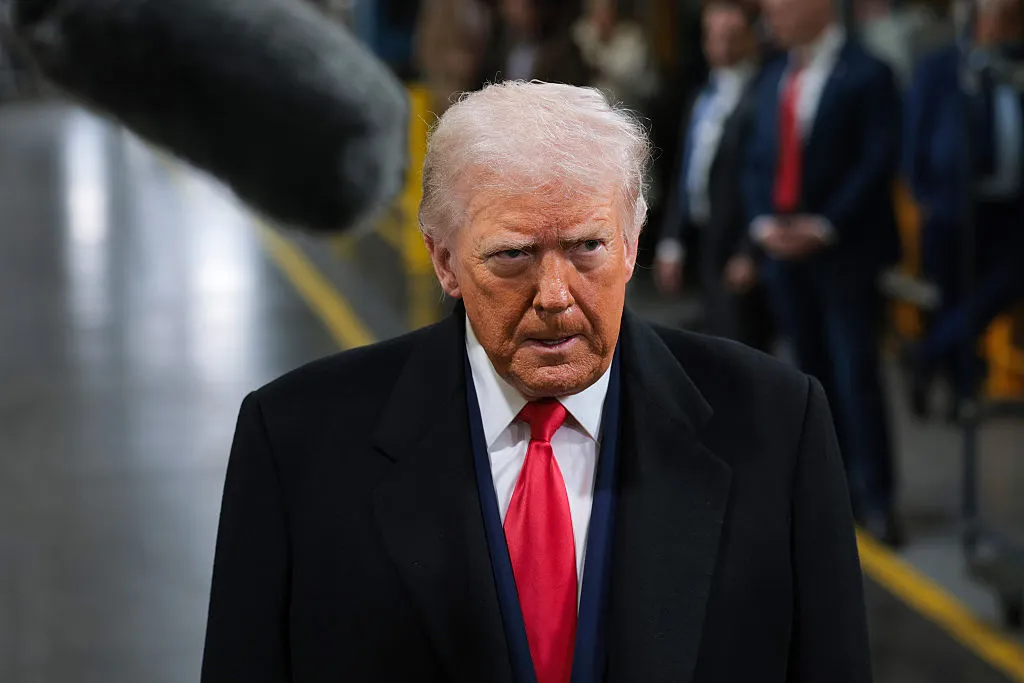
The post, shared from the White House’s official social media accounts, paired Trump’s infamous 2023 Fulton County mug shot with his 2024 Time Person of the Year cover.
Above the booking photo: “How it started.” Above the glossy magazine spread: “How it’s going.” The caption was a single word — “MAGA” — followed by a fire emoji, as if daring the internet to applaud.
Instead, it collapsed into a merciless pile-on.
Within hours, the comment section was overwhelmed, cresting past 6,000 replies as critics drowned out the MAGA faithful. The brag — if it was meant to be one — landed sideways.
To make matters worse, this wasn’t a random campaign account or a fan page. This was the White House — the same institution now openly displaying Trump’s gold-framed mug shot just outside the Oval Office, worn not as a scarlet letter but as a badge of honor. The image, taken after Trump was booked in Georgia for trying to overturn the 2020 election, now hangs feet away from the most powerful office in the country.
The Time cover was treated the same way — not as a complicated recognition of disruption “for better or worse,” but as unambiguous praise.
But the internet wasn’t interested in joining the celebration.
One viral repost from user JP “fixed” the image by replacing “Person of the Year” with “Pedophile of the Year,” a brutal callback to the Epstein scandal Trump cannot outrun.
Despite campaigning on promises to release the full Epstein files, Trump’s Justice Department has stalled for months, even after Congress mandated their release. The delay has only intensified suspicion — and ensured that every attempt at self-congratulation gets rerouted back to the same unresolved question.
Others used the moment to widen the frame.
Poster Wael Khoury reposted the image alongside a graphic reading, “How Trump Used the Presidency to Pocket $1,408,500,000,” referencing Trump’s post-election cryptocurrency windfall and the monetization spree that followed — from merch and media ventures to branded consumer products bearing the presidency’s imprint.
Another viral repost featured a dazed-looking Trump at the World Economic Forum in Davos, captioned simply: “Dementia MAGA.”
Then came the “T.A.C.O.” edits — an old internet nickname resurrected to mock Trump’s pattern of issuing sweeping tariff threats, only to retreat days later. The acronym spread again, shorthand for what critics see as bluster followed by collapse.
And hovering over all of it was a darker subtext: this White House doesn’t just tolerate distortion — it produces it.
Just days later, the administration posted an altered image of Minnesota protester Nekima Levy Armstrong’s arrest. Armstrong was protesting against U.S. Immigration and Customs Enforcement at a Minnesota church.

The accurage photo as first posted on X by Homeland Security Secretary Kristi Noem, however, the White House took it a step further and digitally manipulated her expression to make it appear as though she were crying.
Experts said the image was likely AI-edited. The post labeled her a “far-left agitator.” The vice president reposted it. No correction followed.
That incident wasn’t isolated. It was part of a pattern — an administration willing to erode public trust by any means.
“This is not the first time that the White House has shared AI-manipulated or AI-generated content. This trend is troubling on several levels. Not only are they sharing deceptive content, they are making it increasingly more difficult for the public to trust anything they share with us,” Digital forensics expert Hany Farid told CBS.