As speculation and questions about President Donald Trump’s health and fitness for office persist, no matter how hard Trump has tried to address the issue and even distance himself from all the talk, he may actually be hiding a dark secret.
A medical expert from Washington State University’s Elson S. Floyd College of Medicine believes the president suffered a stroke sometime last summer.
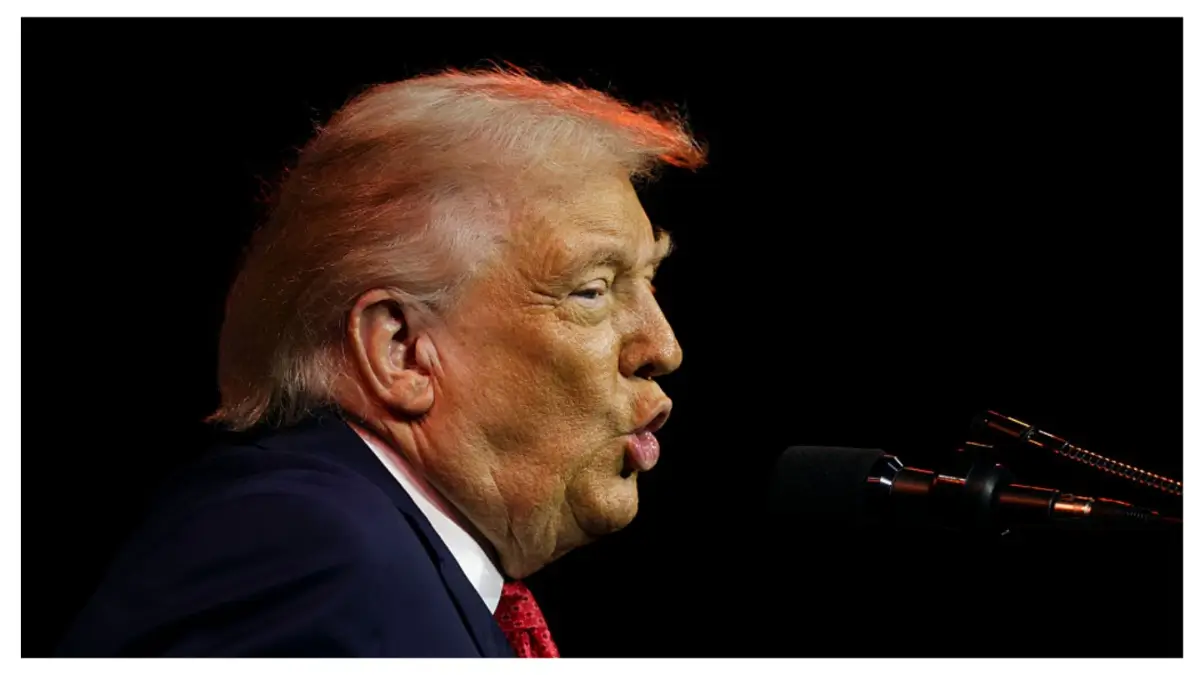
Professor of medicine Dr. Bruce Davidson told the podcast “The Court of History” that he thinks it was on the “left side of the brain, which controls the right side of the body,” according to The Daily Beast.
If Trump did suffer a stroke, it would explain troubling symptoms that have been obvious for some time, although Davidson did say he thought the President has been making a remarkable recovery.
“There are videos of him shuffling his feet, which is not what we’d seen previously when he was striding on the golf course. We’ve seen him holding his right hand cradled in his left. Earlier in 2025, he was garbling words, which he hadn’t done before and which he’s improved upon more recently,” Davidson said on the podcast.
Just a few weeks ago, during his arrival for his New Year’s Eve party at Mar-a-Lago, his Florida estate, he was seen slightly dragging his left leg before straightening up and trying to conceal it as he realized the cameras were on him.
And he’s also been caught on camera seemingly dozing off at White House meetings and events, especially over the past three months, and it’s now becoming even more common to see him napping in public.
Davidson says stroke victims commonly experience a condition known as hypersomnolence or “marked episodes of excessive daytime sleepiness,” which could help explain Trump’s persistent doziness, although the White House has repeatedly explained it away by claiming the President doesn’t sleep much and works very hard.
Of course, wild theories erupted online and sent social media into a frenzy of speculation.
View on Threads
Threads user How Route believes Trump had a stroke last May, posting a clip of Trump slurring a word as proof.
“Trump had a mini stroke during his Memorial Day speech in Arlington, VA.”
View on Threads
Another user thinks it happened in September when the President’s face appeared to droop on one side.
“The internet has diagnosed Trump. People think he had a stroke during the 9/11 ceremony. I am not a medical professional but it just looks like his face to me?”
View on Threads
Trump has also exhibited other health concerns, including swollen ankles from a condition known as chronic venous insufficiency, which affects many older Americans, and regular bruising on his hands, which could be related to thinning skin from a high dose of aspirin he’s been taking for decades.
In an interview with The Wall Street Journal earlier this month, Trump admitted to ignoring a doctor’s order about taking a low dose of daily aspirin. He says he’s been taking a high dose for decades and plans to continue.
He’s also admitted before and did so again to The WSJ that he doesn’t like to exercise, except for golf, and his penchant for high-fat, salty fast food is well known, along with his addiction to diet soda.
Trump is the oldest person to assume the presidency. He was 78 years old when he was inaugurated for a second term last January and turned 79 over the summer.


