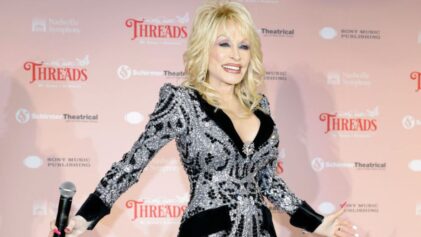
Social media erupted in controversy following the Valentine’s Day release of Dolly Parton and Sabrina Carpenter’s collaborative rendition of “Please Please Please.”
Fans are divided over the unexpected vocal pairing of the country legend with the pop star. The duet, released as part of the deluxe edition of Carpenter’s album “Short n’ Sweet,” has drawn sharp criticism, particularly regarding the production quality of Parton’s singing.

Social media users were quick to express their disapproval, with one asking, “Were the vocals mixed in a barn?” while another dismissively said, “Not the cowmix.”
The criticism grew nastier in tone with comments like “SHE SOUNDS LIKE A GRABDMA !/?:?” and suggestions like “we can just forget this song exists like the yes and remix ft mariah… SHORT N SWEET DELUXE OUT IN A FEW HOURS.”
Some critics targeted the genre-crossing attempt itself, with one user declaring that Carpenter “should really stop making country music cuz it does NOT fit her and it sounds horrible asf.”
HELPPPPP😭😭😭💀 pic.twitter.com/gfEvYHsZmi
— Ravenclaw (@WhiteRavern) February 13, 2025
Others took a more measured approach, noting,”i love dolly but i think their voices just don’t mix well together this was poorly made.”
Another said, “I really wanted to like please x3 with Dolly Parton but why does it sound so off. Like I don’t know if it’s just me but Dolly’s vocals just sound really strange help.”
The backlash has sparked a fierce defense of the 79-year-old country icon, with supporters rallying behind Parton’s legendary status.
“Don’t you dare put dirt on Dolly’s name!!!!!!!!!” one fan passionately tweeted, while another exclaimed “HOLD UP NIE.. NOT TOO MUCH ON MS PARTON.”
Another said, “There’s nothing wrong with how Dolly sounds, it just seems like these were not recorded or mixed in the same way at all so they feel disconnected. They should’ve got them together in a room to record this together it would’ve been more cohesive than slapping Dolly onto the og.”
Others drew connections to broader industry debates, noting, “the same people hating on the dolly parton cover of please please please are the same ‘beyoncé shouldn’t have won’ people, ironic isn’t it.”
Some fans redirected the conversation, with one commenting, “Seeing Sabrina Carpenter + Dolly Parton on the Please Please Please remix music video just reminded me that Beyonce is not giving us videos for 2 albums now.”
This controversy mirrors recent debates surrounding another country music crossover: Beyoncé’s 2024 album, “Cowboy Carter,” which features a cover of Parton’s classic “Jolene.”
While some critics, including Megyn Kelly, accused Queen Bey of missing the original song’s essence, Parton herself embraced the new interpretation, expressing enthusiasm on Instagram, “Wow, I just heard Jolene. Beyoncé is giving that girl some trouble and she deserves it!”
The mixed reception to Parton’s recent collaborations stands in stark contrast to the universal acclaim received by Whitney Houston’s 1992 cover of Parton’s “I Will Always Love You.”
Originally penned and recorded by the country superstar in 1973, the song found renewed life as the lead single for the movie “The Bodyguard” after lead actor Kevin Costner suggested it when the original choice fell through.
Parton recalled being deeply moved when she first heard Houston’s version while driving.
Houston’s rendition became a global phenomenon, topping the Billboard Hot 100 for 14 consecutive weeks and selling approximately 9 million copies worldwide.
As the debate over the new “Please Please Please” continues, the collaboration stands as another chapter in Parton’s storied career of crossing musical boundaries and generations.