One of the most famous legends in soul music history revolves around singer Al Green, an obsessed lover and a pot of grits. While this tale has been incorporated into countless stand-up comedians’ routines and has become a popular cultural reference for women seeking revenge on their cheating partners (à la Lorena Bobbitt and her infamous carving knife incident), the true story behind the incident remains relatively unknown.
In the mid-’70s, Green was one of the most successful artists in the world. Between 1971 and 1974, he sold over 20 million albums and had five consecutive hit songs: “Tired of Being Alone,” “Call Me,” “Let’s Stay Together,” “You Ought to Be With Me,” and “I’m Still in Love With You.” He was also an undeniable sex symbol, with groupies flocking to him in every state.
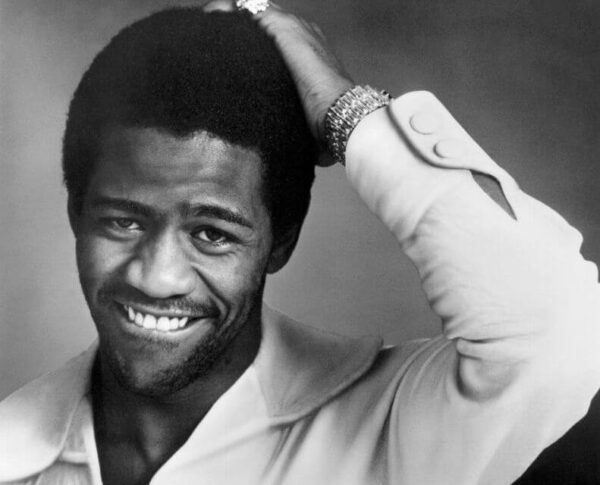
Recently, a video resurfaced from the 1984 documentary “The Gospel According to Al Green” featuring the “Love and Happiness” singer detailing what happened that day at his Memphis home in 1974.
According to the singer, he was seeing a 29-year-old woman by the name of Mary Woodson, who confessed that she was in love with him. Unbeknownst to Green, when he met Woodson, she had just left her husband and three children behind in New Jersey to attend his concerts in New York.
After returning to his Memphis home from a show in San Francisco, Woodson unexpectedly appeared to confront the star about her feelings. Unfortunately, Green didn’t quite feel the same for her, he explained. When he admitted he liked Woodson and was comfortable with their casual situation, her tone seemingly switched from love to obsession.
“She says, ‘Well, I love you, and I don’t want to go on without you,’” Green recalled. She told him that she didn’t want “to be involved in anything else” other than a relationship with the star.
Green responded, “Well, please don’t take that ‘do or die’ attitude about things,” before adding, “Man, you know there’s life to live.”
Green admits that he did not take her desperation seriously and kept stressing how they were both “free” to do as they pleased. But Woodson didn’t see it that way. She wanted to be married to him despite already being married with a family in New Jersey.
“She asked me if I would marry [her]. I says, ‘Well, nah. I don’t think I’m ready to get married.’ This is 1974. I mean, I’ve just been in this [the music industry] two or three years, you know,” Green recalls.
According to the soul singer, he went upstairs in his house and closed the door to rest. After a while, he got back up, went downstairs, and saw Woodson boiling water. Despite inquiring as to why Woodson was boiling the water, she brushed him off.
Green then went into his bathroom to bathe. While attempting to exit the tub, Woodson barged in and poured the pot of scalding-hot grits down his back.
“I had on this little thin robe. … I’m in total pain and shock,” said Green.
The 11-time Grammy winner said that Woodson added the grits to the boiling water to make it stick and “slime” up.
“All of a sudden, I’m full of it. This is so much pain, and I reach back, and I got two fingers full of skin. I went over, after being full of grits, jumped in the shower because I’m ached all over, and I called this girl from next door over to help me because I’m in total, you know, and man, I’ve got these big boils on my skin. And I am in total pain. I can’t believe the pain,” he explained.
Soon after dousing the singer in hot grits, Woodson retreated to a bedroom and shot herself with Green’s .38 handgun.
He added, “All of a sudden, you hear (he makes a sound of shooting). Then that was the end of that. You hear something hit the floor … boom!”
The then-27-year-old, still in pain from being burned, said he asked what the noise was and was then told that that was gunshots and that his girlfriend was dead. After the shooting, he instructed someone to call the police.
“It looks like suicide,” said Inspector Dan Jones to the New York Times in 1974. Jones also revealed that a three‐page suicide note written on motel stationery was found in Woodson’s purse. Green suffered second-degree burns on his back, arms, and stomach and required skin grafts.
The publication tells a slightly different story than Green did.
Police Capt. William Maley reported that the Arkansas native told the police that he had returned to his home around 4 a.m. after recording a soundtrack for a new film. He was accompanied by another woman, Carlotta Beth Williams from Denver, aged 21.
Green said shortly after getting in, he went upstairs to take a bath and was just getting out of the tub when Woodson burst in, threw a pan of “hot boiling grits” on him, and then ran out of the room and shot herself with the firearm.
Shortly after the incident, Green would later renounce his secular career and dedicate himself to spreading the gospel.
According to Davin Seay, who collaborated with Green on his 2000 autobiography, “Take Me To The River,” the singer doesn’t immediately connect his embracing of the faith to the traumatic events of Oct. 18, 1974.
“He likes to distance the facts of his [religious] conversion from the terrible events of that night,” says Seay, “but I think the Woodson incident kind of crystallized his need to move on, to sort of shut down one part of his life and open up another.”