Following the United States Army’s historic decision last year to overturn the convictions of 110 Black soldiers court-martialed for their roles in the 1917 Houston riots, the Department of Veterans Affairs sought to correct the injustice with new headstones for 17 of the soldiers.
The VA’s National Cemetery Administration held a memorial ceremony in San Antonio, Texas, last week to dedicate headstones for the resting places of the World War I soldiers of the 3rd Battalion, 24th Infantry Regiment, who were among those executed after being charged with murder and mutiny for their roles in the riots, the VA said in a news release.
The 17 soldiers’ bodies were put in a mass grave until they were exhumed, identified and buried at Fort Sam Houston in 1937, the Military Times reported.
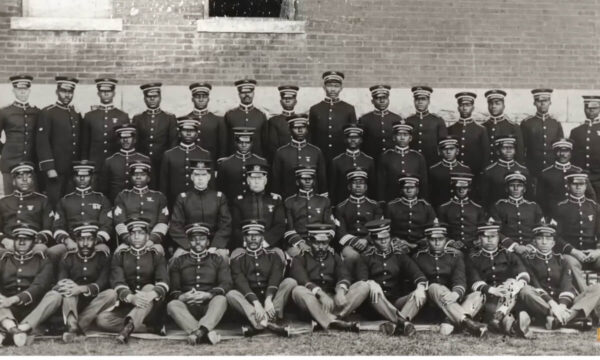
The segregated unit today is widely known as the Buffalo Soldiers, Atlanta Black Star reported previously.
The soldiers’ convictions were overturned last November as an acknowledgment that the soldiers faced mistreatment and were denied fair trials due to being Black, the U.S. Army Public Affairs Office said in a statement.
“Consistent with standard procedure of that time for soldiers who were sentenced to death in a court-martial, their graves were marked with headstones that listed only their names and year of death – as opposed to full honors,” according to the VA.
The new headstones they were honored with at Fort Sam Houston National Cemetery on Feb. 22 include their names, home state, rank, unit, date of death and a sign sharing their story.
The updated interpretive sign is meant to educate the public and offer closure to the soldiers’ next of kin, the VA said.
“We right the wrongs of the past and honor the service of these soldiers – who served our country with honor,” said Matthew Quinn, the VA’s Under Secretary for Memorial Affairs.
Quinn added that the gesture demonstrated the department’s “full commitment to helping correct the injustice of that era.”
The WWI-era Houston riots that unfolded on Aug. 23, 1917, and left 19 dead followed “months of racial provocations against members of the 24th — including the violent arrest and assault of two Black Soldiers,” U.S. Army Public Affairs Office notes.
The assaults and rumored additional threats facing the soldiers prompted more than 100 Black soldiers to seize weapons and march into Houston, triggering deadly clashes.
Historians and government officials later noted that the Buffalo Soldiers’ trial was plagued by legal irregularities that resulted in the hanging of 13 Black troops at once, with six more troops later executed.
The killings of the 19 men, who were put to death without due process, resulted in the largest mass execution of American soldiers by the U.S. Army.


