The Wisconsin woman who admitted to killing a man who sexually abused her and several other underage Black girls is back behind bars after allegedly fleeing the state following her indictment on an unrelated disorderly conduct charge.
U.S. Marshals found 23-year-old Chrystul Kizer in Louisiana after she had been charged with misdemeanor disorderly conduct stemming from an incident on Jan. 7.
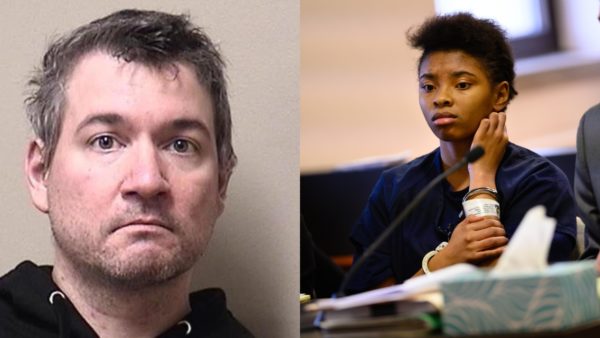
That day, Kizer called 911 from an apartment where she said a man attempted to rape her. When Milwaukee police arrived, Kizer was reportedly using abusive and profane language toward the man. She told police the man was a sex offender and lied to her. A criminal complaint obtained by Fox 6 Now states that Kizer yelled at police and then lunged at the man and hit him in the face.
She was arrested a day later. Authorities tacked a condition onto her bond that directed her not to commit any crimes while she was out on bail. Then, on Jan. 22, Milwaukee County prosecutors charged her with bail jumping.
It took two weeks for authorities to find her nearly 1,000 miles away with the man she accused of raping her. She was booked into the Lafayette Parish Correctional Center where she awaits extradition back to Wisconsin.
Police identified the man she was with as 47-year-old David Melton, who is a registered sex offender. Melton was also arrested for violating his probation.
Kizer was already awaiting trial for the death of 33-year-old Randall Volar in June 2018. Authorities discovered Volar met Kizer after answering a Backpage ad and started sexually abusing her when she was 16 and filmed the sex acts that were added to his collection of child sexual abuse material. She claims he also forced her to work as a prostitute for other men.
Volar, who was white, had also abused about a dozen other underage Black girls. Police arrested Volar for child sexual assault in February 2018 and then released him without bond.
He remained free for three months, during which police discovered more evidence of his crimes. They reportedly found “hundreds” of videos of child sex acts and more than 20 showing Volar sexually abusing Black children.
While he was free, Kizer went to his house one night in 2018 and shot him twice in the head. Then, she set his house on fire and stole his BMW. She admitted to the crime a few days later and was charged with first-degree murder, arson, and theft.
Kizer spent two years in jail while several victim rights groups raised enough money to pay her $400,000 bond. Kenosha County is now pushing to raise her bail to $1 million.
Kizer’s murder trial for Volar’s killing is in June. She faces life in prison. Prosecutors plan to argue that Kizer’s crime was premeditated. Kizer maintains she was acting in self-defense. She told the Washington Post that she didn’t want to have sex the night she went to his home nearly six years ago, but he pinned her to the floor.
Comparisons surfaced between Kizer’s case and the case of Cyntoia Brown, who was sentenced to life in prison when she was 16 for killing a Nashville man who solicited her for sex in 2004.
Brown’s case started drawing attention more than a decade after her sentencing when it was included in a PBS documentary and circulated online by several A-List celebrities. Many people challenged her harsh sentencing and called for changes to the criminal justice system. Former Tennessee Gov. Bill Haslam granted Brown clemency in 2019.


