A woman from St. Louis, Missouri, has been trying to prove that she is not deceased for decades after learning that her Social Security number was associated with a dead person.
Madeline-Michelle Carthen learned that her Social Security number had been compromised while she was preparing for a summer internship and exchange program in Ghana through Webster University back in 2007. Carthen told KSDK News that her life has been a nightmare ever since due to government red tape.
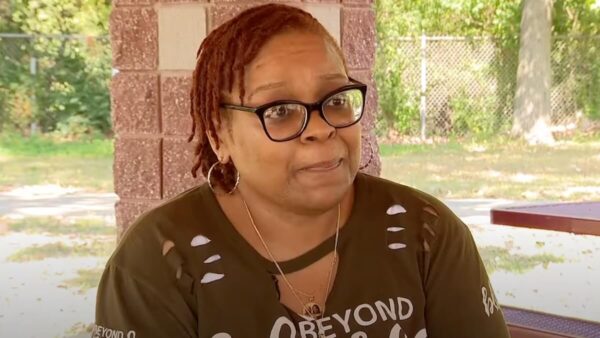
“A nightmare of corruption. No oversight with government. It’s like a haunting,” she said. “I got denied my financial aid. Now, they’re saying, ‘Prove to us you’re not dead.’”
Carthen added that she initially dismissed the news as a mistake and laughed.
“I laughed,” said Carthen. “I said, ‘What do you mean? I’m sitting right here. I’ve been at school over a year and a half. … How am I dead? Is this going to affect my international internship?’”
Carthen was told to contact the Social Security Administration to have the error fixed, and when she did, she found out that she’d been added to SSA’s Death Master File. According to NBC News, the Death Master File is an internal compilation of SSA records of deceased people.
Carthen was told her name was added in error and given a death erroneous letter to show that she was still alive to hand over to bureaus. However, Carthen said her troubles didn’t end after she received the letter and instead got worse.
“Well, it got worse because it wasn’t creditors,” she explained. “Being in the Death Master File, it went to the IRS, it went to the Department of Homeland Security, it went to E-verify, all of these things. It just started affecting my life.”
The 52-year-old said that her life has been disrupted ever since, and she was forced to quit school due to the Social Security issue. Carthen has also lost employment because human resources couldn’t process her payroll, and she has also lost homes because of the error. She lives with her sister because she can’t get a mortgage.
“Sometimes I can get a job, and then within so many months, there’s going to be a problem. So it’s like I can get it, and then it’s yanked back from me. But I don’t know when it’s going to be yanked back,” she said. “I just know I’m alive. I don’t care what A.I. says or software says, but I’m alive. But it’s hard to prove that.”
Carthen changed her name in 2021 and was issued a new Social Security number, and she hoped that her nightmare was over. Unfortunately, the new Social Security number is continuously flagged because it is connected to her old Social Security number.
St. Louis consumer protection attorney Creighton Cohn told KSDK that being declared deceased impacts every aspect of one’s life.
“It can really impact every single aspect of your life,” Cohn said. “So the first is to figure out where the information came from, so get your credit report.”
Carthen has no idea how her name got on the list, and she filed a $12 million federal lawsuit against the Social Security Administration and other government agencies in 2019. However, the judge dismissed the lawsuit, citing the government as having sovereign immunity.
David Seymour, a spokesperson from the Social Security Administration, told KSDK News that it receives three million death reports annually, and their records are “highly accurate” with “less than one-third of 1 percent” needing corrections.
“I don’t know how this is going to work out,” said Carthen. “I just keep advocating and fighting, and when I say fighting, within my spirit. Sometimes, I wanna give up, but my faith is too strong. I don’t care if it takes 20 years. I’m going to still do what I got to do to make this situation right, not just for myself but for others.”


