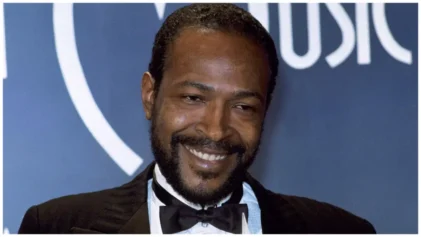
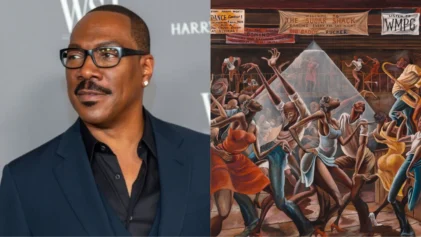
Motown singer Martha Reeves is spilling the tea about her feelings for the late “Sexual Healing” singer Marvin Gaye. Reeves revealed her feelings during a recent interview for SiriusXM’s “Fierce: Women in Music.”
Reeves spoke about her experience during a recording session with Gaye and her singing group Martha and the Vandellas for the 1965 hit, “Dancing in the Street,” and the 82-year-old said that being around the singer left her in awe.
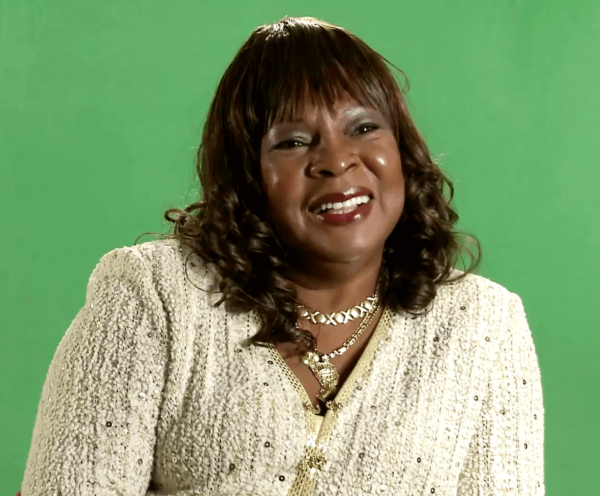
“Marvin Gaye was singing it, ‘Callin’ out around the world. Are you ready for a brand new beat baby?’ And I’m standing there in awe, ’cause I followed him around,” said Reeves. “I love Marvin Gaye. I thought he was the finest man God ever put on this earth.”
Reeves noted that her group, which included Annette Beard, Rosalind Ashford and Gloria Williams, also sang backup vocals for his 1963 single, “Stubborn Kind of Fellow,” and Gaye caught her sneaking a peek at him during the session.
“We sang behind him on ‘Stubborn Kind of Fellow.’ That was when there was only four tracks and the four of us, Gloria, Annette, Rosalind, and myself. And we could touch him. One mic we went, ‘Do, do. Ow. Yeah. Yeah.’ He would [say], ‘I try to put my arms around you.’ He looked over there and saw me just admiring him, just standing there,” she continued. “I can’t help it. He was just so fine. And when he sang, he would close his eyes. So he didn’t know that I was looking at him.”
“And I heard him sing and he looked up and saw me in awe of him. And he said to Mickey Stevenson and Ivy Hunter, the co-writers on the song, ‘Hey man, try this song on Martha.’ I’d done everybody else’s demos, so I was ready ’cause I had learned the song listening to him, but I didn’t feel it where he felt it. And I know how to take a song if it was a man’s key — to sing the same keyboard on the third of the chord. So instead of going, ‘Callin’ out around the world,’ I went, ‘Callin’ out around.’ Cause the intro reminded me of the bullfights in Spain.'”
Reeves went on to say that the experience left her “overwhelmed” and that it can be heard on the record.
“If you do something wrong, get a wrong note, or you ain’t got the right inflection, they’ll say, ‘Do it again.’ Uh, make that better. No stopping, no nothing. That next tape is what you hear on that record. That’s why it sounds like I’m overwhelmed. And I was.”
Reeves also spoke about Gaye during an interview with Signed Media in 2019 and noted that he was also a drummer who traveled with Smokey Robinson and the Miracles.
(13:47)”Marvin played a full set of drums. In fact, he traveled with Smokey Robinson and the Miracles for a while,” she recalled. “He was shy. He was a singer when he came but he worked his way as a musician as well.”
Fans enjoyed listening to Reeves talk about her experiences as a musician for Motown and replied in the video’s comment section.
“Martha can go on and on and you never tire from hearing these wonderful stories. She is sharp as a tack,” said one. “The joy on her face when she tells them is simply priceless.”
“This lady is amazing! I could listen to her for hours. So talented and yet so humble,” added another.”
Martha and the Vandellas were signed by Motown in 1962. Their hit “Dancing in the Street” was written by Gaye, William Stevenson and Ivy Jo. The singing group recorded the song in 1964, and it is widely considered their greatest hit. They are also known for hits “Nowhere to Run” and “Jimmy Mack.” Gaye died on April 1, 1984. Martha and the Vandellas were inducted into the Rock and Roll Hall of Fame back in 1995.