Social media is on fire after a woman in a viral video said she got fed up with her cheating husband’s antics but was not quite through with him.
Michelle Raye, an investment technology consultant, made the comments on Facts and Law PodShow, which aired on YouTube on Aug. 4.
In a clip that went viral on social media, Raye brings up her frustration with her partner’s infidelity. But instead of leaving her husband, Ray says she laid down the new rules for an open relationship.
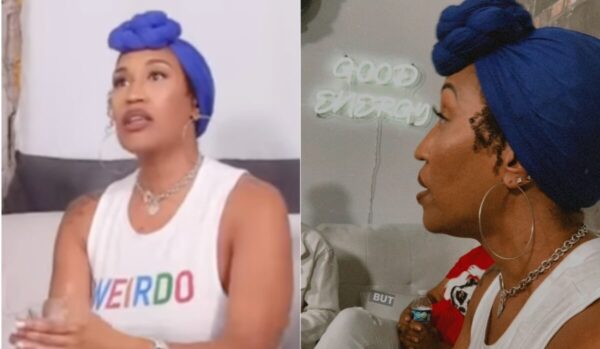
“I never wanted to be without you,” she recalls saying. “I want to do life with you, but in the process of all this happening. You a liar. You got you another b##ch.”
“We not f##king no more. I want to see other people,” she continues listing the other rules.
“We going to have a beautiful life together for the rest of our lives. We are going to continue to get money together. We going to continue to raise this little girl together. We going to have a fabulous home,” she says.
“We are going to love and take care of each other. I’m going to f##k other people … I hope you do too. “
Many viewers were shocked at Raye’s comments because it goes against the norms of the most widely accepted constructs of Western marriage, particularly that a woman is setting the terms of their relationship.
One TikTok user complimented her on a well-thought plan.
“Get that bag but set yo[ur] boundaries and be happy too. Real smart and classy.”
However, others criticized the decision.
“This is not realistic. She should get divorced because it will just spiral into this competition where nobody wins especially the Kid,” one person on Twitter said.
One Twitter user rebutted, “Naw this works more than you think. Plenty of marriages are based on business instead of love.”
Raye steps away from what is most accepted in American culture, monogamy, and presents an open marriage as an option. An open marriage is categorized as consensual non-monogamy (CNM) or ethical non-monogamy (ENM).
Dr. Eli Scheff, an expert who has researched and written about Americans over the age of 18 who practice CNM, believes it’s more common than one thinks. She highlighted two research teams who independently found that 4 to 5 percent of the population was currently part of a CNM relationship but believes the number might be a little higher.
“Because CNM is highly stigmatized, lots of people who do it might be hesitant to admit it, even on an anonymous survey,” Scheff wrote in 2019 in Psychology Today.
The big question here is, can an open marriage save a marriage? Sex educator Tristan Taormino says “No.”
“Certainly, an open relationship cannot save a marriage,” Taormino said to Oprah Daily. “In fact, if there are existing conflicts, power struggles, and other issues in a relationship when you open up a monogamous relationship, those will become magnified times ten.”
One TikTok user knows this to be true. She said an open marriage agreement didn’t work for her and was the doom for her relationship, “I tried this an[d] my husband is divorcing me now cus he don’t wanna live like that,” adding that it OK “when he was doing it behind my back.”


