Former Newbern Mayor Haywood “Woody” Stokes III believes despite conspiring to block a rightfully elected Black mayor from sitting in the position, he should not be named in a federal civil lawsuit that claims he violated anyone’s rights.
The politician is relying on the concept of “qualified immunity” as a shield, attempting to exempt himself and fellow white lawmakers from legal action. Their argument is that the legalities around the Newbern mayoral elections do not “clearly establish” rules that say their actions broke or violated any laws.
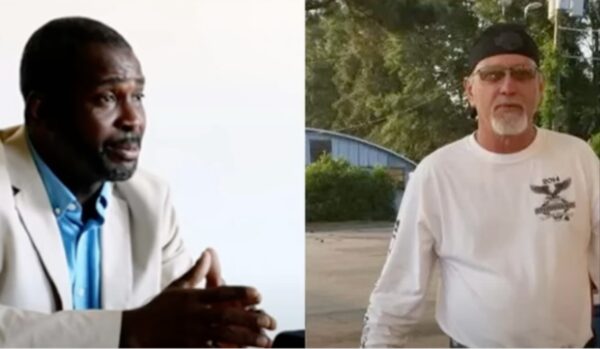
Patrick Braxton, the elected mayor, has taken legal action, filing a lawsuit against several parties, including Stokes III, the former white mayor of Newbern, his council, various government officials, and the People’s Bank of Greensboro.
According to the federal lawsuit, Braxton alleges that these defendants collaborated to prevent him from assuming his duly elected office.
The claim suggests that they disregarded the results of the 2020 election and unlawfully installed Stokes as mayor, even though he was not a candidate on the ballot. Members of Braxton’s appointed city council, James Ballard, Barbara Patrick, Janice Quarles, and Wanda Scott, assert that, much like Braxton, they are not acknowledged by the previous administration.
The defendants filed a motion to dismiss on Friday, July 21, stating that the actions they took to secure their positions in government could not be prosecuted because there is no precedent.
Law & Crime reports that the city of Newbern is governed by a mayor and five council members selected from residents in the town. The election, according to the city’s municipal code, is held on the fourth Thursday of August at the start of a four-year term interval. However, the town is reported to have not “held an election in decades.”
In lieu of an official election, the mayor’s position is “‘inherited’ by a hand-picked successor.” Stokes III inherited the job from his father, Haywood Stokes Jr.
So used to this system, Stokes did not bother to apply during the 2020 election, leaving Braxton as the sole name on the ballot. County probate Judge Arthur Crawford recognized Braxton as the winner of the election (by default), making him the first Black mayor of Newbern in the 165 years since Newbern was founded. He also told him he was able to appoint his city council.
In response to Braxton’s win, Stokes and his previous city council allegedly set up a special election for Oct. 6, 2020, where they “effectively reappointed themselves” and “unlawfully assumed their new terms.”
Stokes and his administration also enlisted the help of the bank to block the elected mayor’s access to the city’s financial statements, Braxton’s complaint claims. The local postmaster allegedly also prohibited Braxton from getting the small town’s mail from its P.O. box.
The complaint says all of these actions were to undermine his rights as an elected official and are rooted in racial discrimination. It notes that while the town is 80 percent Black, the overwhelming majority of its elected or appointed officials have been white.
The defendants assert “because the law is not clearly established regarding the actions to be taken by officials in a town that has not ‘held an election in decades,’” the lawsuit should be thrown out.
They also said that based on the facts, there is nothing “remotely close” for the courts to compare and say that their behavior in this matter was not “so egregious that a constitutional right is clearly violated.”
They also claimed race is not a factor in this case, despite the defendants being all white and the plaintiffs being all Black.


